
Start with size
Before anything else, compare the bird to something familiar: smaller than a sparrow, sparrow-sized, robin-sized, crow-sized, or larger than a crow. This one comparison rules out most of the roster immediately and is the fastest first filter.
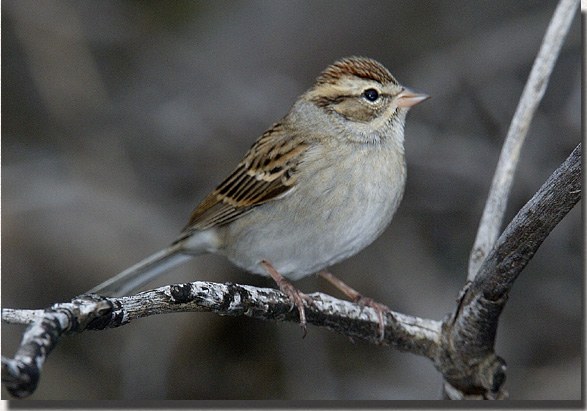 Sparrow-sized
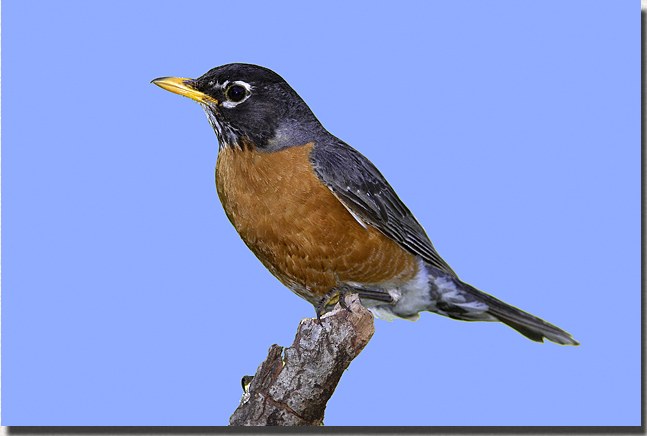 Robin-sized
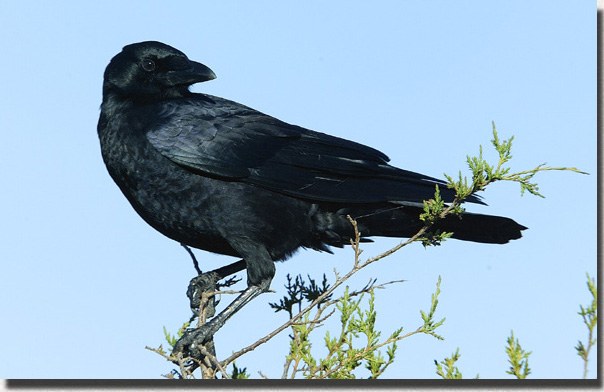 Crow-sized
Where and when
Location and season matter more than most people expect. A bird at a backyard feeder in January is a very different candidate list than the same silhouette over a wetland in June. Note the habitat too — open grassland, forest edge, water's edge, or backyard/urban — since the species database groups every bird by exactly these categories.
Field marks
Color and pattern are the most obvious clues, but a few specific marks matter more than overall color: bill shape and color, eye-ring or eyebrow stripe, wing bars, and tail shape (forked, notched, square, or long). Try to note these even if you only get a few seconds — color alone is often misleading in poor light.
Behavior
How a bird moves is often as identifying as how it looks: hopping versus walking on the ground, tail-pumping, hovering, soaring versus flapping, or feeding upside-down on a branch. Behavior is also the hardest thing to fake — it's a good tie-breaker between two similar-looking species.
Use the database
Once you have a rough size, habitat, and a field mark or two, the fastest way to narrow it down is the Birds page — filter by habitat and day/night, then search by name if you have a guess, or browse the matching group.
Still stuck?
Send a description — approximate size, location, field marks, and behavior — to [email protected] and we'll help narrow it down.