
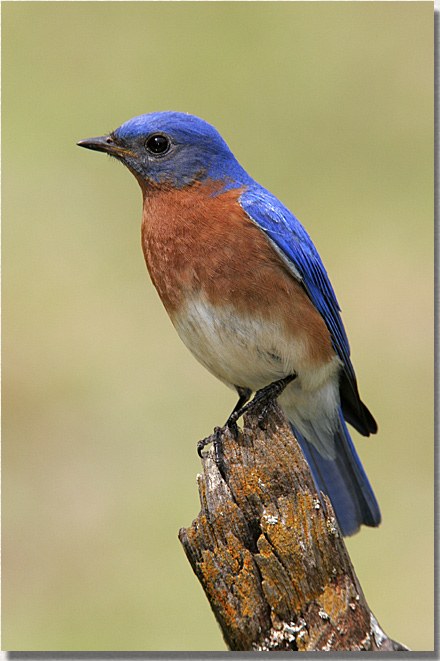
Building or buying a box
Eastern Bluebirds are particular about nest box dimensions. A box built from 3/4" cedar or pine with roughly a 4–5" square floor, about 12" of interior height, and a 1½" entry hole positioned about 2" from the top fits their preference well. Mount it on a post 5–6 feet off the ground — avoid fences, which give predators an easy approach.
- 1 Entry hole — 1½" diameter, about 2" down from the roofline
- 2 Interior height — roughly 12" from floor to roof
- 3 Floor — a 4–5" square base
- 4 Mounting height — 5–6 ft up on a post, never a fence
Competition for the box
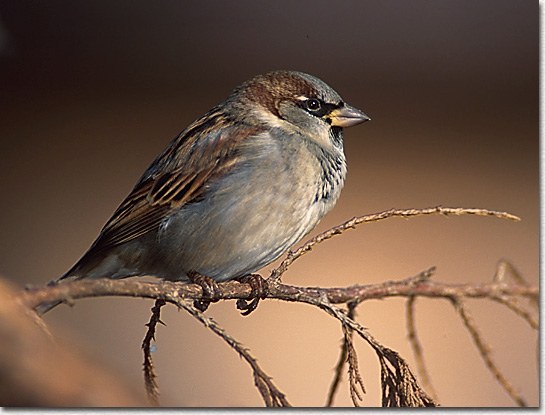
House Sparrows will often claim a bluebird box before a bluebird pair finds it. Regularly clearing out sparrow nesting material can be necessary before a bluebird pair settles in for good.
What nesting looks like
Once a pair commits to a box, the female does most of the nest-building — typically around eight days — while the male guards the site. Incubation runs about three weeks, during which the male hunts for insects for both of them. A typical clutch is four pale-blue eggs.
Feeding the nestlings
Once the eggs hatch, both parents work non-stop gathering insects and grubs — nestlings need far more food than the adults consume themselves. Mealworms are a favorite supplemental food; offering a small dish of them near the box (morning and evening) reduces some of the parents' workload, and pairs generally learn the routine quickly.
Fledging
Young bluebirds typically peer out from the entry hole for a while before working up the courage for their first flight. The family often stays near the nest site afterward while the fledglings learn to hunt on their own.
Why it matters
Bluebird populations declined significantly through the 20th century as natural nesting cavities became scarcer, and nest-box programs have been a major part of their recovery since. For more detailed guidance, the North American Bluebird Society is a good next stop.