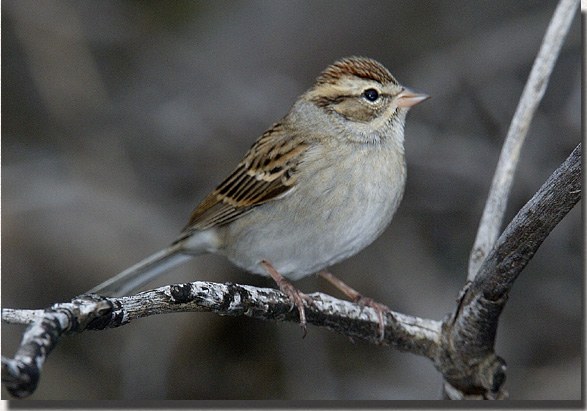
Chipping Sparrow
Spizella passerina
- Habitat
- Open woodlands, parks, gardens, and edges with scattered trees for singing perches
- Size
- 5-5.75 in
- Lifespan
- Banding records show individuals living to at least 10 years, well above the average for a small songbird.
- Diet
- Seeds for most of the year, switching to insects during the breeding season to feed nestlings
About the Chipping Sparrow
The Chipping Sparrow is a small, slim sparrow with a bright rufous cap, clean gray face, black eyeline, and unstreaked gray underparts in breeding plumage, giving it a crisp, clean-cut look compared to many streakier sparrows. Non-breeding and juvenile birds are duller and more streaky, with a less vivid cap, sometimes causing confusion with other small Spizella sparrows such as the Clay-colored.
It's a common breeding bird across Oklahoma in open pine or oak woodland, suburban yards, parks, and orchards with scattered trees and areas of short grass or bare ground nearby, often nesting close to houses. It winters in the southern portion of its range, and many birds either pass through or remain in the state through the colder months, often joining mixed sparrow flocks foraging on the ground together.
Chipping Sparrows forage mostly on the ground or in low vegetation for grass and weed seeds. During the breeding season they shift heavily toward caterpillars and other insects to meet the protein demands of growing chicks, then return to a mostly seed-based diet the rest of the year, frequently visiting bird feeders that offer millet or other small seeds.
The species builds a compact cup nest low in a conifer or dense shrub, historically lined thickly with animal hair, especially horsehair when available, earning it the old folk nickname 'hairbird.' Its song is one of the most familiar sounds of suburban summer: a long, dry, mechanical trill on a single pitch, easily confused with the trills of Pine Warblers, Dark-eyed Juncos, or even certain insects, and often sung persistently from an exposed perch through the warmer months, making it one of the more reliably identifiable backyard birds by ear alone once learned. Pairs are largely monogamous through a breeding season and may raise two or even three broods before summer ends, with young from an earlier brood sometimes still nearby as the parents start incubating again. The species is also a well-documented, though occasional, host for Brown-headed Cowbird eggs, sometimes successfully raising a cowbird chick alongside or in place of its own young. Its overall abundance and tolerance of people have made it one of the most-studied small songbirds in North America, contributing significantly to broader research on songbird nesting success and survival.
Frequently asked questions
What does a Chipping Sparrow's song sound like?
A long, dry, rapid trill on a single pitch, often compared to a sewing machine or insect buzz.
Why is it sometimes called a 'hairbird'?
It was historically known for lining its nest heavily with animal hair, especially horsehair, when it was available.
Does the Chipping Sparrow stay in Oklahoma year-round?
Many breeders leave for winter farther south, but the state also hosts wintering birds from farther north, so the species can be seen across most seasons.
How can I tell it apart from other sparrows?
Look for the clean rufous cap, black eyeline, and unstreaked gray breast of breeding adults, a combination not shared by most similar sparrows.
Where to find it
This species favors city / backyard habitat. See real Oklahoma locations on the Habitats map.