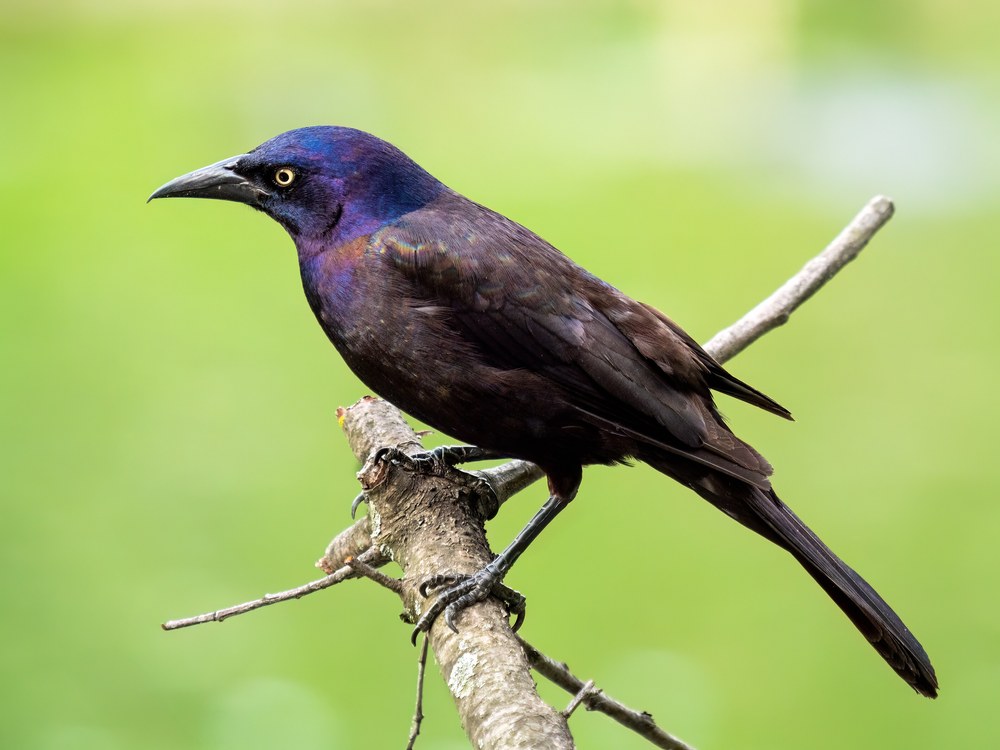
Common Grackle
- Habitat
- Open woodlands, farmland, parks, and suburban or urban areas
- Size
- 11-13 in
- Lifespan
- Banding records show individuals living to at least 23 years, though typical wild lifespans are far shorter.
- Diet
- Omnivorous: insects, grain, seeds, small vertebrates, and occasionally eggs or nestlings of other birds
About the Common Grackle
The Common Grackle is a large blackbird with a long, wedge- or keel-shaped tail that it can fold into a distinctive V-shape in flight, pale yellow eyes, and iridescent plumage that shifts between bronze, purple, and blue-green depending on the light and the subspecies. It's noticeably larger and longer-tailed than other common blackbirds such as the cowbird or the European Starling, and moves with a confident, strutting gait on the ground.
It's abundant and widespread year-round across Oklahoma, thriving in farmland, open woods, parks, and residential areas, often visiting bird feeders where it can dominate smaller birds. Outside the breeding season it forms large, sometimes massive, mixed flocks with other blackbirds and starlings, especially at communal winter roosts that can number in the tens of thousands and generate local nuisance complaints in some towns.
Highly opportunistic, the Common Grackle eats grain and seeds, insects, small frogs and fish, and occasionally raids the nests of smaller birds for eggs or nestlings, a predatory habit unusual among mostly seed- and insect-eating blackbirds. It forages both on the ground and in trees, and readily exploits human food sources including farm fields and feeders, sometimes causing meaningful crop damage in concentrated agricultural areas.
The species nests in loose colonies in trees or shrubs, often near water, with females building the nest and incubating while males defend the territory. One genuinely interesting behavior documented in Common Grackles is 'anting,' in which the bird rubs crushed ants, and occasionally other substances such as mothballs, walnut husks, or lime, into its feathers, likely to make use of chemicals like formic acid as a natural parasite deterrent. Grackles have also been observed dunking dry, hard food in water to soften it before eating, and using their bill to saw open acorns or other tough food items, an unusually flexible foraging repertoire for a blackbird. Populations have actually declined noticeably in parts of their range in recent decades, a downward trend that has drawn attention from researchers despite the species still being common and conspicuous across most of the eastern and central United States. Winter roosts sometimes include several other blackbird species together with European Starlings and Brown-headed Cowbirds, forming mixed flocks that can be difficult to sort through visually but are usually dominated numerically by grackles.
Frequently asked questions
Are Common Grackles harmful to crops?
They can cause significant damage to corn and grain crops when foraging in large flocks, leading some areas to treat them as an agricultural pest.
What is 'anting' behavior?
Grackles and some other birds rub ants onto their feathers, likely because the formic acid the ants release helps deter parasites.
How can I tell a grackle from a crow or a starling?
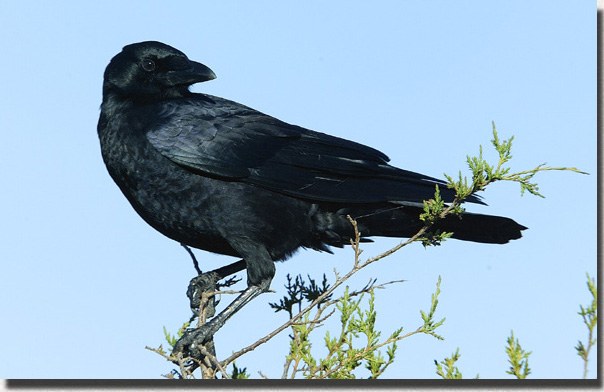
Grackles have a longer, wedge-shaped tail and pale yellow eyes, distinguishing them from the shorter-tailed European Starling and the much larger, dark-eyed American Crow.
Do Common Grackles migrate?
Northern populations migrate south for winter, but many Oklahoma birds are present year-round, often joining large mixed-species winter roosts.
Where to find it
This species favors city / backyard habitat. See real Oklahoma locations on the Habitats map.