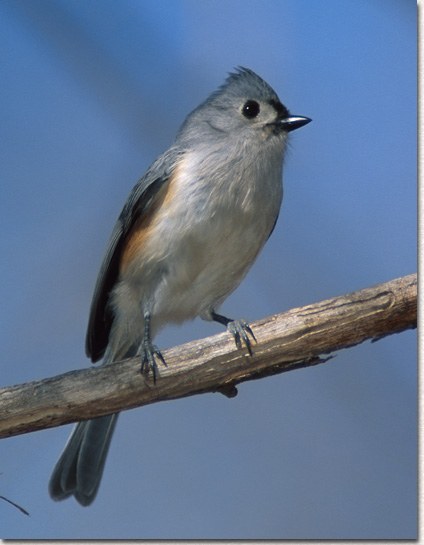
Tufted Titmouse
- Habitat
- Deciduous woodlands, suburbs, villages, parks, mesquite; common, conspicuous, tame; frequents feeders
- Size
- 6 in, sparrow-sized
- Lifespan
- Usually lives just a few years; the oldest banded individual on record was over 13 years old.
- Diet
- Seeds and fruit, spiders and their eggs, some snails; acorns may be most of its diet November–February
About the Tufted Titmouse
A small, energetic songbird with an oversized personality, the Tufted Titmouse is easy to recognize by its soft gray upperparts, whitish underside washed with rusty color along the flanks, and a pointed gray crest that it raises and lowers depending on mood. Large black eyes and a small, stout bill give it an alert, inquisitive expression, and in the southwestern part of its range a related population shows a black crest instead of gray, a difference once used to split the birds into separate species before they were reclassified as one. Common, conspicuous, and famously tame, it is a familiar visitor at backyard feeders across much of its range.
Tufted Titmice live year-round in deciduous woodlands but adapt readily to suburbs, parks, and mesquite country, foraging by gleaning insects, spiders, and their egg cases from bark and foliage. Acorns can make up the bulk of the diet from November through February, when the birds crack open shells with their bill while gripping the nut steady with their feet, and they also eat snails, seeds, and fruit. Like several of their relatives, titmice cache surplus food in bark crevices to retrieve later, a habit that helps them survive lean winter stretches, and in autumn they often join loose foraging groups that move together through the woods.
Pairs are monogamous and can remain together on the same territory across years, nesting in tree cavities or nest boxes that they line with soft materials — famously including fur plucked directly from live animals such as dogs, squirrels, or even napping humans, a bold habit widely documented in the species. Young from an earlier brood sometimes linger and help their parents raise the next set of chicks, a form of cooperative breeding that is unusual among small songbirds. Tufted Titmice typically live only a few years in the wild, though the oldest banded individual on record survived more than 13 years, a testament to how long a bold, adaptable bird can persist given a steady supply of feeders and forest cover.
The species does not migrate, remaining on or near the same territory throughout the year, and over the past century its range has crept steadily northward, a shift widely attributed to a combination of milder winters and the spread of backyard bird feeders that help the birds survive in areas that once lay just beyond their range. Its loud, whistled "peter-peter-peter" song, often given even in the depths of winter, is one of the more familiar sounds of eastern and midwestern woodlands, a reliable clue to the bird's presence long before it comes into view.
Frequently asked questions
What does the crest on a Tufted Titmouse mean?
The gray crest is simply a field mark of the species; the bird raises and lowers it depending on its mood and alertness.
Do Tufted Titmice really pull fur from live animals?
Yes, they are known to pluck fur from live mammals such as dogs, squirrels, or raccoons to line their nests.
What do Tufted Titmice eat in winter?
Acorns can make up most of their diet from November through February, supplemented by cached seeds, snails, and fruit.
How long do Tufted Titmice live?
Most live only a few years, but the oldest banded individual on record was over 13 years old.
Where to find it
This species favors city / backyard habitat. See real Oklahoma locations on the Habitats map.