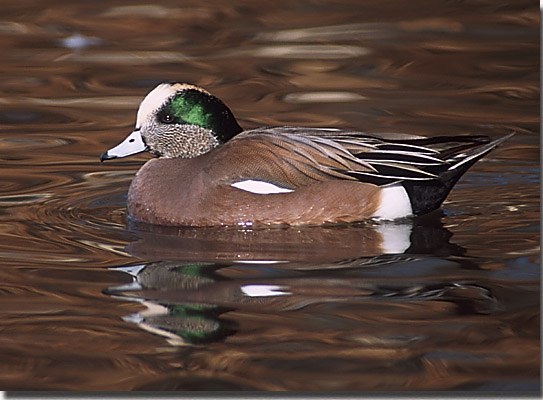
American Wigeon
- Habitat
- Lakes, ponds, marshes, and flooded fields, often grazing on adjacent grasslands
- Size
- 18-23 in
- Lifespan
- Typically a few years in the wild; banding records for this species include individuals documented living two decades or more, though such ages are exceptional.
- Diet
- Aquatic and terrestrial plants, grasses, sedges; some invertebrates
About the American Wigeon
The American Wigeon is a medium-sized dabbling duck easily recognized in breeding males by a broad white or cream patch running from the forehead to the crown—earning it the old nickname "baldpate"—paired with an iridescent green swath behind the eye and a soft pinkish-brown body. Females and non-breeding males are mottled warm brown overall with a plain grayish head, distinguished from other female dabblers by a stubby blue-gray bill with a black tip. Like most ducks, males briefly molt into a drab, female-like "eclipse" plumage in late summer after breeding, becoming flightless for a few weeks while replacing their flight feathers, before molting back into their showy breeding colors by fall.
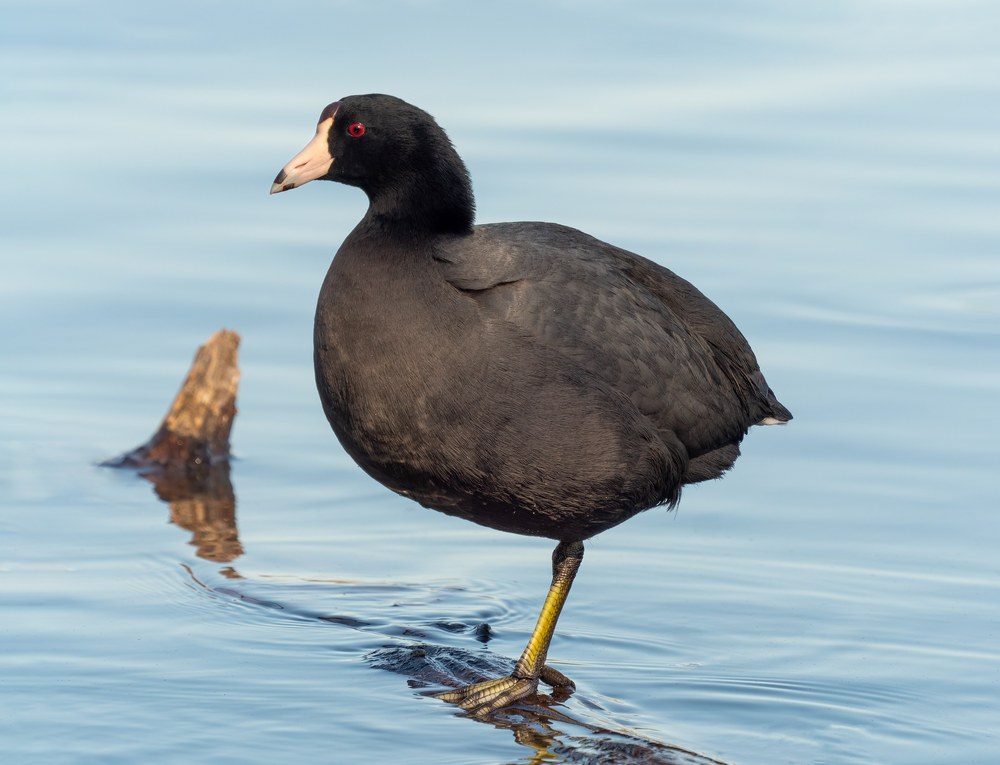
Wigeon favor open water bordered by marsh vegetation or grassy shoreline—lakes, reservoirs, ponds, and flooded agricultural fields—and are just as likely to be seen grazing on land as swimming. Unlike many ducks that tip up to feed underwater, American Wigeon often graze directly on short grass and other vegetation the way geese do, and they are well known for stealing food: they frequently associate with diving ducks and American Coots, snatching plant material those species bring up from underwater rather than diving for it themselves, a strategy sometimes called kleptoparasitism that lets wigeon exploit deeper submerged vegetation beds without diving themselves.
American Wigeon breed across the prairie pothole region and boreal areas of the northern United States and Canada, nesting on the ground in grass or brush near water, well concealed from predators, sometimes considerable distances from the nearest pond. Pair formation largely happens on the wintering grounds and during spring migration, well before birds reach the breeding range, so pairs typically arrive on the nesting grounds already bonded, and the male departs once incubation begins, leaving the female to raise the brood alone, as is typical among dabbling ducks.
They are highly migratory and winter widely across the southern United States, including Oklahoma, where large numbers can be found on lakes and wetlands from fall through early spring, making them one of the more common and easily observed ducks in the state during the cooler months. Their distinctive whistled call, often rendered as a three-note "whee-whee-whew," carries well across open water and is frequently the first clue to a flock's presence before the birds themselves come into view; females give a lower, harsher quack more typical of dabbling ducks generally.
Occasionally a Eurasian Wigeon, a close relative from across the Atlantic, turns up mixed into flocks of American Wigeon in Oklahoma during winter, distinguished by the male's rusty-red head and cream crown stripe rather than the American bird's gray head and green eye patch; any such sighting is uncommon enough to draw attention from local birders, and mixed pairs between the two species have occasionally been documented, given how readily they associate with one another on shared wintering grounds. American Wigeon are also strong fliers, capable of rapid, direct flight on relatively short, pointed wings, and flushed flocks often wheel and bank together in tight, coordinated groups before settling back onto the water. Nest predation from mammals such as skunks, raccoons, and ground squirrels is a significant source of loss on the prairie breeding grounds, and hen wigeon that lose a first nest will sometimes attempt to renest later in the season if time allows. As a widely hunted species across its range, American Wigeon populations are also closely monitored through annual waterfowl surveys, and hunting regulations are adjusted based on these counts to help keep harvest sustainable alongside habitat conditions on the breeding grounds each year.
Frequently asked questions
What does the American Wigeon eat?
Mostly grasses, aquatic plants, and sedges, gathered by grazing on land or dabbling at the water's surface, along with occasional invertebrates.
Where can I see an American Wigeon in Oklahoma?
On lakes, reservoirs, and wetlands statewide from fall through early spring, often in mixed flocks with other ducks.
How long do American Wigeon live?
Most live a few years, though banding records show some individuals reaching two decades, an unusually long lifespan for a duck.
Is the American Wigeon common in Oklahoma?
Yes, it is a common and widespread winter visitor and migrant across the state's lakes and wetlands.
Can Eurasian Wigeon be found mixed in with American Wigeon in Oklahoma?
Occasionally—a Eurasian Wigeon, with a rusty-red head and cream crown stripe, sometimes turns up in flocks of American Wigeon during winter, and any such sighting is considered notable.
Where to find it
This species favors wetland habitat. See real Oklahoma locations on the Habitats map.