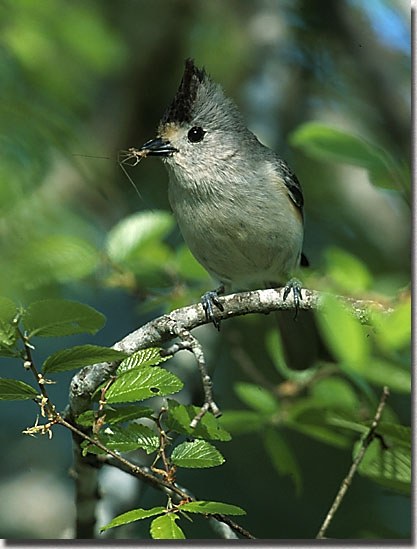
Black-crested Titmouse
Baeolophus atricristatus
- Habitat
- Deciduous woodlands, suburbs, villages, parks, mesquite areas — described as common, conspicuous and tame
- Size
- 6 in, sparrow-sized
- Lifespan
- Average lifespan is only about 2 years due to heavy nestling mortality; oldest banded bird reached almost 8 years.
- Diet
- Seeds, fruit, spiders and spider eggs, snails; acorns may dominate its diet November–February
About the Black-crested Titmouse
The Black-crested Titmouse is a small, sparrow-sized songbird easily identified by its tall, pointed black crest, which contrasts sharply with an otherwise soft gray back, pale whitish underparts, and warm rust-colored flanks. This crest, raised and lowered at will, gives the bird a perky, alert look and is the clearest field mark separating it from its close relative, the Tufted Titmouse, which has a gray rather than black crest; the two species were in fact once considered the same, and they still hybridize where their ranges meet in central Texas and Oklahoma.
True to its description as common, conspicuous, and tame, this titmouse thrives in deciduous woodlands, suburban yards, small towns, parks, and mesquite-dominated brushland, showing little shyness around people and readily investigating backyard feeders. Its comfort near human development has made it one of the more easily observed songbirds across its range in Oklahoma and neighboring states.
The diet shifts noticeably with the seasons: seeds, fruit, spiders and their egg cases, and snails are all taken through much of the year, but acorns become the dominant food source from November through February, when the birds rely heavily on this cached, high-fat resource to get through the leaner winter months. Like many titmice, it often wedges larger seeds or acorns into bark crevices to hammer them open with its stout bill.
Nestling mortality is high in this species, which pulls the average lifespan down to only about two years, even though banding records show individuals capable of living close to eight. After the breeding season ends, family groups often join small mixed-species foraging flocks alongside chickadees, taking advantage of the extra eyes for spotting predators, and by fall the titmice themselves have formed loose social groups that move together through the woodland understory searching for food. Like other titmice, this species nests in cavities rather than building an exposed nest, taking over old woodpecker holes or natural hollows and lining the interior with soft material, sometimes including hair plucked directly from a live animal such as a dog, squirrel, or even a napping person. Its clear, whistled "peter-peter-peter" song carries well through open woodland and suburban yards alike, and pairs typically remain bonded on the same territory year-round rather than dispersing after breeding, giving the species a settled, familiar presence in the same patch of woods or backyard from one season to the next.
Frequently asked questions
How is the Black-crested Titmouse different from the Tufted Titmouse?
Its crest is black rather than gray, and the two species hybridize where their ranges overlap in Texas and Oklahoma.
What do Black-crested Titmice eat in winter?
Acorns become their dominant food source from November through February, supplementing seeds, fruit, spiders, and snails eaten the rest of the year.
Why does the Black-crested Titmouse have such a short average lifespan?
Heavy mortality among nestlings pulls the average down to about two years, even though some individuals live to nearly eight.
Does the Black-crested Titmouse flock with other birds?
Yes, after breeding it often joins mixed foraging flocks with chickadees and forms its own social groups in fall.
Where to find it
This species favors forest habitat. See real Oklahoma locations on the Habitats map.