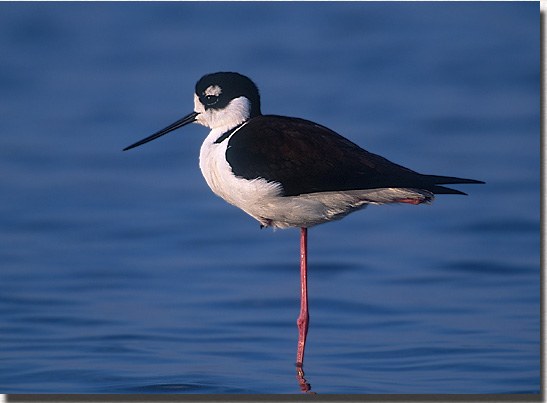
Black-necked Stilt
- Habitat
- Shallow wetlands, mudflats, alkali flats, and flooded fields
- Size
- 13-15 in
- Lifespan
- Not extensively documented in accessible records; comparable shorebirds sometimes live into the mid-teens.
- Diet
- Aquatic invertebrates, small crustaceans, and insects
About the Black-necked Stilt
The Black-necked Stilt is a striking, slender shorebird best known for its extraordinarily long, thin, pinkish-red legs—proportionally among the longest of any bird relative to body size, second only to flamingos among all birds. Its plumage is boldly bicolored, with glossy black upperparts, head, and neck contrasting sharply against pure white underparts, and a thin, straight black bill completes a silhouette unlike almost any other wading bird sharing its habitat.
Stilts favor shallow wetland habitats with little or no dense vegetation: mudflats, shallow ponds, alkaline or saline flats, and flooded agricultural fields, where they wade on their long legs to pick insects, small crustaceans, and other invertebrates from the water's surface or soft mud. Their feeding technique is generally a visual, deliberate peck rather than the probing method used by many other shorebirds, suited to prey items visible near the surface.
In Oklahoma, Black-necked Stilts occur locally as breeders at suitable shallow wetlands and reservoir margins, part of a range that is more extensive and common across the southern and western United States. They typically nest on the ground in the open, sometimes in loose colonies on bare shoreline or small islands, and are notably vocal and aggressive in nest defense, using loud, repeated alarm calls and distraction displays—including feigning injury—to draw predators away from eggs or chicks, calling a sharp, repeated "kek-kek-kek" that can continue for extended periods until an intruder retreats.
This bold defensive behavior, combined with their unmistakable appearance, makes stilts one of the more conspicuous and easily identified shorebirds at the wetlands where they occur in the state. Populations in Oklahoma tend to fluctuate with water levels and wetland availability from year to year, since the species depends on specific shallow-water conditions that can vary considerably with rainfall and reservoir management.
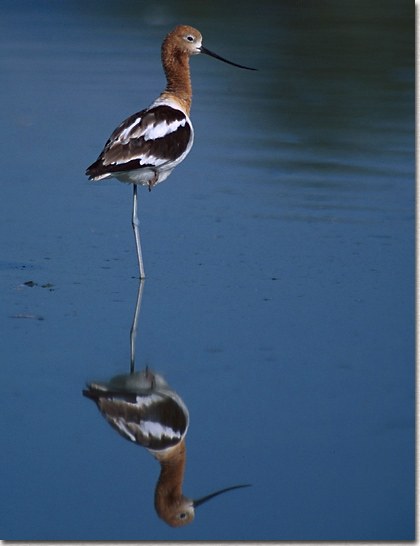
Stilts frequently share shallow wetlands with the similarly long-legged American Avocet, and mixed groups of the two species foraging together are a common sight at productive Oklahoma wetlands; the stilt's straight bill and solid black-and-white pattern make it easy to separate from the avocet's upturned bill and rust-tinged breeding head. Chicks are precocial, leaving the nest scrape within a day of hatching to follow the adults and begin picking at food themselves, though they rely on their parents' constant vigilance and alarm-calling for protection until they are capable of stronger flight, typically by around a month of age. Black-necked Stilts are medium-distance migrants across most of their range, arriving on Oklahoma breeding wetlands in spring, generally by April, and departing again by early fall once young have fledged, with some individuals wintering as far south as Central America and northern South America. Outside the breeding season, stilts often gather into loose foraging flocks at productive wetlands, sometimes numbering into the dozens where habitat conditions are especially favorable, though they remain considerably less social during the nesting period itself, when pairs actively defend a feeding and nesting territory against other stilts. The species has expanded its breeding range northward across parts of the interior United States over recent decades, likely aided by the creation of artificial wetlands, sewage treatment ponds, and managed reservoir margins that mimic the shallow, sparsely vegetated conditions stilts prefer. Both parents share incubation duties and chick-rearing responsibilities, an equal division of labor that is fairly typical among shorebirds but stands in some contrast to species like dabbling ducks in which only the female tends the young. Black-necked Stilt populations are not currently considered to be of major conservation concern at a continental scale, though local breeding success in Oklahoma can vary considerably depending on water levels and the availability of undisturbed shoreline during the nesting season.
Frequently asked questions
What does the Black-necked Stilt eat?
Aquatic invertebrates, small crustaceans, and insects, picked from shallow water and mud.
Where can I see a Black-necked Stilt in Oklahoma?
At shallow wetlands and reservoir margins statewide during the breeding season, particularly where water levels expose mudflats.
How long do Black-necked Stilts live?
Specific figures are limited, but comparable shorebirds sometimes live into their mid-teens.
Is the Black-necked Stilt common in Oklahoma?
It's a locally common breeder at suitable wetlands, though its numbers depend heavily on water conditions from year to year.
How do Black-necked Stilts defend their nests?
They are highly vocal and aggressive, giving loud repeated alarm calls and performing distraction displays, including feigning injury, to lure predators away from eggs or chicks.
Where to find it
This species favors wetland habitat. See real Oklahoma locations on the Habitats map.