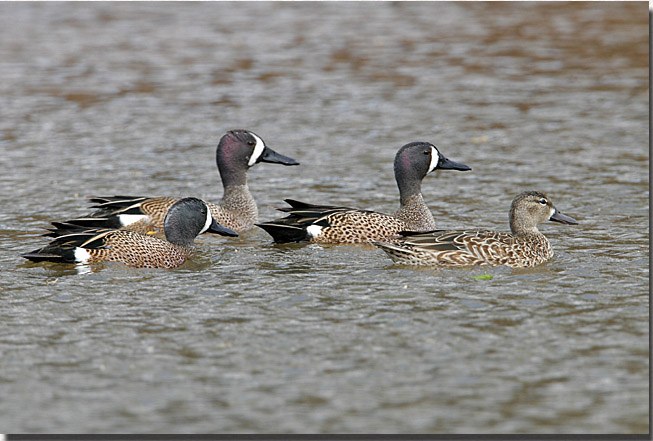
Blue-winged Teal
- Habitat
- Shallow marshes, ponds, prairie potholes, and flooded fields
- Size
- 14-16 in
- Lifespan
- Typically a few years in the wild; banding records for this species include individuals documented living well into their teens.
- Diet
- Seeds, aquatic vegetation, and aquatic invertebrates
About the Blue-winged Teal
The Blue-winged Teal is a small, compact dabbling duck. Breeding males show a distinctive bold white crescent on the face just in front of the eye, set against an otherwise slate-gray head, with a mottled brown body and a pale blue patch on the upper wing visible mainly in flight. Females are mottled brown overall, closely resembling other small female dabbling ducks, but share the same pale blue wing patch that helps confirm identification once the bird takes flight. After breeding, males molt into a duller, female-like "eclipse" plumage for a period, briefly becoming flightless as they replace all their flight feathers at once, a vulnerable stage during which they favor dense marsh cover.
This species favors shallow, vegetated wetlands: marshes, ponds, prairie potholes, and seasonally flooded fields, where it feeds by dabbling at the surface or tipping up in shallow water for seeds, aquatic plants, and small invertebrates. It breeds across the northern Great Plains and prairie regions of the United States and Canada, nesting on the ground in grass cover near water, often at some distance from the water's edge compared with other prairie ducks. Pair bonds are renewed each year rather than lasting a lifetime, with courtship and pairing largely taking place on the wintering grounds or during spring migration before birds reach the breeding marshes.
Blue-winged Teal are known for their early southbound migration, often departing breeding areas well ahead of most other duck species in late summer and early fall, and correspondingly returning north relatively late in spring -- a pattern that makes them one of the more predictable early-season ducks for Oklahoma hunters and birdwatchers alike, and one reason waterfowl seasons in many states include an early teal-specific hunting period. Many individuals migrate remarkably far, wintering as far south as Central America and northern South America, one of the longest migratory journeys of any North American dabbling duck.
In Oklahoma, the species is a common and widespread migrant across the state's ponds and wetlands during spring and fall, with smaller numbers remaining through the winter in milder years, and its combination of small size, distinctive facial crescent in males, and early migration timing make it a familiar sight on prairie wetlands each year. The Blue-winged Teal is also closely related to the Cinnamon Teal of the western United States, and the two occasionally hybridize where their ranges meet, producing offspring with intermediate plumage that can pose an identification challenge. Nest success can be fairly low in heavily farmed prairie landscapes, since ground nests in grass cover are vulnerable to mowing, grazing, and a wide range of mammalian predators, and wetland conservation programs on the northern breeding grounds are considered important to maintaining the species' otherwise healthy overall population.
Blue-winged Teal populations are also known to respond quickly to wet and dry cycles on the prairies, with breeding numbers rising sharply in years when spring rains fill potholes across the Dakotas and prairie Canada, and falling again during drought years when many small wetlands dry up before nesting can succeed. This close tracking of water conditions makes the species one of the more useful indicators of prairie wetland health used by waterfowl biologists, alongside the similarly pothole-dependent Canvasback. Drakes take no part in incubation or brood-rearing, instead departing the nesting marsh to molt once the female begins incubating, leaving her to raise the ducklings alone; ducklings themselves are precocial, able to swim, dive, and feed on aquatic insects within hours of hatching, though they remain flightless and vulnerable to snapping turtles, herons, and other predators for several weeks. In Oklahoma's shallow playa lakes and farm ponds, migrating flocks often number in the dozens to low hundreds, tightly bunched and prone to sudden, twisting flushes when disturbed, a flight style that also makes them a popular target during the state's early teal hunting season.
Frequently asked questions
What does the Blue-winged Teal eat?
Seeds, aquatic vegetation, and aquatic invertebrates, gathered by dabbling or tipping up in shallow water.
Where can I see a Blue-winged Teal in Oklahoma?
On ponds, marshes, and shallow wetlands statewide during spring and fall migration, with some remaining through mild winters.
How long do Blue-winged Teal live?
Typically a few years, though banding records show some individuals living well into their teens.
Is the Blue-winged Teal common in Oklahoma?
Yes, it's a common and widespread migrant across the state's wetlands, especially during early fall and spring passage.
Does the Blue-winged Teal hybridize with other ducks?
It occasionally hybridizes with the closely related Cinnamon Teal where their ranges overlap in the western United States, producing offspring with intermediate plumage.
Where to find it
This species favors wetland habitat. See real Oklahoma locations on the Habitats map.