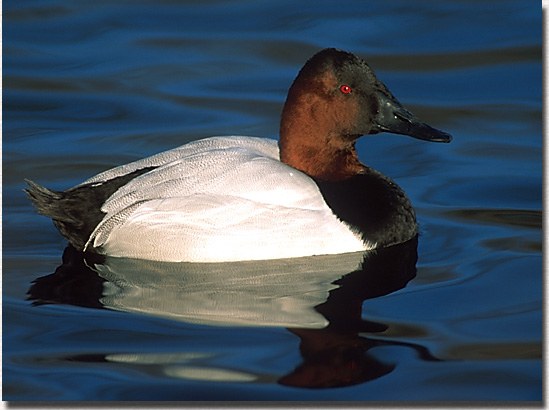
Canvasback
- Habitat
- Prairie marshes and potholes for breeding; large lakes, reservoirs, and coastal bays in winter
- Size
- 19-22 in
- Lifespan
- Wild individuals commonly live several years, with banding records documenting some living close to two decades.
- Diet
- Aquatic plant tubers and seeds, especially wild celery, plus mollusks and aquatic invertebrates
About the Canvasback
The Canvasback is the largest diving duck in North America, immediately recognizable by its long, sloped profile running from the tip of the bill to the crown, without the forehead bump seen in similar species. Males show a bright chestnut-red head, black breast, and pale grayish body, while females share the same distinctive head shape in softer brown tones, and both sexes have a solid black bill lacking any pale markings.
It breeds in prairie pothole wetlands across the northern Great Plains and Canada, a habitat type that has been heavily drained and converted to agriculture over the past century. In Oklahoma it occurs mainly as a migrant and winter visitor, found on large lakes and reservoirs where it often associates with other diving ducks and American Coots. Its population fluctuates with drought conditions and wetland loss on its northern breeding grounds, making it sensitive to prairie habitat conditions in a way that has drawn close attention from waterfowl managers.
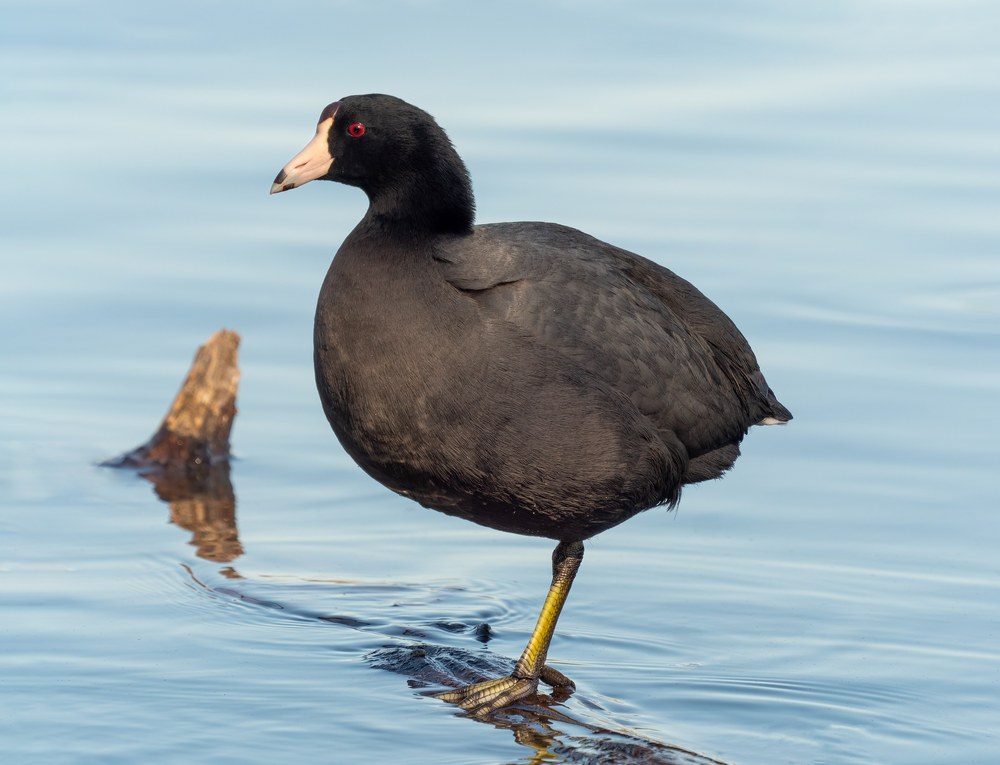
Canvasbacks dive underwater, sometimes to considerable depth, to pull up the tubers and roots of wild celery and other submerged aquatic vegetation; the species' scientific name, valisineria, directly references its dependence on this plant. It also eats snails, clams, and aquatic insects, particularly during the winter months when plant tubers may be less available, and it is a strong, fast flier capable of long nonstop migratory flights. American Coots, which cannot dive nearly as deep or effectively, are notorious for waiting near a foraging Canvasback and stealing food it brings to the surface, a form of kleptoparasitism that costs the duck a real share of the energy it works hard underwater to obtain.
Females build a floating platform nest anchored to marsh vegetation over water, weaving in reeds and cattail stems as the water level rises around it. Canvasback hens are also known to occasionally lay eggs in the nests of other Canvasbacks, or even other duck species, a mild form of brood parasitism seen in several duck species that may help spread reproductive risk. Courting males give a soft, cooing call while performing head-throw and neck-stretching displays on the water, a relatively subdued courtship compared with the flashier displays of some other diving ducks, and the species will occasionally hybridize with the closely related Redhead where the two overlap on shared breeding marshes.
The bird's historic reliance on wild celery beds made it a prized, richly flavored game bird through the 19th and early 20th centuries, prized on restaurant menus in cities like Baltimore and Washington, until overhunting and wetland loss led to stricter regulation and improved habitat protection. Modern waterfowl managers now track Canvasback numbers closely as an indicator of prairie wetland health, since the species responds quickly, in both directions, to changes in pothole water levels from one year to the next, and annual aerial breeding-population surveys of prairie Canada and the northern Plains remain a key tool for monitoring its status. Wintering flocks on large Oklahoma reservoirs often raft together in tight, mixed groups with scaup and Redheads, diving in loose synchrony and providing some of the more reliable inland opportunities to study this otherwise prairie- and coastal-associated species up close. The male's soft courtship calls and stiff-necked posturing typically peak before spring migration north, so wintering flocks on Oklahoma waters sometimes offer a preview of pairing behavior that will be completed once birds reach the breeding marshes, a useful reminder that much of a duck's social life is already underway well before it reaches its nesting grounds.
Frequently asked questions
Why is it called a Canvasback?
Its pale grayish-white back feathers were thought to resemble canvas cloth, giving rise to the common name.
Is the Canvasback common in Oklahoma?
It occurs mainly as a migrant and winter visitor on large lakes and reservoirs, rather than as a breeding species.
What makes its head shape distinctive?
It has a long, sloping forehead and bill that form one continuous line, unlike the rounder heads of most other diving ducks.
What's the biggest threat to Canvasback populations?
Loss and degradation of prairie pothole breeding wetlands and the submerged aquatic vegetation beds it depends on for food.
Do other birds steal food from Canvasbacks?
Yes, American Coots often wait nearby and snatch aquatic vegetation a diving Canvasback brings to the surface, a form of food theft called kleptoparasitism.
Where to find it
This species favors wetland habitat. See real Oklahoma locations on the Habitats map.