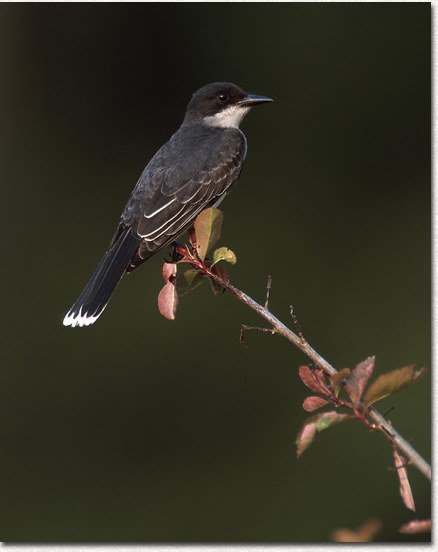
Eastern Kingbird
- Habitat
- Open woodlands, clearings, rural roadsides, farms, orchards, field edges, streams, suburbs; often near water
- Size
- 8–9 in
- Lifespan
- Averages under 3 years, though the oldest banded bird reached about 10 years.
- Diet
- Fruit and insects, often caught by hovering and pouncing
About the Eastern Kingbird
The Eastern Kingbird is a medium-sized flycatcher, 8 to 9 inches long, dressed in slate-gray above and clean white below, with a black tail crisply tipped in white, a marking visible even in flight and useful for quick identification. A concealed reddish-orange crown patch, rarely visible except during aggressive displays, tops off a bird whose upright posture and habit of perching prominently on wires, fence posts, and treetops make it one of the more conspicuous songbirds of open country.
Kingbirds favor open woodlands, clearings, rural roadsides, farms, orchards, field edges, streamsides, and suburban areas, generally staying close to some source of water and open airspace for hunting flying insects. Their habit of perching in plain view on exposed wires and posts, scanning for prey, makes them easy to spot across the agricultural landscapes common throughout Oklahoma.
The diet is a mix of fruit and insects, with insects typically caught on the wing through short hovering flights and sudden pouncing sallies from a perch, a classic flycatching technique. Because flying insect abundance can vary considerably with weather and season, the timing of breeding itself appears closely tied to when insect prey becomes reliably plentiful, ensuring that the demanding job of feeding a nest full of chicks coincides with peak food availability.
True to its name, the Eastern Kingbird is remarkably fearless and aggressive in defense of its nest, routinely harassing hawks, crows, and other birds many times its size that stray too close, and it will not hesitate to dive at humans who approach a nest as well. This bold, almost reckless defensiveness, combined with a fairly short average lifespan under 3 years in the wild (though some individuals reach a decade), has made the species a well-documented example of small-bird aggression toward much larger potential threats. Outside the breeding season, the Eastern Kingbird's personality changes dramatically: after migrating to wintering grounds in South America, it largely abandons its aggressive, territorial habits, switches to a diet dominated by tropical fruit rather than insects, and joins loose, quiet flocks that wander the forest canopy in search of fruiting trees, a striking behavioral shift between the bold, insect-hunting breeder seen across Oklahoma summers and the comparatively passive, frugivorous bird it becomes for the rest of the year.
Frequently asked questions
Why is the Eastern Kingbird considered fearless?
It aggressively harasses much larger birds like hawks and crows that come near its nest, and will even dive at approaching people.
How does the Eastern Kingbird catch insects?
It typically hunts by hovering briefly or making short pouncing flights from a perch to snatch flying insects out of the air.
Why does the Eastern Kingbird time its breeding to insect abundance?
Raising chicks demands a steady supply of insect prey, so nesting appears timed to coincide with periods of peak insect availability.
What is the hidden crown patch on an Eastern Kingbird?
A reddish-orange patch on the crown that's usually concealed and only becomes visible during aggressive or excited displays.
Where to find it
This species favors wetland habitat. See real Oklahoma locations on the Habitats map.