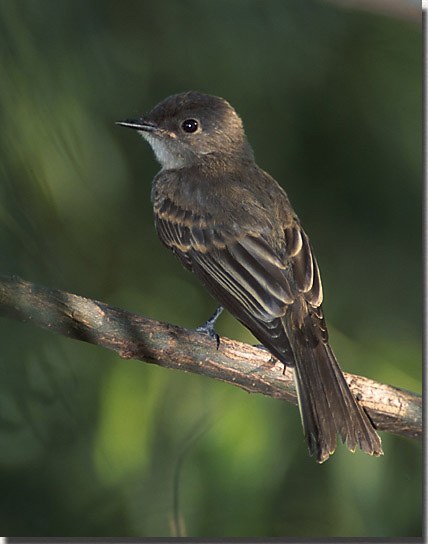
Eastern Phoebe
- Habitat
- Woodlands near streams, suburbs, farmyards, bridges over streams/small rivers, rocky ravines; nests in eaves, rafters, and under bridges
- Size
- 7 in, dull olive-green, no eye ring or wing bars
- Lifespan
- Averages 3-4 years in the wild; the oldest known banded bird reached almost 11 years.
- Diet
- Insects, occasionally small fish and frogs; berries and a few seeds mostly in winter
About the Eastern Phoebe
The Eastern Phoebe is a plain, dull olive-brown flycatcher about 7 inches long, notably lacking the bold eye ring and wing bars found on many similar-looking small flycatchers, which actually makes its plain face one of the better field marks for identification by process of elimination. In fresh fall plumage, it shows a subtle olive wash along the flanks and a pale yellow tinge on the belly, both of which fade with wear over the following months.
Phoebes are strongly tied to water and human structures, typically found in woodlands near streams, suburban yards, farmyards, and especially around bridges spanning streams and small rivers, as well as rocky ravines. This close association with bridges and other overhangs isn't incidental — the species nests directly on eaves, rafters, and the undersides of bridges, tucking a mud-and-moss nest onto a ledge or beam where it's sheltered from rain and largely out of reach of ground predators.
Insects caught on short sallying flights from a low perch make up the great majority of the diet, but the Eastern Phoebe is somewhat more flexible than many flycatchers, occasionally taking small fish or frogs, particularly around the streams and ponds it favors, and turning to berries and a few seeds mainly in winter when flying insects become scarce. This dietary flexibility, unusual among strictly insectivorous flycatchers, likely helps the species survive through colder months when most of its relatives have already migrated much farther south.
One of the most reliable ways to identify a perched Eastern Phoebe is its habit of slowly, deliberately wagging its tail up and down after landing, a distinctive tic not shared by many similar species. Notably tame and often unbothered by human presence, phoebes will nest just feet from doorways, porches, and busy foot traffic provided a suitable ledge is available, making them one of the more approachable flycatchers found around Oklahoma homes and farm buildings. The species also holds a notable place in ornithological history: John James Audubon tied silvered threads to the legs of phoebe nestlings near his home, one of the earliest documented bird-banding studies in North America, and later recorded some of those same individuals returning to nest nearby in following years.
Frequently asked questions
How can you identify an Eastern Phoebe?
Look for a plain olive-brown flycatcher lacking eye rings or wing bars, along with its habit of slowly wagging its tail after landing.
Where does the Eastern Phoebe build its nest?
On eaves, rafters, or the undersides of bridges, often near streams, using a mud-and-moss nest tucked onto a sheltered ledge.
What does the Eastern Phoebe eat besides insects?
It occasionally takes small fish or frogs, and turns to berries and a few seeds mainly in winter when insects are scarce.
Is the Eastern Phoebe afraid of people?
Not particularly — it's considered tame and often nests close to doorways, porches, and other high-traffic areas around buildings.
Where to find it
This species favors wetland habitat. See real Oklahoma locations on the Habitats map.