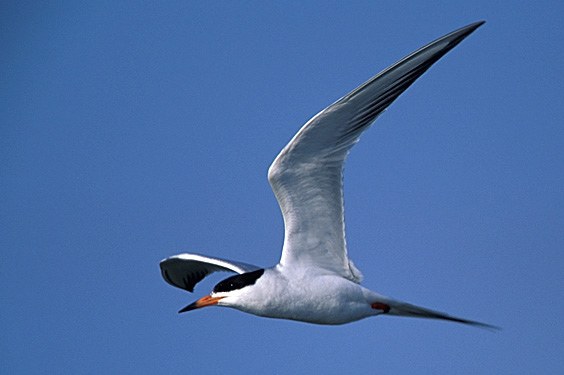
Forster's Tern
- Habitat
- Nests in freshwater marshes and marshy lake edges of southwest Canada/northern US, and in coastal marshes on both the Atlantic and Pacific
- Size
- 14–15 in (wingspan not stated)
- Lifespan
- Generally lives 10-15 years; the oldest documented banded bird reached almost 16 years.
- Diet
- Aquatic invertebrates, insects taken in flight over marshes, also dead fish and live/dead frogs
About the Forster's Tern
Forster's Tern is a mid-sized tern, roughly 14 to 15 inches long, built with the buoyant, angular grace typical of terns hunting over open water and marsh. It is so similar in overall appearance to the widespread Common Tern that the two were not recognized as separate species until 1831, and even experienced birders still rely on subtle differences in bill color, wing pattern, and tail length to tell them apart in the field. Like other terns, it has a slender body, long pointed wings, and a deeply forked tail suited to quick, agile flight.
The species nests in two rather different settings depending on region: freshwater marshes and marshy lake edges across the northern Great Plains and prairie provinces of southwestern Canada and the northern United States, and coastal salt marshes along both the Atlantic and Pacific shorelines. In every case, the birds depend on stands of emergent marsh vegetation, floating mats of dead reeds, or muskrat lodges to support their simple nests just above the waterline, leaving them vulnerable to flooding during storms or unusually high water. Outside the breeding season the species disperses to a broader range of coastal waters, following productive fishing grounds along beaches, bays, and estuaries well beyond the marshes where it raises its young.
Forster's Terns feed by hovering over water and marsh vegetation before plunging down to snatch aquatic invertebrates, and they are especially effective at catching flying insects on the wing as they patrol just above the marsh surface. They will also take dead fish and both live and dead frogs opportunistically, showing more flexibility in diet than some of the more strictly fish-eating terns.
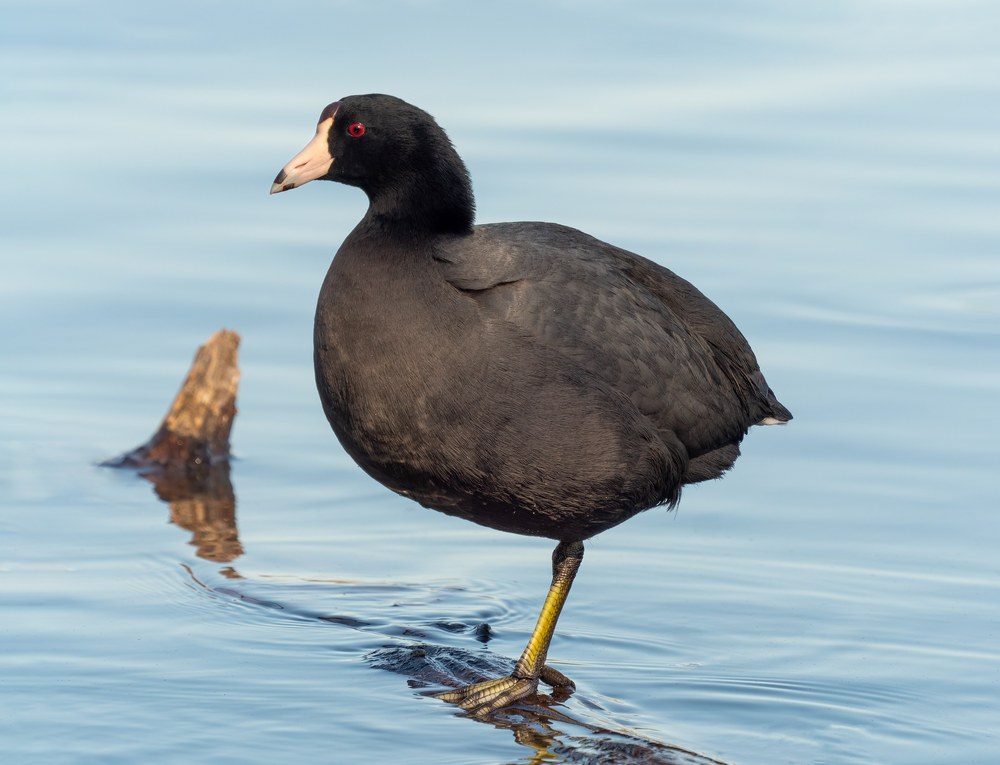
Despite their light build, Forster's Terns are vigorous defenders of their nests, diving repeatedly and calling loudly at intruders that stray too close to a colony. That fierce defense does not always deter other marsh birds looking for a ready-made nest, however: American Coots and Red-necked Grebes occasionally parasitize Forster's Tern nests, laying their own eggs among the tern's clutch or otherwise usurping the site. The birds nest colonially, which offers some safety in numbers even as it concentrates the risks from flooding, predation, and the occasional freeloading neighbor into one vulnerable patch of marsh.
Frequently asked questions
How do you tell a Forster's Tern from a Common Tern?
They look very similar and were not classified as separate species until 1831; birders distinguish them by subtle differences in bill and wing pattern rather than one obvious trait.
Where does the Forster's Tern nest?
It nests in freshwater marshes in the northern US and southwestern Canada as well as in coastal salt marshes along the Atlantic and Pacific.
What does a Forster's Tern eat?
It eats aquatic invertebrates and insects caught in flight over marshes, along with dead fish and live or dead frogs.
Do other birds ever take over Forster's Tern nests?
Yes, American Coots and Red-necked Grebes occasionally parasitize their nests despite the terns' vigorous nest defense.
Where to find it
This species favors wetland habitat. See real Oklahoma locations on the Habitats map.