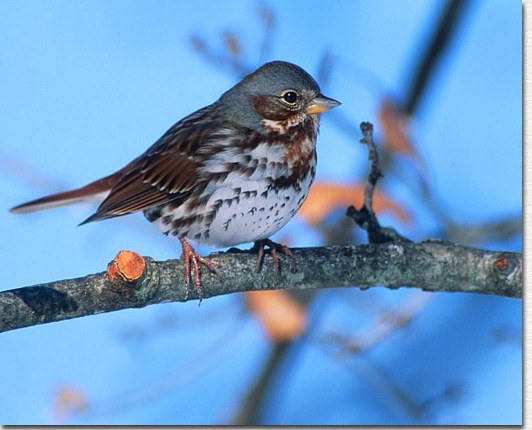
Fox Sparrow
- Habitat
- Dense undergrowth in coniferous/mixed woods, dense thickets, chaparral, hedgerows, brushy streamsides
- Size
- 7 in, one of the larger sparrows
- Lifespan
- Longevity data is limited, but the oldest banded bird on record reached just over 10 years.
- Diet
- Spiders, bugs; nestlings are fed entirely insects; also fruit
About the Fox Sparrow
The Fox Sparrow is one of the larger members of its family, around 7 inches long, with a chunky, robust build that sets it apart from the smaller, slimmer sparrows it often shares habitat with. Its common name refers to the reddish, fox-colored plumage typical of eastern populations, but the species is famously variable across its range: western birds are considerably darker, grayer, or sootier overall and bear surprisingly little resemblance to the rufous eastern birds that gave the species its name. This regional variation is significant enough that ornithologists have long debated whether some populations deserve full species status, and current thinking generally recognizes four distinct groups, often called Red, Sooty, Slate-colored, and Thick-billed, distinguished by overall tone, bill shape, and the extent of streaking below.
Fox Sparrows favor dense, tangled cover, turning up in coniferous and mixed woodland with thick undergrowth, chaparral slopes, hedgerows, and brushy streamside thickets. They are ground-dwellers at heart and, notably, almost never build their nests in trees, preferring instead to tuck them into low shrubs or directly on the ground where dense vegetation offers concealment from predators. A distinctive foraging habit helps identify the species even when it stays hidden: Fox Sparrows use a vigorous two-footed "double-scratch," kicking backward with both feet at once to throw aside leaf litter, a technique shared with several towhee species and audible as a burst of rustling before the bird itself comes into view.
Foraging Fox Sparrows spend much of their time scratching through leaf litter for spiders and other invertebrates, supplementing this animal protein with fruit, especially outside the breeding season. Nestlings are raised on a diet of insects alone, since the fast growth of young songbirds depends on protein-rich food rather than the seeds and fruit adults can fall back on later in the year. In winter, weed and grass seeds become a larger share of the diet, and birds will readily visit brush-pile feeding stations where scattered seed mixes with natural leaf litter.
Behaviorally, Fox Sparrows are typically shy and retiring for most of the year, keeping low in cover and calling more often than they show themselves. That changes during the breeding season, when males can become notably aggressive in defending territory and competing for mates, singing a rich, musical song from a low perch that is often rated among the more melodic songs of any American sparrow. Parents also use a broken-wing display, feigning injury to lure predators away from a nest full of vulnerable young, a common but effective ploy among ground-nesting songbirds.
Longevity data for the species remains limited, but the oldest banded individual on record lived just over 10 years, suggesting a lifespan considerably longer than the few years most wild sparrows typically survive. Many populations migrate substantial distances between breeding grounds in Canada and the northern US and wintering areas across the southern and eastern states, arriving on wintering grounds by working through the same brushy corridors they favor year-round. In Oklahoma the species is essentially a winter visitor, arriving with the first cold fronts of late fall and lingering into early spring in brushy ravines, hedgerows, and overgrown fence lines before departing north again to breed.
Predators of the Fox Sparrow include a range of small hawks, owls, and mammalian nest predators such as raccoons and snakes, and the species' preference for extremely dense cover is thought to be a direct response to this predation pressure rather than simply a feeding preference. Where its range overlaps with the Song Sparrow, observers sometimes confuse the two, but the Fox Sparrow's larger size, grayer head, and heavier, more triangular bill usually settle the question once the two are seen side by side. Winter site fidelity has also been documented in the species, with banded individuals returning to the same wintering thicket in consecutive years, suggesting that once a bird finds a productive patch of brush it will return to it reliably.
Frequently asked questions
Why is it called a Fox Sparrow if some are gray, not reddish?
The name comes from the rufous, fox-colored eastern birds, but western populations are much darker and look quite different from their eastern counterparts.
Where do Fox Sparrows nest?
They nest low in dense shrubs or directly on the ground and almost never build nests in trees.
What do Fox Sparrows eat?
Adults eat spiders and other invertebrates plus fruit, while nestlings are fed entirely insects.
How do Fox Sparrows protect their nests?
Parents use a broken-wing display to feign injury and lure predators away from the nest.
How can you tell a Fox Sparrow is nearby without seeing it?
Listen for a loud, rustling double-scratch as it kicks leaf litter aside with both feet at once while foraging on the ground.
Where to find it
This species favors forest habitat. See real Oklahoma locations on the Habitats map.