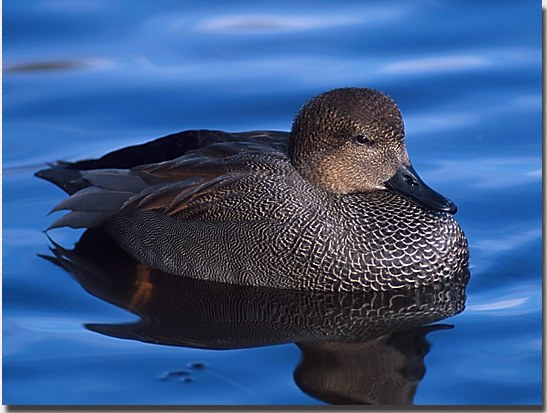
Gadwall
- Habitat
- Marshes, lakes, and reservoirs with abundant submerged and emergent aquatic vegetation
- Size
- 19-23 in
- Lifespan
- Banding records show individuals living to at least 19 years.
- Diet
- Mostly aquatic vegetation, with some aquatic invertebrates added, especially in winter
About the Gadwall
The Gadwall is a medium-sized dabbling duck often described as subtly patterned rather than showy, and sometimes overlooked by beginning birders scanning for more colorful ducks nearby. Males are finely marked with intricate gray vermiculation and a black rear end, while females resemble a female Mallard but are more uniformly patterned with a thinner, orange-edged bill; both sexes show a white patch on the inner wing visible in flight that is a reliable identification feature at any distance. In flight, Gadwalls also show a chestnut-and-black speculum bordered in white, a pattern distinct enough that experienced waterfowl watchers can often identify a flying flock before the birds ever land.
It's found across Oklahoma primarily as a common migrant and winter resident on lakes, reservoirs, and marshes, with a smaller number breeding in the state. It's part of a broader breeding range centered on the prairie pothole region of the northern Great Plains and Canada, and its numbers have generally fared well compared to some other prairie-nesting ducks in recent decades. Wintering flocks in Oklahoma often mix freely with American Wigeon and other dabblers on the same reservoirs, and the two species share enough of a foraging niche that Gadwalls will sometimes pirate vegetation from wigeon just as readily as from diving ducks and coots.
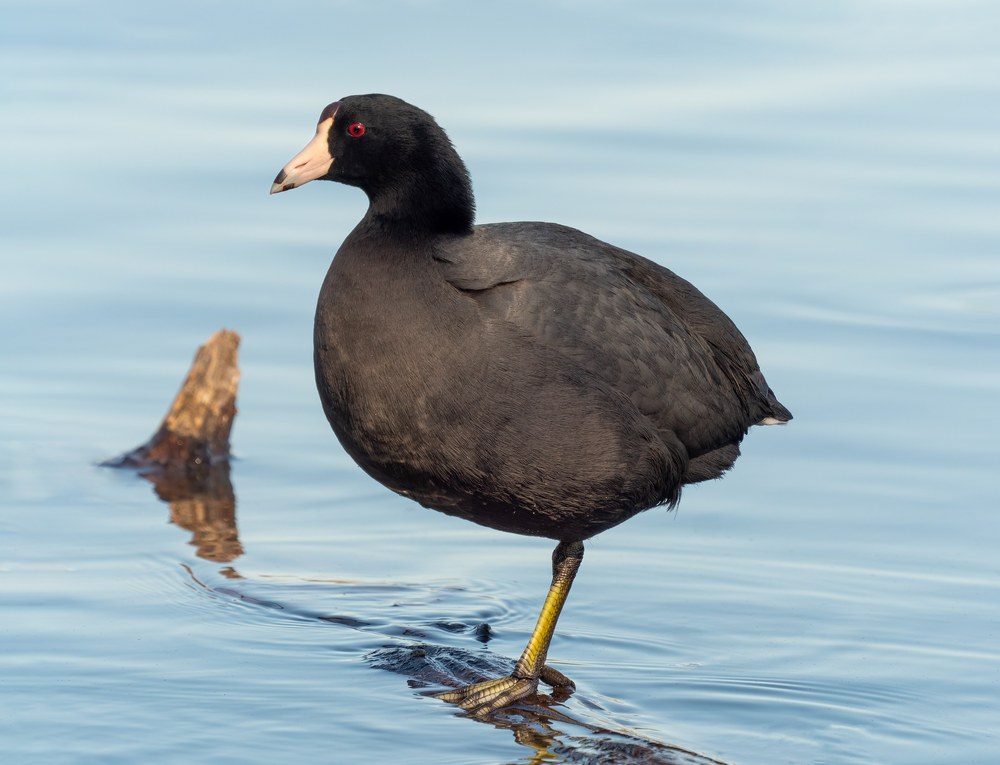
Gadwalls feed mainly by dabbling and up-ending in shallow water to reach submerged vegetation. The species is well known for a food-stealing habit: it often associates closely with diving ducks and American Coots, snatching vegetation those species bring up from depths the Gadwall itself can't reach on its own, a strategy that lets it exploit food resources it couldn't access unaided. Aquatic plants such as pondweed, wigeongrass, and algae make up the great majority of the adult diet, though insects and other invertebrates become more important during the breeding season when females need extra protein for egg production.
It nests on the ground in dense grass, sometimes at some distance from water, well concealed from aerial and ground predators alike. Among dabbling ducks, the Gadwall is unusually reliant on this kind of kleptoparasitism as a foraging strategy, regularly following diving ducks and coots specifically to pirate the aquatic plants they surface with, a niche behavior that supplements its own foraging in vegetation-rich wetlands and has been documented in multiple detailed behavioral studies of mixed waterfowl flocks. Pair formation happens on the wintering grounds and during spring migration, well before birds reach their breeding marshes, so many Gadwalls arrive on nesting territory already paired and ready to begin nesting quickly once conditions allow.
Gadwall populations have generally increased across North America in recent decades, one of the more encouraging trends among dabbling ducks, likely helped by their flexible diet and willingness to use a wide variety of wetland habitats, including many smaller or more disturbed sites that other ducks tend to avoid. This adaptability has made the Gadwall an increasingly important species for waterfowl hunters and wetland managers alike, even though it has historically received less public attention than more colorful ducks such as the Mallard or Wood Duck.
Like many ducks, male Gadwalls undergo a rapid post-breeding molt in mid-to-late summer that leaves them briefly flightless and clad in a drab, female-like eclipse plumage, a vulnerable period during which the birds retreat to dense marsh cover until their flight feathers regrow. Gadwalls are also known to occasionally hybridize with other dabbling ducks, including American Wigeon and Mallard, though such crosses remain uncommon compared to the species' overwhelming tendency to pair within its own kind. Nest predation from raccoons, skunks, and various birds poses a significant threat to ground-nesting females, and hens will sometimes renest later in the season if an early attempt is destroyed, a resilience that helps buffer the population against a single bad nesting attempt.
Frequently asked questions
How can I tell a Gadwall from a female Mallard?
Gadwalls have a thinner, orange-edged bill and a more uniformly patterned body, plus a white wing patch visible in flight that female Mallards lack.
Does the Gadwall steal food from other birds?
Yes, it frequently pirates aquatic vegetation brought to the surface by diving ducks and American Coots, and sometimes American Wigeon as well.
Does the Gadwall breed in Oklahoma?
A small number breed in the state, but it's far more numerous as a migrant and winter resident.
What does the Gadwall eat?
Primarily aquatic plants obtained by dabbling and up-ending in shallow water, with some invertebrates added, especially in colder months and during egg-laying.
When do Gadwalls pair up for breeding?
Pairs typically form on the wintering grounds or during spring migration, so many birds arrive on breeding territory already paired.
Where to find it
This species favors wetland habitat. See real Oklahoma locations on the Habitats map.