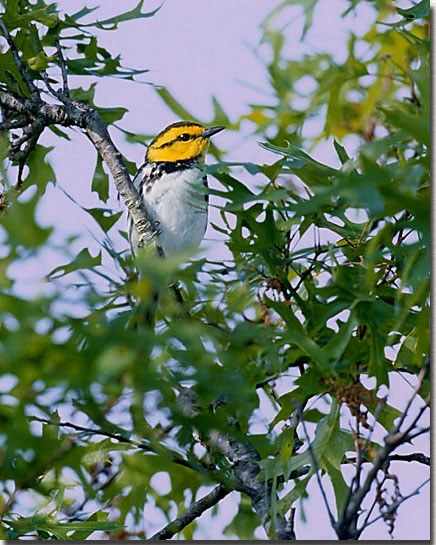
Golden-cheeked Warbler
- Habitat
- Mature Ashe juniper-oak woodlands on breeding grounds in the Texas Hill Country; a rare migrant elsewhere, including occasionally Oklahoma
- Size
- About 4.5-5 inches long, a small warbler
- Lifespan
- Not well documented in detail, but the oldest banded individual on record was at least 10 years, 11 months old, an unusually long life for a small warbler
- Diet
- Insects and spiders gleaned from foliage, especially caterpillars during the breeding season
About the Golden-cheeked Warbler
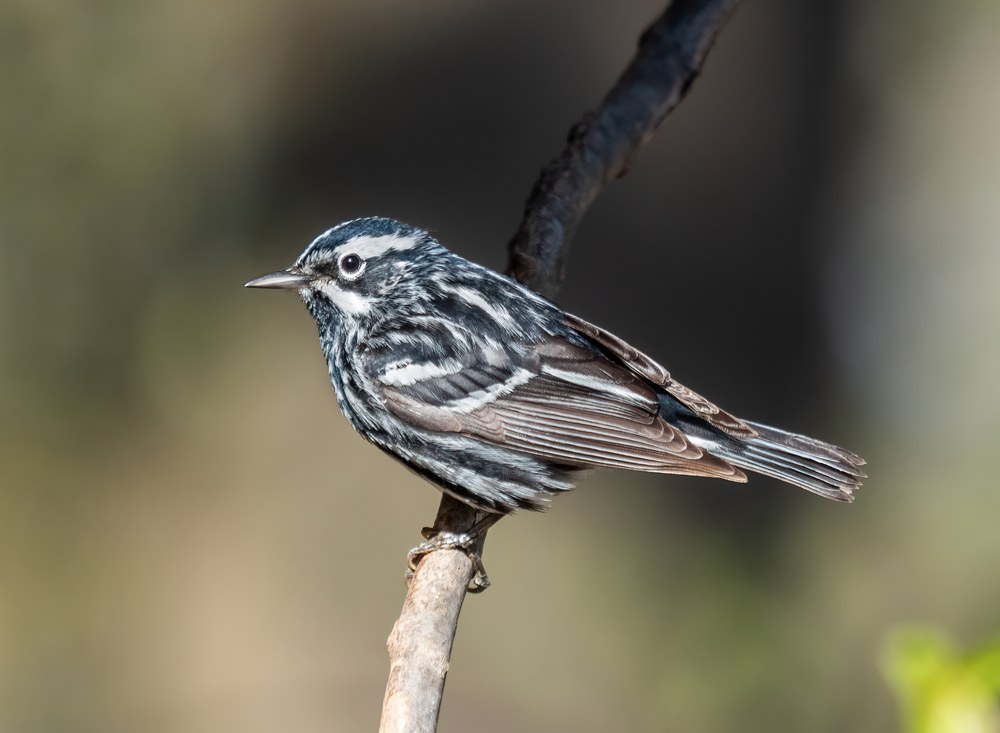
The Golden-cheeked Warbler is a striking small songbird: males show a black throat, back, and crown set against bright yellow cheeks outlined in black, while females and immatures are duller with more olive tones but retain the yellow face pattern. It is the only bird species whose entire breeding range lies within Texas, nesting almost exclusively in mature Ashe juniper woodlands mixed with oaks in the Hill Country region.
This specialization is the core of the bird's conservation story. Golden-cheeked Warblers strip long bark fibers from old-growth Ashe juniper trees to build their nests, a resource found only in juniper stands of a certain age, so the species is tightly bound to a specific, shrinking habitat type. Because of ongoing habitat loss to development, brush clearing, and juniper removal, the species has been federally listed as endangered since 1990. Outside the breeding season it withdraws to pine-oak forests in Mexico and northern Central America, and during migration a small number of individuals wander beyond the core Texas range, with occasional records reported from Oklahoma.
Like most wood-warblers, it forages actively in the outer foliage of trees, hopping along branches and making short flights to glean caterpillars, beetles, and other insects and spiders from leaves and twigs, an important food source for feeding nestlings during the brief spring breeding window.
Pairs are generally monogamous for a season, and males defend juniper-oak territories with a distinctive buzzy song. Because the species depends so heavily on a single, slow-growing habitat type in a limited geographic area, it has become one of the most closely studied and actively managed songbirds in the southern United States, with ongoing land conservation efforts aimed at protecting remaining Hill Country juniper woodlands.
The species' total population is relatively small and closely tracked by biologists, and much of its remaining habitat lies on private ranchland rather than public conservation land, which has made voluntary landowner partnerships and habitat easements central to recovery efforts. Its buzzy, husky song is distinctive among Texas warblers and is one of the main ways researchers survey territories during the brief spring breeding window before males stop singing as regularly. For a birder in Oklahoma, encountering this species at all would be a genuinely rare event tied to migration, since the bird's entire nesting distribution sits well to the south in the Hill Country's juniper-oak canyons.
Frequently asked questions
Why is the Golden-cheeked Warbler considered special among North American birds?
It is the only bird species that breeds exclusively within the state of Texas, nesting in Hill Country Ashe juniper-oak woodlands.
Why is this species endangered?
It depends on mature Ashe juniper for nest material and cover, and much of that old-growth juniper habitat has been cleared or fragmented.
Would you expect to see a Golden-cheeked Warbler in Oklahoma regularly?
No, it is a rare visitor there at best; its core breeding range is well south in central Texas.
What does a Golden-cheeked Warbler build its nest from?
It strips and weaves long bark fibers from old Ashe juniper trees, a material tied directly to older growth stands.
Where to find it
This species favors forest habitat. See real Oklahoma locations on the Habitats map.