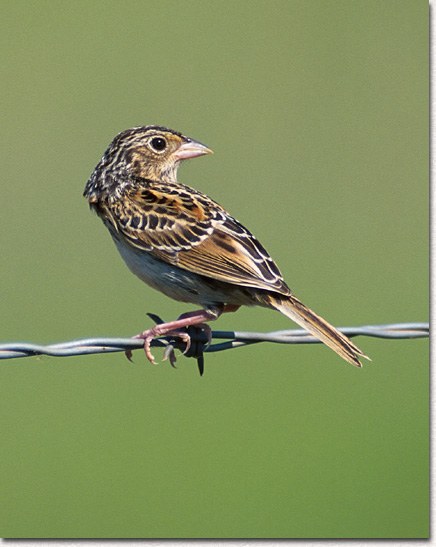
Grasshopper Sparrow
- Habitat
- Prairie grasslands, pastures, old weedy fields, palmetto scrub, grain fields, hayfields — fairly common but secretive, staying in low grasses
- Size
- 4½–5 in
- Lifespan
- Average wild lifespan under 3 years; oldest banded individual reached about 9 years.
- Diet
- Invertebrates, grass and tree seeds
About the Grasshopper Sparrow
The Grasshopper Sparrow is a small, secretive bird, just 4½ to 5 inches long, built with a short tail and a distinctively flat-topped head profile that helps separate it from other grassland sparrows. Its dark crown is split by a thin, pale central stripe, and the upperparts show a rich, dark rufous tone mixed with black and buff streaking that provides excellent camouflage against dried grass. Despite this camouflage, the species is best known for its insect-like, buzzy song, a thin trill that gives the bird its common name and that is often overlooked or mistaken for the sound of an actual grasshopper. The unstreaked, buffy breast further separates it from similar grassland sparrows like the Savannah or Le Conte's Sparrow, both of which show distinct dark streaking below.
This is a bird of open grassland habitats: prairie, pastures, weedy old fields, palmetto scrub, grain fields, and hayfields all support breeding populations, provided the grass is not too tall or too sparse. Grasshopper Sparrows are considered fairly common across much of their range, but their preference for staying low and hidden in the grass, combined with a habit of running rather than flying when disturbed, makes them easy to overlook even where they are present in good numbers. Males typically require a patch of grassland large enough to hold a full territory, and small, fragmented remnants of prairie often fail to support breeding pairs even when the vegetation itself looks otherwise suitable.
The diet centers on invertebrates gleaned from the ground and low vegetation, supplemented by grass and tree seeds, a fairly typical mix for a grassland-dwelling sparrow that depends on insects during the energy-intensive breeding season and shifts toward more seeds when insect availability drops. True to its name, grasshoppers and other large insects make up an outsized share of the food delivered to nestlings, and parents will beat larger prey against the ground or a perch to remove wings and legs before feeding it to young in the nest.
Grasshopper Sparrow populations fluctuate considerably from year to year at the local level, a pattern tied closely to changes in grassland management and weather. Because the species nests directly on the ground in grass and hayfields, its nests are especially vulnerable to agricultural mowing, and a substantial number are destroyed annually when hay or grain fields are cut during the breeding season. Males sing from low grass stems or fence posts, and unlike many songbirds, some individuals produce a second, more complex flight song in addition to the simple buzzy trill used to declare a territory, often delivered at dusk in a fluttering display flight over the breeding territory.
This vulnerability to routine farming practices, combined with the ongoing loss of native grassland habitat across North America, has made the Grasshopper Sparrow a species of particular conservation concern in many parts of its range, even though it can still be locally common where suitable grassland persists. In Oklahoma, the species remains a fairly widespread summer breeder wherever native or restored prairie and pastureland provide enough undisturbed grass cover to raise a brood before mowing season begins.
One subspecies, the Florida Grasshopper Sparrow, is a non-migratory resident of Florida's dry prairie and has become critically endangered, reduced to a small remnant population through a combination of habitat loss and increased flooding of its specialized prairie habitat, making it one of the most at-risk birds in the continental United States. Populations elsewhere in the species' broader range, including Oklahoma's tallgrass and mixed-grass prairies, remain far more secure, though they still face steady pressure from the conversion of grassland to intensive row-crop agriculture. Snakes, small mammals, and various grassland-hunting raptors are the primary predators of eggs, nestlings, and adults alike.
Frequently asked questions
Why is it called a Grasshopper Sparrow?
It gets its name from its thin, buzzy, insect-like song, which resembles the sound of a grasshopper.
Where do Grasshopper Sparrows live?
They live in open grasslands such as prairies, pastures, weedy fields, and hayfields, staying low and hidden in the grass.
What threatens Grasshopper Sparrow nests?
Because they nest on the ground in fields, many nests are destroyed each year by agricultural mowing.
What do Grasshopper Sparrows eat?
They eat invertebrates, especially grasshoppers and other large insects, as well as grass and tree seeds.
Do Grasshopper Sparrows need large fields to breed?
Generally yes, males typically need a sizable patch of grassland to hold a territory, so small fragmented prairie remnants often go unused.
Where to find it
This species favors grassland habitat. See real Oklahoma locations on the Habitats map.