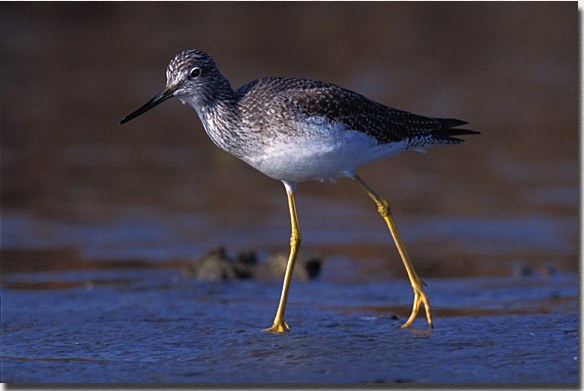
Greater Yellowlegs
- Habitat
- Mudflats, marshes, flooded fields, and shallow ponds during migration and winter; breeds in boreal bogs and muskeg far to the north
- Size
- About 11-14 inches long, the larger of the two yellowlegs species
- Lifespan
- A specific banding longevity record does not appear to be well documented for this species; based on related shorebirds, individuals likely can live at least several years, with the true upper limit probably higher than currently confirmed
- Diet
- Aquatic insects, small fish, and crustaceans
About the Greater Yellowlegs
The Greater Yellowlegs is a tall, slender shorebird with long, bright yellow legs, a slightly upturned, fairly long bill, and mottled gray-brown upperparts that turn more heavily barred in breeding plumage. It is often confused with the smaller, more compact Lesser Yellowlegs, but the Greater's noticeably longer, slightly upturned bill and louder, more insistent three-note call help separate the two in the field.
Greater Yellowlegs breed in wet boreal forest openings and muskeg across Canada and Alaska, well outside Oklahoma, but the state sees them regularly as a migrant and occasional winter visitor at wetlands, flooded fields, sewage lagoons, and shallow lake edges as birds move between breeding grounds and wintering areas that stretch from the southern United States to South America.
Foraging Greater Yellowlegs are active and visually distinctive, often running through shallow water with the bill swept side to side or dashed forward to snatch small fish, aquatic insects, and crustaceans. This more predatory, fish-chasing foraging style, sometimes involving cooperative herding of small fish into shallows, sets it apart from many other shorebirds that simply probe mud for buried invertebrates.
The species nests on the ground in boreal wetlands, and adults are notably vocal and vigilant near the nest, readily giving loud alarm calls that alert other wetland birds to approaching predators, a habit that has earned yellowlegs the informal reputation among birders as one of the more effective sentinel species of open wetlands. Because it breeds in such remote, hard-to-access habitat, much less is known about its breeding biology and survival rates than for many more accessible North American shorebirds.
Outside the breeding season, Greater Yellowlegs winter across a very broad range, from the coastal and southern United States all the way to southern South America, and Oklahoma's wetlands serve as an important stopover for birds covering this long journey twice a year. Flocks are often loose and mixed with other shorebird species, though Greater Yellowlegs tend to keep some distance from one another while foraging compared with more tightly packed species like dowitchers. Its combination of wariness, loud calls, and habit of feeding somewhat apart from other shorebirds makes it one of the easier species to pick out even in a crowded, mixed flock at a muddy wetland edge.
Frequently asked questions
How can you tell a Greater Yellowlegs from a Lesser Yellowlegs?
The Greater is noticeably larger with a longer, slightly upturned bill and a louder, more insistent call.
Does the Greater Yellowlegs breed in Oklahoma?
No, it breeds far to the north in Canadian and Alaskan boreal wetlands; Oklahoma sees it mainly as a migrant and occasional winter visitor.
What is unusual about how Greater Yellowlegs feed?
They often actively chase small fish through shallow water, sometimes sweeping the bill side to side, rather than only probing mud like many shorebirds.
Why are yellowlegs considered good wetland sentinels?
They are alert and vocal, quickly giving loud alarm calls that warn other wetland birds of approaching predators.
Where to find it
This species favors wetland habitat. See real Oklahoma locations on the Habitats map.