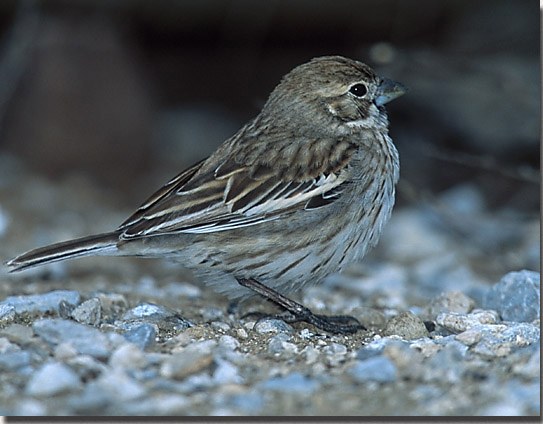
Lark Bunting
- Habitat
- Shortgrass and mixed-grass prairie, including the western Oklahoma Panhandle during the breeding season
- Size
- About 5.5-7 inches long
- Lifespan
- The oldest banded individual on record was at least 4 years, 10 months old; most wild individuals likely live only a few years
- Diet
- Seeds and insects, with insects especially important during the breeding season
About the Lark Bunting
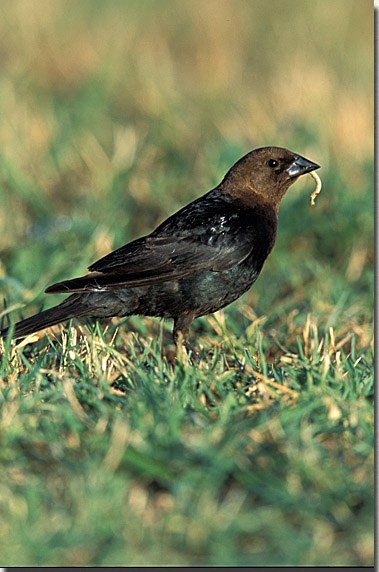
The breeding male Lark Bunting is a striking, almost entirely black bird set off by a bold white patch in the wing, a pattern unlike any other North American sparrow-like bird. Females and non-breeding males, however, are streaky brown and far less conspicuous, blending closely with the dry grassland they inhabit, and a male molting out of breeding plumage in late summer can look mottled and patchy as black feathers are gradually replaced by browner ones. It is closely related to the sparrows despite its bunting name, and it is the official state bird of Colorado.
Lark Buntings breed across the shortgrass and mixed-grass prairies of the central and southern Great Plains, a range that reaches into the western Oklahoma Panhandle, where suitable open grassland persists. Outside the breeding season, flocks move south and winter across parts of the southwestern United States and northern Mexico, often gathering in large, loosely coordinated flocks on wintering grounds and during migration, sometimes numbering in the hundreds as they move across open rangeland and agricultural fields in search of seed.
Diet shifts with the season: birds eat more insects, especially grasshoppers and beetles, during the breeding season when protein demands are high for raising young, then rely more heavily on grass and weed seeds during migration and winter. They forage mostly on the ground or low in grass and shrub cover typical of open prairie, often walking rather than hopping as they search for food between clumps of native grass.
Male Lark Buntings perform a distinctive display flight, rising steeply from the ground on rapid wingbeats before gliding down on stiffly held wings while singing, a courtship display used to advertise territory across open, largely treeless grassland where a high song perch is often unavailable. Because the species depends on large, intact tracts of native prairie, its populations have shown significant long-term declines linked to grassland habitat loss and conversion to cropland across much of the Great Plains, making it a species of conservation concern in several states within its range.
Lark Buntings are also known for somewhat nomadic settlement patterns from year to year, with breeding numbers at a given site sometimes varying considerably depending on rainfall and resulting grassland productivity, so a location with abundant birds one summer may host far fewer the next. This nomadism appears to be a genuine adaptation to the boom-and-bust nature of Great Plains rainfall, letting the species track patches of productive grassland across a wide geographic area rather than committing to the same breeding site regardless of local conditions. Outside the breeding season, flocks can number in the hundreds or more, moving together across open country in search of seed-rich fields, and the species' striking black-and-white male plumage combined with this unpredictable, weather-driven abundance makes it a memorable sight for visitors to Oklahoma's Panhandle grasslands in a good year.
The male's song, delivered both during the display flight and occasionally from a low perch, combines a jumble of buzzy trills and clear notes distinct from the songs of most other grassland sparrows and buntings sharing the same open habitat. Predators include a range of grassland-hunting hawks, snakes, and small mammals that raid the shallow, grass-lined nest built directly on the ground, and nest success in a given year often tracks vegetation density, since thicker grass cover generally affords better concealment from these threats. Little geographic variation is recognized across the species' range, unlike some of the widely distributed sparrows it associates with, and the striking, uniform black-and-white male plumage remains essentially the same whether a bird is breeding in eastern Colorado or the Oklahoma Panhandle.
Frequently asked questions
What state bird is the Lark Bunting?
It is the official state bird of Colorado.
Do male and female Lark Buntings look different?
Yes, breeding males are mostly black with a white wing patch, while females are streaky brown and much less conspicuous.
Where in Oklahoma would you look for a Lark Bunting?
In the western Panhandle, where remaining shortgrass and mixed-grass prairie habitat supports breeding birds.
Why do male Lark Buntings perform flight displays instead of singing from a perch?
Open prairie habitat often lacks tall perches, so males rise and glide on stiff wings while singing to advertise territory.
Why do Lark Bunting numbers vary so much from year to year at the same location?
The species is somewhat nomadic, tracking rainfall and grassland productivity, so a site with abundant birds one summer may have far fewer the next.
Where to find it
This species favors grassland habitat. See real Oklahoma locations on the Habitats map.