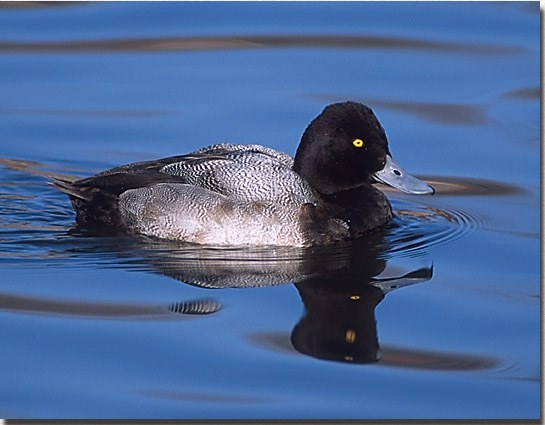
Lesser Scaup
- Habitat
- Lakes, ponds, marshes, and bays, breeding in prairie and boreal wetlands farther north
- Size
- About 15.5-18 inches long
- Lifespan
- The oldest banded individual on record was at least 18 years old
- Diet
- Aquatic invertebrates such as mollusks and insects, along with some aquatic plant material
About the Lesser Scaup
The Lesser Scaup is a medium-sized diving duck. Breeding males show a dark head with a subtle purplish sheen, a black breast, pale gray back, and white flanks, while females are brown overall with a bold white patch at the base of the bill. It closely resembles the larger Greater Scaup, and the two are best separated by subtle differences in head shape and shape of the white wing stripe, a common identification challenge even for experienced birders; the Lesser Scaup's head typically shows a slight peak toward the rear of the crown, giving it a more angular profile than the smoother, rounder head of its larger relative.
Lesser Scaup breed mainly in prairie potholes and boreal wetlands across the northern Great Plains, Canada, and Alaska, then winter widely across the United States, including on lakes and reservoirs in Oklahoma, where flocks can gather in substantial numbers during migration and winter. It is generally considered the most abundant diving duck species in North America, and its breeding distribution overlaps broadly with several other prairie-nesting ducks, though Lesser Scaup tend to nest somewhat later in the season and closer to open water than dabbling ducks sharing the same wetlands.
As a diving duck, it feeds by swimming underwater to reach the bottom of lakes and ponds, where it forages for aquatic invertebrates such as small clams, snails, and aquatic insect larvae, along with some seeds and vegetation of aquatic plants. This diet contrasts with dabbling ducks like the Green-winged Teal, which feed mainly at or near the surface rather than diving to the bottom. Dives typically last well under a minute, and a feeding flock will often dive in loose synchrony, with several birds disappearing beneath the surface at once before popping back up scattered across the same patch of water.
Lesser Scaup populations have declined significantly since the late twentieth century, and researchers have proposed several contributing factors, including changes in the abundance and quality of invertebrate prey on both breeding and wintering grounds, wetland habitat loss, and shifts in the timing of migration relative to food availability. This decline has made the species a focus of long-term waterfowl monitoring and habitat research across its range, with some studies specifically examining whether declining body condition in females arriving on the breeding grounds may be reducing nesting success.
During migration, Lesser Scaup rely on a network of staging lakes and reservoirs to rest and refuel, and Oklahoma's larger lakes can host substantial numbers of the species during spring and fall passage. Flocks are often tightly packed on open water and can include mixed groups with other diving ducks such as Ring-necked Ducks or Redheads, requiring careful attention to head shape, bill pattern, and the extent of white in the wing to confirm identification among these similar-looking diving species. Courtship displays, including head-throwing and soft whistled calls from males, often begin on these wintering and staging grounds well before birds depart for their northern breeding territories.
Hens build their nests directly on the ground, usually well concealed among grasses close to water, and typically do not begin nesting until relatively late in spring compared to many other prairie-nesting ducks, timing that may help ensure aquatic invertebrate prey is abundant enough to support both the incubating female and, later, her rapidly growing brood. Ducklings are precocial, capable of swimming and diving for their own food within a day of hatching, though they remain flightless and vulnerable to predators such as pike, snapping turtles, and gulls for several weeks. Like many diving ducks, Lesser Scaup must patter across the water for a running start before becoming airborne, a takeoff style shared with several related diving species and quite different from the near-vertical jump takeoff typical of dabbling ducks.
Frequently asked questions
How do you tell a Lesser Scaup from a Greater Scaup?
They are very similar, but subtle differences in head shape and the extent of white in the wing stripe help separate the two species.
How does the Lesser Scaup find its food?
It dives underwater to the bottom of lakes and ponds to find aquatic invertebrates like clams, snails, and insect larvae.
Is the Lesser Scaup a common duck in North America?
Yes, it is generally considered the most abundant diving duck species on the continent, though populations have declined in recent decades.
Where would you see Lesser Scaup in Oklahoma?
On lakes and reservoirs, mainly during migration and winter, since the species breeds much farther north.
Do Lesser Scaup dive in groups?
Yes, feeding flocks often dive in loose synchrony, with several birds submerging together before surfacing scattered across the same area.
Where to find it
This species favors wetland habitat. See real Oklahoma locations on the Habitats map.