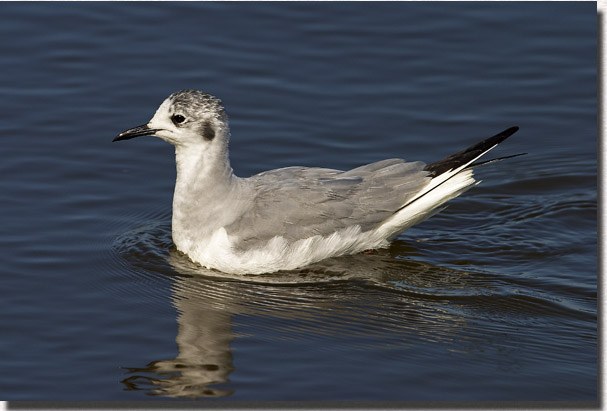
Little Gull
- Habitat
- Lakes, bays, and estuaries; a rare, scattered visitor across most of North America
- Size
- About 10-11.4 inches long, the smallest gull species in the world
- Lifespan
- The oldest known banded individual reached at least 20 years, 11 months old, recorded in Finland
- Diet
- Small fish and aquatic insects picked from the water's surface, plus insects caught in flight
About the Little Gull
The Little Gull lives up to its name as the smallest gull species on Earth, noticeably more delicate and tern-like in flight than most other gulls. Breeding adults show a black hood, pale gray upperparts, and a distinctive dark underwing that contrasts with the white trailing edge of the wing, visible as the bird flies overhead, a helpful field mark since the species can otherwise resemble the more common Bonaparte's Gull.
This is primarily a Eurasian species, breeding across parts of northern Europe and Asia, with only a small, irregular nesting population near the Great Lakes and Hudson Bay in North America. Elsewhere on the continent, including in Oklahoma, it occurs as a genuine rarity, typically found singly among flocks of the more numerous Bonaparte's Gull on lakes, reservoirs, or coastal waters, and any sighting is considered notable enough to be reported to regional birding groups.
Its feeding technique often looks more like a tern's than a typical gull's: Little Gulls pick small fish and aquatic insects directly from the water's surface while in flight, and they also sally up to catch flying insects in the air, a light, buoyant foraging style suited to its small size and long, pointed wings.
Because the North American nesting population is so small and scattered, with pairs appearing and disappearing from particular sites unpredictably from year to year, researchers suspect the continent's breeding population may not be fully self-sustaining and could depend partly on occasional birds straying over from the larger Eurasian population. This combination of rarity and unpredictable occurrence makes any Little Gull sighting in an inland state like Oklahoma a genuinely notable birding event.
Like many gulls, Little Gulls take a couple of years to reach full adult plumage, passing through juvenile and immature stages marked by variable dark markings on the head, back, and wings that differ noticeably from the clean black-hooded adult. Most North American reports away from the small breeding areas occur during migration or winter, when individuals join flocks of the more numerous Bonaparte's Gull on lakes and reservoirs, and careful comparison of size, wing pattern, and underwing color remains the most reliable way to confirm an identification.
Frequently asked questions
Is the Little Gull really the smallest gull species?
Yes, it holds the distinction of being the smallest gull species in the world.
Is the Little Gull native to North America?
It is primarily a Eurasian species, with only a small, irregular breeding population near the Great Lakes and Hudson Bay in North America.
How does a Little Gull typically feed?
It picks small fish and insects from the water's surface in flight and also catches flying insects, in a light, tern-like style.
How likely is it to see a Little Gull in Oklahoma?
Very unlikely; it is a genuine rarity there, usually found singly within flocks of the more common Bonaparte's Gull.
Where to find it
This species favors wetland habitat. See real Oklahoma locations on the Habitats map.