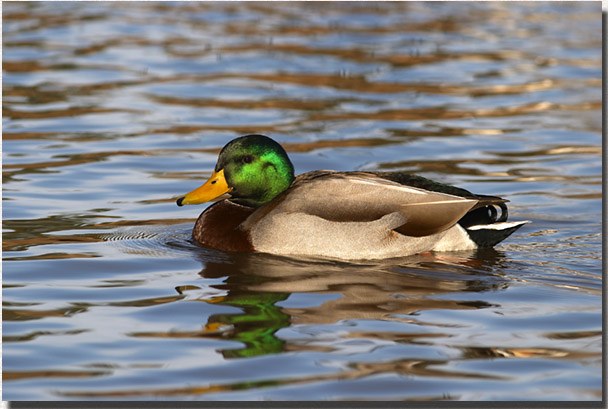
Mallard
- Habitat
- Abundant throughout the Northern Hemisphere; shallow fresh/brackish water — marshes, swamps, wetlands, ponds, lakes; avoids fast water
- Size
- 18–27 in
- Lifespan
- Typical wild lifespan is 3-5 years, though exceptional banded individuals have lived over 27 years.
- Diet
- Seeds/shoots of sedge, grass, aquatic vegetation, grain, acorns; insects, aquatic invertebrates
About the Mallard
The Mallard is the duck most people picture when they hear the word "duck," and for good reason: it is the ancestor of nearly every domestic duck breed except the Muscovy, and its genes run through countless park-pond hybrids that confuse casual birders every year. A breeding-plumage male is unmistakable, with a glossy bottle-green head, a crisp white ring around the neck, a rich chestnut breast, soft gray flanks, and a curled black feather or two at the base of the tail. Females are mottled brown from head to tail, patterned for camouflage on a ground nest, but both sexes show an iridescent blue speculum bordered in white on the wing, visible whether the bird is swimming, standing, or in flight. The orange-and-black bill of the female contrasts with the male's plain yellow bill, another useful field mark once the birds are close enough to compare.
Few ducks tolerate people, weather, or habitat change as well as the Mallard. It turns up on farm ponds, city park lagoons, roadside ditches, coastal marshes, and slow rivers across the entire Northern Hemisphere, and it is just as comfortable dabbling in a suburban retention pond as in a remote prairie wetland. This adaptability, more than any other trait, explains why it is the most abundant and widely recognized duck on the continent, and why it is often the first waterfowl species a beginning birder learns to identify with confidence.
Mallards are dabblers rather than divers: they tip forward with tails in the air to reach seeds, aquatic plants, grain, and acorns just below the surface, and they happily forage in flooded fields and even backyard lawns. Insects and other invertebrates round out the diet, especially for ducklings that need extra protein to grow quickly, and adult birds will readily take handouts of bread or grain from people at park ponds, though natural forage remains healthier for them.
A hen builds her nest on the ground near water, hidden in grass or brush, and incubates her clutch alone while the drake takes no part in raising the young. After breeding, males molt out of their bright plumage into a drab, female-like "eclipse" plumage and become flightless for about 32 days while new flight feathers grow in; females go through a similar flightless molt later in the season. During this vulnerable stretch, birds stick to dense cover and open water to avoid predators. Despite the species' overall success, individual mortality is high enough that the typical wild Mallard lives only 3 to 5 years, even though banding records have documented a handful of exceptional individuals surviving more than 27 years.
Frequently asked questions
Do male and female Mallards look different?
Yes, males have a glossy green head, white neck ring, and chestnut breast, while females are mottled brown all over, though both sexes share a blue speculum patch on the wing.
How long do Mallards usually live?
Most survive only 3 to 5 years in the wild, though one exceptional banded individual lived more than 27 years.
Why do male Mallards look drab in late summer?
After breeding they molt into a duller, female-like "eclipse" plumage and are briefly flightless while growing new flight feathers.
What do Mallards eat?
Mostly plant material such as seeds, aquatic vegetation, grain, and acorns, along with insects and other invertebrates.
Where to find it
This species favors wetland habitat. See real Oklahoma locations on the Habitats map.