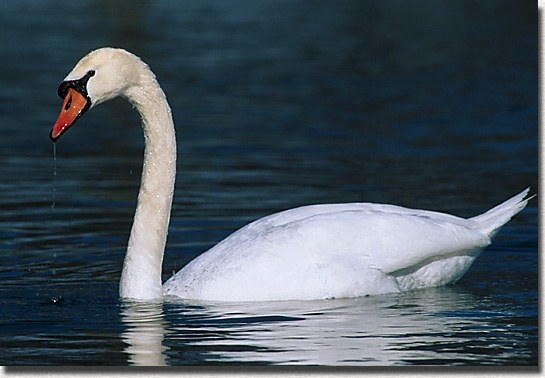
Mute Swan
- Habitat
- Lakes, ponds, slow-moving rivers, and coastal bays; an introduced European species with established feral populations in parts of North America
- Size
- About 59-63 inches long, one of the heaviest flying birds in North America
- Lifespan
- The oldest known Mute Swan in North America reached at least 26 years, 9 months old; a European individual is documented to have lived slightly past 40 years
- Diet
- Aquatic vegetation, supplemented by some small invertebrates
About the Mute Swan
The Mute Swan is a large, all-white swan with an orange bill marked by a prominent black knob at the base, and a distinctive habit of holding its neck in a graceful S-curve with the bill often angled downward, in contrast to the straighter neck posture of native North American swans. Its great size and pure white plumage make it one of the most instantly recognizable waterbirds wherever it occurs.
Originally native to Europe and parts of Asia, the Mute Swan was introduced to North America in the 1800s as an ornamental bird for parks and estates, and escaped or released individuals subsequently established free-living, breeding feral populations in parts of the northeastern and Great Lakes United States. It is not native to Oklahoma, and any individuals seen in the state are typically escapees from captivity or wanderers from established feral populations elsewhere rather than part of a self-sustaining wild population there.
Mute Swans feed mainly by grazing and tipping up to reach aquatic vegetation growing underwater, using their long neck to reach plants beyond the range of surface-feeding ducks, and they supplement this largely plant-based diet with occasional small invertebrates. A single swan can consume a very large quantity of aquatic vegetation each day, and in areas with dense feral populations this heavy grazing pressure has raised ecological concerns about competition with native waterfowl and damage to submerged aquatic plant beds.
Despite its name, the Mute Swan is not actually silent, producing various grunts, hisses, and snorting sounds, though it is generally quieter than the loud trumpeting calls of native North American swan species. Pairs are strongly territorial and can be notably aggressive in defending nesting areas, sometimes displaying threateningly toward people, pets, or other waterfowl that approach too closely, a behavior well documented in the feral populations established across parts of the northeastern United States.
Because Mute Swans are non-native and can be highly aggressive toward native waterfowl, several states have implemented management programs aimed at controlling feral population growth in areas where the species has become established, out of concern for its effects on native wetland birds and aquatic vegetation. In Oklahoma, the Mute Swan is not part of the established avifauna, and any individual encountered on a local pond or lake almost certainly originated from a private waterfowl collection rather than from a self-sustaining regional population.
Frequently asked questions
Is the Mute Swan native to North America?
No, it is native to Europe and Asia and was introduced to North America in the 1800s as an ornamental bird, later establishing feral populations in some regions.
Is the Mute Swan actually silent?
No, despite its name it can grunt, hiss, and snort, though it is generally quieter than native North American swan species.
Would a Mute Swan in Oklahoma be part of a wild population?
No, it would most likely be an escapee or wanderer from captivity or an established feral population elsewhere, since Oklahoma has no native or self-sustaining feral population.
How aggressive are Mute Swans around their nests?
Pairs are strongly territorial and can behave aggressively toward people, pets, or other waterfowl that come too close to a nest.
Where to find it
This species favors wetland habitat. See real Oklahoma locations on the Habitats map.