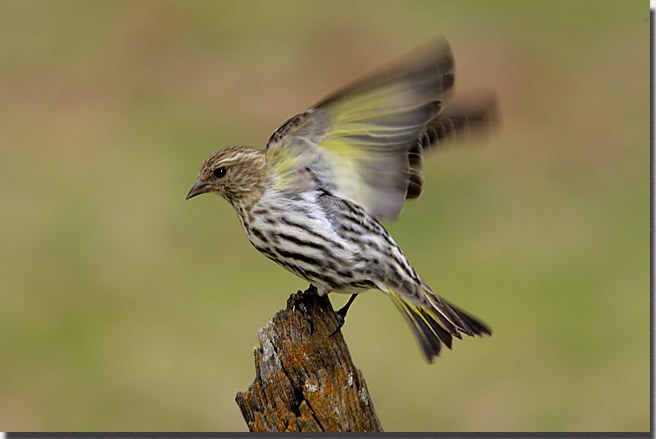
Pine Siskin
- Habitat
- Coniferous forests, mixed woodlands, alder groves, shrubs, fields, feeders
- Size
- 4.5–5 in
- Lifespan
- Usually lives only a few years in the wild; the oldest banded individual on record reached about 9 years.
- Diet
- Insects, seeds (deciduous/coniferous trees), forbs, grass, floral buds, nectar, sap
About the Pine Siskin
The Pine Siskin is a small, heavily streaked brown finch, easy to overlook in a mixed flock until it flashes small patches of yellow at the base of its wings and tail, visible mainly in flight or when the wings are spread during a display or squabble at a feeder. Its notched tail and thin, pointed bill, more slender than the stout conical bill of most finches, help separate it from similar streaky sparrows and finches at a glance, once an observer knows to look for the shape of the bill. The amount of yellow in the plumage varies noticeably between individuals, and some birds show so little that they can be mistaken for a plain streaky sparrow until they call or fly.
Siskins favor coniferous and mixed woodlands, alder groves, weedy fields, and shrubby edges, and they readily discover backyard feeders, showing a particular fondness for nyjer or thistle seed offered in tube feeders, where they will feed alongside goldfinches and other small finches. In Oklahoma the species is mainly a winter visitor, arriving in variable numbers depending on the northern seed crop and typically departing again by spring as birds head back toward breeding areas farther north or at higher elevation.
The diet is broad for a finch, including seeds from both conifers and deciduous trees, weed and grass seeds, floral buds, and a variety of insects, along with occasional tree sap and nectar. When breeding, siskins build a shallow, well-hidden cup nest far out on a conifer branch, often high above the ground, and the female alone incubates while the male regularly feeds her at the nest, a common pattern among northern finches. Foraging siskins move through a tree in coordinated flocks, working from the top down before wheeling off together to the next tree, a pattern often described as the flock "bunching up and dispersing" as it moves through a woodland in a loose, constantly shifting formation. At a feeder, siskins can seem almost fearless in their persistence, standing their ground against larger finches and only reluctantly giving way, a scrappiness that seems disproportionate to their small size.
One of the species' defining traits is its irruptive movement pattern: because Pine Siskins depend heavily on the size of the regional conifer seed crop, their numbers in any given area can swing dramatically from one winter to the next, with birds common in a place one year and nearly absent the next as they shift ranges to track food across the continent. This pattern puts siskins in the same loose company as other irruptive northern finches, such as redpolls and crossbills, whose southward movements in a given year are likewise driven by how well the conifer seed crop has fared farther north. Outside the breeding season they are highly social, gathering into winter flocks that typically number 50 to 200 birds, occasionally swelling to nearly 1,000 where food is especially abundant, chattering constantly with wheezy, buzzy calls as they move, a rising, electric zreeeet call being one of the most distinctive sounds of a winter finch flock.
Pine Siskins generally do not live long, with the oldest banded individual on record reaching about 9 years of age. Despite their small size, siskins are hardy in cold weather, able to survive nights well below freezing by fluffing their feathers for insulation and relying on cached energy reserves, and they will feed persistently even during snowstorms when other small birds retreat to shelter.
Frequently asked questions
Why do Pine Siskins seem more common some winters than others?
They are irruptive migrants, and their numbers in any region shift with how large the conifer seed crop is that year.
What do Pine Siskins eat?
Mainly seeds from conifers and other trees, along with buds, insects, sap, and nectar.
How do Pine Siskins forage as a flock?
They move through a tree together from top to bottom, then fly off as a group to the next tree.
How long do Pine Siskins usually live?
Typically just a few years, with the oldest banded bird on record reaching about 9 years.
Which other birds share the Pine Siskin's irruptive winter pattern?
Other northern finches such as redpolls and crossbills also show irruptive movements driven by the size of the conifer seed crop.
Where to find it
This species favors forest habitat. See real Oklahoma locations on the Habitats map.