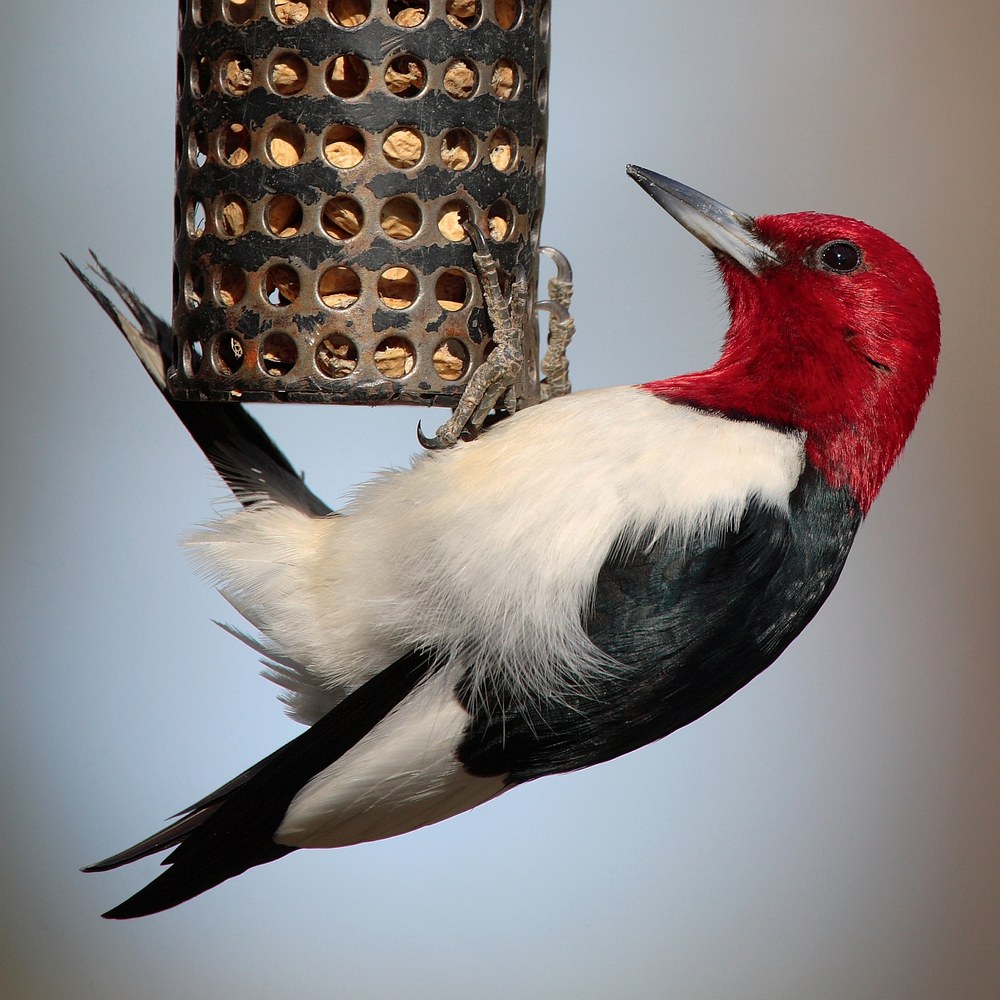
Red-headed Woodpecker
- Habitat
- Open deciduous woodland with oak or beech, dead-timber stands, farmland, and parks, including much of Oklahoma
- Size
- 8.5-9.5 inches (21-24 cm)
- Lifespan
- Typically just a few years in the wild; the confirmed banding longevity record is 9 years 11 months
- Diet
- About one-third insects, caught by gleaning and aerial sallies; two-thirds plant matter, especially acorns and beech nuts
About the Red-headed Woodpecker
Red-headed Woodpeckers are unmistakable: adults show an entirely crimson-red head, a bright white body, and boldly two-toned wings, half white and half glossy black, a pattern visible even in flight and unlike any other North American woodpecker. Immature birds look quite different, with dull grayish-brown heads instead of red and rows of dark spots along the trailing edge of the white wing patch, and they don't gain the full red head until roughly their second year of life.
The species breeds across the central and eastern United States, including much of Oklahoma, favoring open deciduous woodland with oak or beech, river bottoms, dead-timber stands, groves left after wildfire, orchards, farmland with scattered trees, and even parks and roadsides, wherever standing dead or dying trees provide suitable nest cavities. Loss of dead trees, or "snags," through forestry and land-clearing practices has been a major driver of a significant long-term population decline across much of the breeding range.
Diet is more varied than most woodpeckers: roughly a third animal matter, mainly insects caught both by gleaning bark and by sallying out to catch them in midair like a flycatcher, and two-thirds plant matter, especially acorns and beech nuts. Notably, Red-headed Woodpeckers cache surplus food, wedging acorns, nuts, and even insects into bark crevices, cracks, and under shingles for retrieval later, a habit shared with only a handful of other woodpecker species.
Pairs nest in cavities excavated in dead wood, and both parents share incubation and chick-feeding duties over a roughly month-long nesting period, sometimes raising a second brood in a season. Because they rely on cavities rather than digging fresh ones for every attempt as often as some other woodpeckers, Red-headed Woodpeckers compete directly with European Starlings, an introduced species that aggressively takes over cavities, and this competition is thought to compound the effects of snag loss on the population.
Survey data collected through the long-running North American Breeding Bird Survey point to a steep decline for this species, with estimates suggesting the continental population has fallen by roughly two-thirds or more since the mid-20th century, a trend serious enough that several conservation organizations now list it as a species of concern despite it not carrying formal endangered status. Wild lifespan is generally just a few years, though the oldest confirmed banding record, a bird first banded in Michigan in 1926, documented a lifespan of nearly 10 years.
Frequently asked questions
Why are Red-headed Woodpecker numbers declining?
Loss of dead standing trees, which the species depends on for nest cavities and food caching, has been a major factor in its long-term decline.
Do Red-headed Woodpeckers store food?
Yes, they wedge acorns, nuts, and even insects into bark crevices and cracks to eat later, a behavior shared by only a few woodpecker species.
Do young Red-headed Woodpeckers have red heads?
No, immatures have grayish-brown heads and don't develop the full red head until around their second year.
How long do Red-headed Woodpeckers live?
Most live only a few years in the wild, though the oldest banded individual on record lived almost 10 years.
Where to find it
This species favors forest habitat. See real Oklahoma locations on the Habitats map.