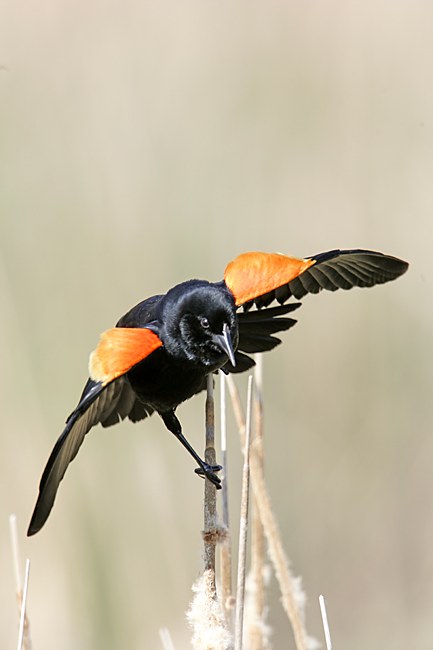
Red-winged Blackbird
- Habitat
- Marshes, wet meadows, roadside ditches, and agricultural fields; one of the most widespread and abundant birds in North America
- Size
- 7-9 inches (18-23 cm)
- Lifespan
- Most individuals live only 2-3 years in the wild given high mortality among nestlings and juveniles, but the species can live much longer — the oldest known banded individual reached at least 15 years, 9 months.
- Diet
- Insects and spiders during the breeding season; seeds and grain (including waste corn, rice, and wheat) the rest of the year
About the Red-winged Blackbird
Adult male Red-winged Blackbirds are glossy black overall with bright red shoulder patches, called epaulettes, bordered by a yellowish-buff stripe. These patches are usually the first thing birders notice, especially when a male perches on a cattail stalk and flares them during a territorial display. Females look almost nothing like the males — heavily streaked brown and buff overall, closer in appearance to a large sparrow than to a blackbird, which often confuses new birders trying to match the sexes to the same species. Both sexes have a sharp, conical bill suited to handling insects as well as seeds.
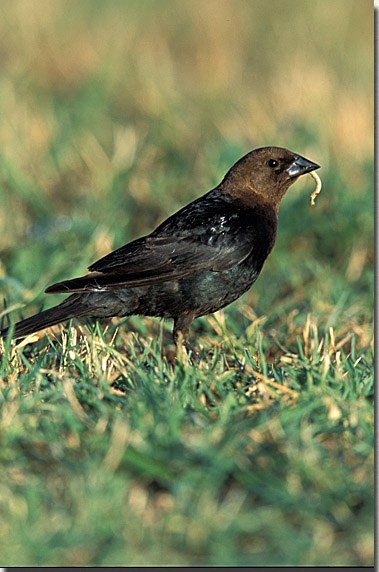
The species breeds across nearly all of the United States and Canada and is one of the most numerous and closely studied birds on the continent. It favors cattail marshes, wet ditches, and hayfields for nesting but ranges into drier upland fields, especially outside the breeding season. In Oklahoma it is present year-round, breeding statewide in wetlands and moving into farmland and feedlots in winter, when local birds are joined by migrants from farther north to form large mixed flocks with grackles, cowbirds, and starlings.
During spring and summer, Red-winged Blackbirds rely heavily on insects and other invertebrates gleaned from marsh vegetation and mud, an important protein source for growing young. In fall and winter the diet shifts toward weed seeds and waste grain, and birds forage in large flocks on the ground in open fields; they will also visit backyard feeders.
The mating system is strongly polygynous: a single territorial male may have several females, sometimes close to a dozen, nesting within his defended patch of marsh, and in some populations up to 90 percent of territorial males have more than one mate. Males are famously aggressive, spending a large share of the day chasing off rival males and diving at intruders many times their size, including hawks, crows, and even people or livestock that stray too close to a nest. Genetic studies have found that despite this mate-guarding effort, a notable share of nestlings in a male's territory are not actually his — females often mate with more than one male. Nests are woven cups built low in cattails, shrubs, or grasses over or near water, typically holding 3-4 eggs incubated by the female for about 10-12 days.
Frequently asked questions
Why do male Red-winged Blackbirds have red shoulder patches?
The patches, called epaulettes, signal ownership of a territory and help attract mates; males can conceal them to move through a rival's territory without provoking a fight.
Are Red-winged Blackbirds aggressive?
Yes — territorial males vigorously defend their nesting areas and will attack birds, and sometimes people, that come too close.
Do Red-winged Blackbirds live in Oklahoma year-round?
Yes, they breed across the state and many remain through winter, though local numbers swell as northern migrants arrive.
What do Red-winged Blackbirds eat?
Mostly insects and spiders during the breeding season, switching to seeds and grain the rest of the year.
Where to find it
This species favors grassland habitat. See real Oklahoma locations on the Habitats map.