Snowy Egret
- Habitat
- Common in fresh, brackish, and saltwater wetlands — marshes, ponds, mangrove swamps, occasionally dry grasslands with cattle
- Size
- 20–27 in
- Lifespan
- Can live well over a decade; the oldest banded individual on record was about 17.5 years old.
- Diet
- Fish, insects, small invertebrates
About the Snowy Egret
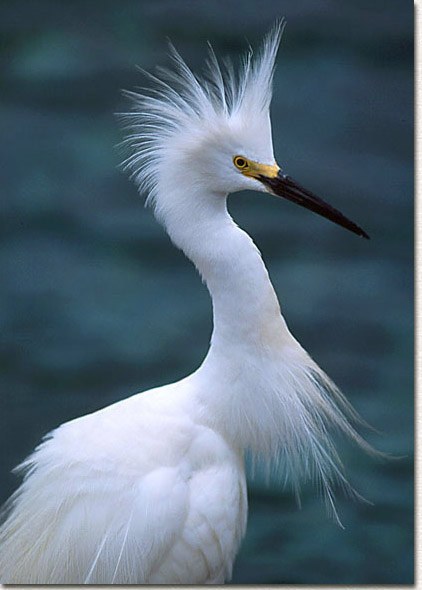
The Snowy Egret is a medium-sized, entirely white heron, set off by a slim black bill, black legs, and strikingly bright yellow feet that stand out sharply against the dark legs above them, sometimes described as looking like the bird is wearing golden slippers. During the breeding season it grows long, delicate, lacy plumes on the head, neck, and back, ornamental feathers so prized by the millinery trade in the late 1800s that hunting for them very nearly wiped the species out before early bird protection laws intervened to stop the trade. Those same plumes also play a role in courtship, with breeding adults raising and fanning them during displays at the nest site to signal readiness to a prospective mate.
It is a common sight across fresh, brackish, and saltwater wetlands, including marshes, ponds, and mangrove swamps, and it will occasionally forage in dry grasslands alongside grazing cattle, taking advantage of insects the animals stir up from the grass as they move. It can also be found foraging alongside other wading birds in mixed-species groups, where the presence of multiple actively hunting birds seems to increase the odds of flushing prey for everyone involved.
Compared to many herons that stand and wait motionless for prey, the Snowy Egret is an unusually active hunter. It shuffles those bright yellow feet in shallow water to startle small fish and invertebrates into moving, then stabs repeatedly and rapidly with its bill to seize them, sometimes running through the shallows or even hovering briefly over the water; insects and other small aquatic prey round out the diet. This foot-stirring technique is thought to work by disturbing hidden prey or by drawing curious small fish toward the moving yellow feet, which may resemble food items themselves against the darker legs and water.
Snowy Egrets nest colonially, often in mixed colonies alongside other herons and egrets that can number in the thousands, typically placing nests in trees or shrubs positioned over water for protection from ground-based predators such as raccoons. Both parents share incubation and feeding duties, and chicks in these crowded colonies can be noisy and demanding, jostling for position when a parent returns with food; sibling aggression is not unusual when food is scarce, with older, stronger chicks sometimes outcompeting younger nestmates for a parent's attention.
Having recovered from the plume-trade crash of the early 20th century, largely thanks to legal protections and changing fashion trends, the species is now common again across much of its range and can live well over a decade, with the oldest banded individual on record reaching about 17.5 years of age. It is often seen foraging alongside other wading birds such as ibises and larger herons, sometimes appearing to deliberately follow another species to snatch up prey stirred loose by the bigger bird's movements through the shallows. Its bright white plumage and animated feeding style make it one of the easier herons to watch and enjoy at a distance, even for visitors with no prior birdwatching experience, and its recovery from the brink of extinction remains one of the more frequently cited early success stories of American bird conservation.
Young Snowy Egrets take a season or two to gain the fully clean white plumage and bright yellow feet of adults, often showing a duller yellow-green on the legs and a less crisply black-and-yellow bill-to-feet transition until their first full molt. Because the species nests, forages, and roosts so visibly in accessible wetlands, it has become one of the more familiar and closely watched herons for both casual visitors and researchers monitoring the condition of wading-bird colonies, and its numbers at a given marsh or rookery are sometimes used as one rough gauge of how healthy that wetland's fish and invertebrate populations are in a given year.
Frequently asked questions
How can you tell a Snowy Egret from other white herons?
Look for its black bill, black legs, and bright yellow feet, sometimes nicknamed "golden slippers."
How does a Snowy Egret catch its food?
It shuffles its yellow feet in shallow water to stir up prey, then stabs repeatedly with its bill.
Why did Snowy Egret populations once decline sharply?
Their ornamental breeding plumes were heavily hunted for the millinery, or hat-making, trade in the late 1800s.
Does the Snowy Egret nest alone or in groups?
It typically nests colonially, sometimes in mixed colonies with other herons numbering in the thousands.
Do Snowy Egret chicks compete with each other for food?
Yes, in crowded colonies siblings often jostle for a parent's attention, and stronger chicks can outcompete weaker nestmates when food is limited.
Where to find it
This species favors wetland habitat. See real Oklahoma locations on the Habitats map.