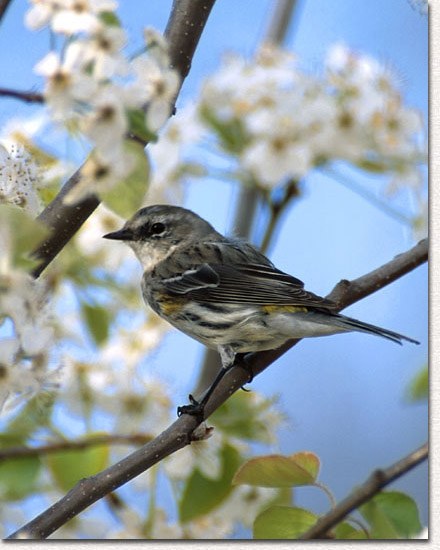
Yellow-rumped Warbler
- Habitat
- Open coniferous forests or mixed woodlands, forest edges, clearings, spruce bogs, thickets
- Size
- 5–6 in
- Lifespan
- Typical wild survival is much shorter, but the oldest recaptured bird was about 10 years old.
- Diet
- More insectivorous in the west than the east; berries of shrubs, especially in winter
About the Yellow-rumped Warbler
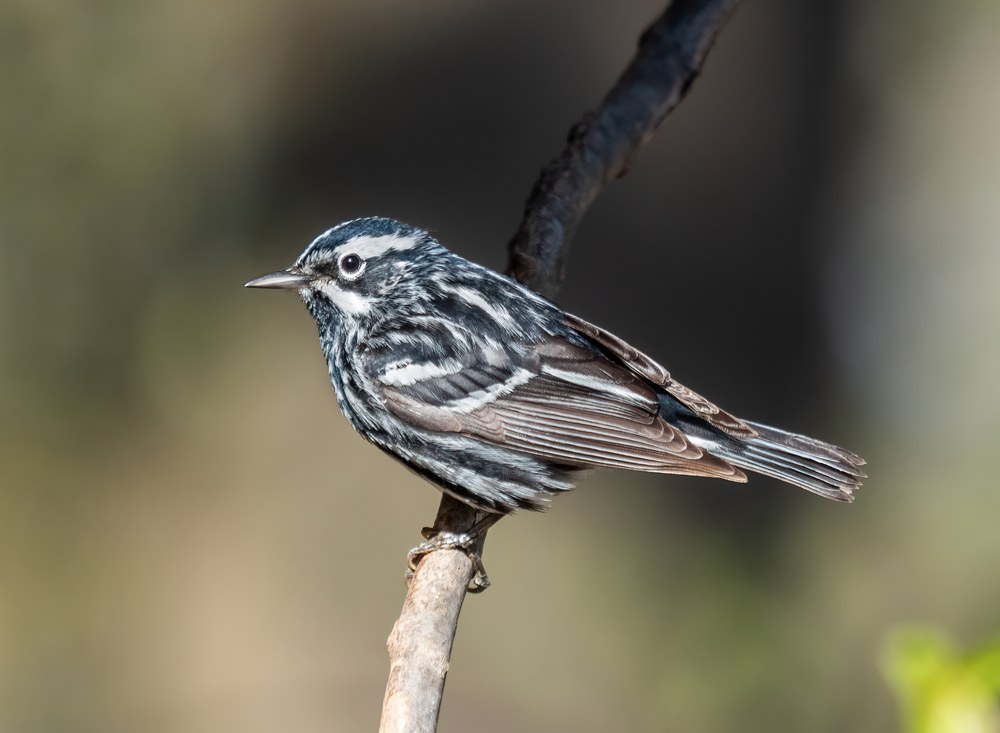
The Yellow-rumped Warbler carries one field mark that never disappears no matter the season or age: a bright yellow patch on the rump, visible in breeding adults, winter adults, and juveniles alike, which makes the species identifiable even in its drabbest winter plumage. Breeding males add yellow patches on the crown and sides of the breast to the mix, set against a gray-and-black streaked body. The species actually comes in two recognizable forms -- an eastern "Myrtle" type with a white throat and a western "Audubon's" type with a yellow throat -- which were once treated as separate species before being combined into one based on extensive interbreeding where their ranges meet; the two forms also differ subtly in face pattern and in the amount of white visible in the tail and wing, details that experienced observers sometimes use to sort out which form, or which hybrid combination, a particular wintering bird represents.
This warbler breeds in open coniferous or mixed forest, favoring forest edges, clearings, and spruce bogs, but during migration and winter it turns up in a much wider range of habitats, from thickets to suburban yards. Its diet shifts noticeably by region and season: it is more insectivorous across the western part of its range, but everywhere it leans heavily on berries in winter, especially those of bayberry and wax myrtle shrubs. That ability to digest waxy berries is unusual among wood-warblers and gives the species a real advantage, letting it winter much farther north than most of its insect-dependent relatives. Foraging technique also shifts with the season and food source: breeding birds glean actively through foliage and frequently sally out to snatch flying insects in mid-air, a technique more typical of flycatchers than of most warblers, while wintering birds spend considerably more time working low shrubs for berries or even foraging on the ground, a flexibility that helps explain the species' broad habitat tolerance outside the breeding season.
That dietary flexibility helps explain some of the species' other habits: it is one of the last warblers to migrate south in fall and among the earliest back in spring, and it will sometimes roost communally in sheltered spots during cold winter weather, a rarity among warblers. Outside the breeding season the birds are notably gregarious, often gathering into loose flocks that move together through good feeding habitat, and within foraging flocks males typically forage higher in the trees than females, a subtle segregation by sex reported in several other wintering warbler species as well. A sharp, flat check note, given year-round, is often the first clue to a Yellow-rumped Warbler's presence in a mixed winter flock, since the birds tend to call frequently while foraging even when they are otherwise easy to overlook among more numerous or more active flockmates.
Taken together, this adaptability has made the Yellow-rumped Warbler one of the most common and widespread wood-warblers in North America. On the breeding grounds, the nest is typically built well out on a horizontal conifer branch and lined with fine materials, sometimes including feathers curled over the eggs, a detail shared with several other warblers that nest in conifers. Typical wild survival is much shorter, but the oldest recaptured bird on record was about 10 years old. Its reliably yellow rump has also earned it the affectionate nickname "butter-butt" among birders, a bit of shorthand that reflects just how often this particular field mark is the quickest way to confirm an identification in the field, especially on a plain, brownish winter bird that otherwise shows little of the bold pattern typical of breeding-plumage wood-warblers.
Frequently asked questions
What field mark identifies a Yellow-rumped Warbler in any plumage?
Its yellow rump patch, which is present year-round in breeding, winter, and juvenile plumages alike.
What are the "Myrtle" and "Audubon's" forms of this warbler?
They are the eastern (white-throated) and western (yellow-throated) forms of the same species, once treated as separate species before being combined.
Why can Yellow-rumped Warblers winter farther north than most warblers?
They can digest waxy berries such as bayberry and wax myrtle, a food source most insect-eating warblers cannot rely on.
How long do Yellow-rumped Warblers live?
Typical survival is much shorter, but the oldest recaptured bird on record was about 10 years old.
How do Yellow-rumped Warblers forage differently in summer versus winter?
In summer they actively glean insects and frequently sally out to catch flying insects like a flycatcher, while in winter they rely much more on berries and often forage low in shrubs or on the ground.
Where to find it
This species favors forest habitat. See real Oklahoma locations on the Habitats map.