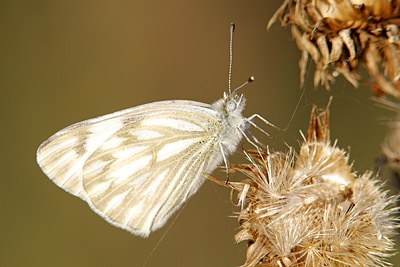
Checkered White
- Habitat
- Dry weedy areas, vacant lots, fields, pastures, sandy areas, railroad beds, roads
- Size
- 1½–2½ in (3.8–6.3 cm)
- Lifespan
- Adults usually live only about 1 to 2 weeks after emerging.
- Diet
- Host: mustard family and caper family, especially Rocky Mountain bee-plant. Nectar: hedge mustards, composites, alfalfa
About the Checkered White
The Checkered White is a small-to-medium white butterfly whose wings are marked with an irregular checkering of gray-brown or blackish patches, a pattern that gives the species its common name. That checkering is not fixed year-round: spring-generation individuals tend to show heavier, bolder markings than the paler summer generation, a seasonal difference common among many white and sulphur butterflies. Females typically display somewhat bolder checkering than males, offering a subtle way to distinguish the sexes in the field.
This butterfly favors dry, open, often disturbed ground rather than lush habitat -- vacant lots, weedy fields, pastures, sandy areas, railroad beds, and roadsides all support populations, a tolerance for marginal land that has likely helped the species persist even as much natural habitat has been altered by human development. Its caterpillars feed on plants in the mustard and caper families, with Rocky Mountain bee-plant standing out as a particularly important host in parts of its range. Over the past century, the Checkered White has become noticeably scarcer across much of the eastern United States, a decline generally attributed at least in part to competition from the introduced Cabbage White, which shares many of the same host plants and disturbed habitats but has proven extremely successful at colonizing exactly the kind of weedy, human-altered ground the Checkered White also depends on; the species remains considerably more common across the drier, more open landscapes of the central and western United States, including much of Oklahoma.
Like several other whites adapted to open, sun-baked ground, the Checkered White is most active during the warmer hours of the day, and individuals will often perch briefly with wings closed on bare soil or gravel between bouts of patrolling, angling the body to control how much direct sun reaches the wings, a basking adjustment common among butterflies of hot, exposed habitats.
Males patrol open ground searching for females rather than waiting at a fixed perch, and once mated, females lay their eggs singly on the leaves or flowers of a host plant, with the pale yellow eggs typically deepening to orange as they near hatching, a color change documented in a number of related white butterflies. Unlike caterpillars that stick strictly to foliage, Checkered White larvae feed broadly on buds, flowers, fruits, and leaves alike, taking advantage of whatever part of the host plant is available and nutritious at the time, a flexible feeding habit that may help them cope with the boom-and-bust growth patterns typical of the weedy, opportunistic host plants they favor.
The species overwinters as a chrysalis, camouflaged against the dry, weedy ground it favors and typically attached low to a plant stem or nearby debris rather than exposed in the open, and adults are relatively short-lived, typically surviving only about one to two weeks after emerging. Multiple broods are produced across the growing season in most of its range, allowing the Checkered White to remain a familiar sight in disturbed, open habitat from spring well into fall. Its range covers most of the continental United States, though it is often confused at a glance with the introduced Cabbage White where the two species overlap; a closer look at the checkered pattern along the wing veins, rather than a simple black wingtip, is usually enough to separate the two, especially once spring's boldly marked generation is on the wing rather than the plainer, paler adults that typically appear later in summer.
Frequently asked questions
Why is the Checkered White's pattern sometimes bolder and sometimes fainter?
Spring-generation individuals tend to show heavier checkering than the paler summer generation.
What kind of habitat does the Checkered White prefer?
Dry, open, often disturbed ground such as vacant lots, weedy fields, pastures, and roadsides.
What do Checkered White caterpillars eat besides leaves?
They feed broadly on buds, flowers, and fruits of host plants in the mustard and caper families, not just foliage.
How long does an adult Checkered White live?
Typically only about one to two weeks after emerging.
Why has the Checkered White declined in parts of the East?
Competition from the introduced Cabbage White, which uses many of the same host plants and disturbed habitats, is generally thought to have contributed to its decline there, while it remains common in the drier central and western states.
Where to find it
This species favors grassland habitat. See real Oklahoma locations on the Habitats map.