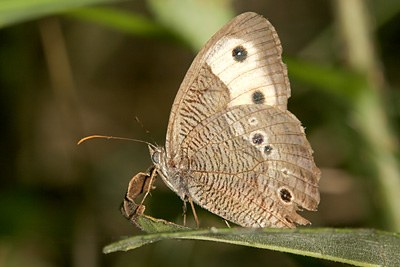
Common Wood Nymph
- Habitat
- Large, sunny, grassy areas: prairies, open meadows, bogs, old fields
- Size
- 1¾–3 in (4.5–7.6 cm)
- Lifespan
- Adults typically live around two weeks, similar to other satyr species.
- Diet
- Caterpillar: purpletop and other grasses. Adult: rotting fruit, flower nectar
About the Common Wood Nymph
The Common Wood Nymph is a medium-to-large satyrine butterfly, spanning roughly 1¾ to 3 inches across the wings, with a subdued but unmistakable look. Its wings are chocolate-to-tawny brown, often washed with a variable yellow-orange patch on the forewing that surrounds one or two prominent eyespots — bold, dark circles ringed in yellow with a pale blue-white pupil at the center. These eyespots, along with smaller ones scattered across the hindwing, are thought to deflect a predator's strike away from the body and toward the wing margin. The underside is a mottled gray-brown, giving the butterfly excellent camouflage when it lands and folds its wings shut against a grass stem or dead leaf.
True to its name, this species haunts large, sunlit expanses of grass rather than gardens or forests: prairies, open meadows, bogs, and old weedy fields across much of North America. It rarely strays far from its larval host grasses, which include purpletop and other native bunchgrasses. Adults, however, are not avid flower visitors in the way many other butterflies are — they're just as likely to be found sipping juice from rotting fruit fallen in an orchard or field edge as they are probing a flower for nectar, a feeding habit shared by many satyrs.
One of the more distinctive things about the Common Wood Nymph is its flight: males cruise low through grass and brush in a bouncing, erratic "dipping" pattern as they search for receptive females, weaving between stems rather than flying in a straight line the way a swallowtail or fritillary might. Mating and egg-laying happen in mid-to-late summer, but the resulting caterpillars have an unusual strategy for surviving winter — they hatch in autumn and then simply stop, never taking a single bite of grass before entering hibernation as tiny larvae. They wait out the cold months dormant near the ground and only resume feeding, growing, and eventually pupating once temperatures warm in spring.
This life cycle produces just one generation per year, a single brood that emerges as adults in summer. Compared to butterflies that live for months, individual Wood Nymphs are short-lived, with adults surviving only about two weeks — enough time to feed, mate, and lay the next generation's eggs before the cycle of dormancy begins again.
Frequently asked questions
How can I tell a Common Wood Nymph from other brown butterflies?
Look for its large yellow-ringed eyespots with pale blue centers on the forewing, set against mottled brown wings — a pattern typical of satyrs rather than fritillaries or skippers.
What do Common Wood Nymph caterpillars eat?
They feed on purpletop and other grasses, though newly hatched caterpillars actually don't eat at all — they go straight into hibernation until spring.
How many generations does this species produce each year?
Just one brood per year, with adults flying in summer after the overwintered caterpillars finish developing in spring.
Do adult Wood Nymphs prefer flowers or fruit?
They often favor rotting fruit over nectar, a feeding habit typical of many satyr butterflies, though they will visit flowers as well.
Where to find it
This species favors grassland habitat. See real Oklahoma locations on the Habitats map.