Delaware Skipper
- Habitat
- Moist areas: marshes, prairies, fields, roadsides, suburban yards
- Size
- 1–1 11/16 in (2.5–4.3 cm)
- Lifespan
- No specific longevity data has been published; expect the typical few-week adult skipper lifespan.
- Diet
- Caterpillar: big bluestem, switchgrass, wooly beard grass, other grasses. Adult: swamp/common milkweeds, shrub houstonia, mountain mint, marsh fleabane, sweet pepperbush, buttonbush, thistles, pickerelweed
About the Delaware Skipper
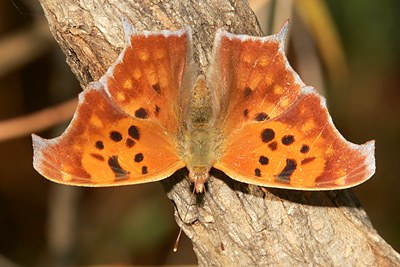
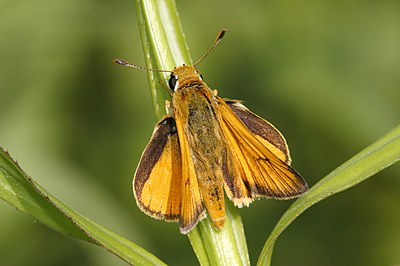
The Delaware Skipper is a bright, distinctive species, measuring roughly 1 to 1 11/16 inches across, with a bold yellow-orange upperside set off by crisp black borders, black veins tracing the wing, and a small black bar closing the forewing cell. This clean, glowing color combination makes it one of the easier grass skippers to identify at a glance, lacking the muddier browns and mottling seen in many related species, though the intensity of the orange can vary somewhat between individuals and with wing wear over the flight season.
The species favors moist, open habitats, including marshes, prairies, fields, roadsides, and even suburban yards, a range that spans from fairly natural wetland edges to distinctly human-altered ground, suggesting some flexibility in habitat use as long as adequate moisture and grass cover are present. This moisture association likely reflects both the needs of its larval host grasses and the adult's preference for nectar sources concentrated in damp low ground and streamside vegetation. Such a wide habitat span, from prairie remnant to mowed yard, suggests the species is somewhat adaptable compared with true prairie specialists, provided its core moisture and grass requirements are met.
Caterpillars feed on big bluestem, switchgrass, wooly beard grass, and other grasses, all warm-season native species characteristic of tallgrass prairie and moist meadow communities, and like other grass-feeding skippers likely construct a silk-and-leaf shelter for protection while young. Adults nectar at a notably wetland-leaning list of plants, including swamp and common milkweeds, shrub houstonia, mountain mint, marsh fleabane, sweet pepperbush, buttonbush, thistles, and pickerelweed, several of which are themselves marsh or streamside specialists, reinforcing the picture of a butterfly closely tied to damp ground even as an adult.
Males hold territories low to the ground, staying within about 1.5 feet of the surface in open grassy areas or along streams, watching from a fixed perch for passing females rather than searching actively on the wing, a perch-and-wait mating strategy shared with many related skippers that helps males conserve energy over a short adult life. Perching at such low height likely also serves a thermoregulatory purpose, letting the male bask in reflected warmth from bare or sparsely vegetated ground while remaining alert to rivals and mates passing through his territory. No specific adult longevity data has been published for the species, so the typical few-week adult skipper lifespan is the reasonable working assumption, consistent with the pattern seen across most of its close relatives.
Frequently asked questions
How do you recognize a Delaware Skipper?
It is bright yellow-orange with black borders, black veins, and a small black bar closing the forewing cell.
What habitat does the Delaware Skipper prefer?
It favors moist areas including marshes, prairies, fields, roadsides, and suburban yards.
What do Delaware Skipper caterpillars feed on?
They feed on big bluestem, switchgrass, wooly beard grass, and other native grasses.
How do male Delaware Skippers behave?
Males stay within about 1.5 feet of the ground in open grassy areas or along streams, perching and waiting for females.
Where to find it
This species favors city / backyard habitat. See real Oklahoma locations on the Habitats map.