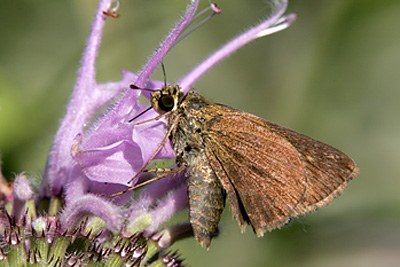
Dun Skipper
- Habitat
- Wet areas near deciduous woods: meadows, seeps, swamp edges, streams
- Size
- 1 1/8–1 3/8 in (2.9–3.5 cm)
- Lifespan
- Individual adult longevity isn't well recorded, though a few weeks is typical for this genus.
- Diet
- Caterpillar: sedges — chufa flatsedge, sun sedge. Adult: common milkweed, purple vetch, selfheal, peppermint, dogbane, New Jersey tea, viper's bugloss
About the Dun Skipper
The Dun Skipper is a small, compact skipper measuring about 1 1/8 to 1 3/8 inches (2.9–3.5 cm) across the wings. Its most distinctive feature is the contrast between a yellow-orange head and thorax and predominantly brown-black wings, giving it a two-toned look even in flight. Males carry a forewing stigma, a patch of specialized scent scales used to disperse pheromones during courtship, while females instead show a scatter of small, cloudy white spots, a difference sharp enough that the sexes can look almost like different species. Males typically perch low, about 3 feet up, staking out a spot in a damp opening from which to watch for passing females — a 'perch-and-wait' mating strategy that conserves energy compared with continuous patrolling.
Dun Skippers favor wet areas near deciduous woodland — meadows, seeps, swamp edges, and the margins of streams — habitats that stay consistently moist even in dry summer stretches. This preference for damp, semi-shaded ground ties directly to its host plants, which are sedges that grow best in saturated or seasonally flooded soil. The species ranges across a broad swath of eastern and central North America, following these wet woodland-edge habitats wherever they persist, including in disturbed or second-growth settings as long as the right sedges and nectar sources are present nearby.
Caterpillars feed on sedges, particularly chufa flatsedge and sun sedge, low grass-like plants typical of wet ground; like other sedge- and grass-feeding skipper larvae, they likely shelter in folded or tied leaf blades while feeding, reducing exposure to predators and weather. Adults, in contrast, visit a notably wide range of nectar sources for such a small butterfly, including common milkweed, purple vetch, selfheal, peppermint, dogbane, New Jersey tea, and viper's bugloss. This broad nectar diet suggests the adults are flexible foragers, able to exploit whatever blooms are available in a given meadow or streamside opening rather than depending on a single flower.
Individual adult longevity in the Dun Skipper isn't well recorded, though a lifespan of a few weeks is typical for adults in this genus, reflecting a life history centered on rapid mating rather than extended survival. As with most grass-skippers, the flight period likely tracks the availability of both larval host sedges and adult nectar plants, with populations timed to emerge when wet meadows and woodland edges are in bloom. The combination of a specialized host-plant requirement and a preference for consistently moist habitat makes this species a useful indicator of healthy wetland-edge conditions within its range.
Frequently asked questions
How can you tell male and female Dun Skippers apart?
Males have a forewing stigma, while females show small cloudy white spots instead.
What habitat does the Dun Skipper prefer?
Wet areas near deciduous woods, including meadows, seeps, swamp edges, and streams.
What do Dun Skipper caterpillars eat?
Sedges, particularly chufa flatsedge and sun sedge.
How do male Dun Skippers find mates?
They perch low, about 3 feet up, in damp low-lying spots and wait for females to pass.
Where to find it
This species favors wetland habitat. See real Oklahoma locations on the Habitats map.