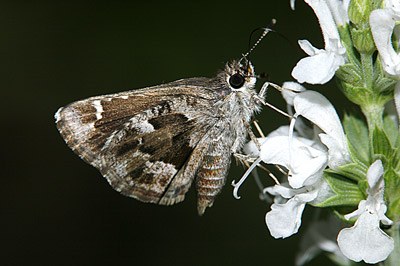
Nysa Roadside-Skipper
- Habitat
- Open areas: dry rocky ravines, woodland edges, desert grasslands, yards, gardens
- Size
- 3/4–1 3/16 in (1.9–3 cm)
- Lifespan
- No specific data exists; small roadside-skippers likely live only one to two weeks as adults.
- Diet
- Caterpillar: St. Augustine grass, crab grass, bristlegrass, barnyard grass, green spangletop. Adult: blue spiraea, marigold, lima bean, cantaloupe
About the Nysa Roadside-Skipper
The Nysa Roadside-Skipper is a small butterfly, measuring only about 3/4 to 1 3/16 inches (1.9–3 cm) across the wings, making it one of the smaller skippers likely to be seen in its range. The upperside is essentially black, broken by three to five small white spots clustered near the forewing tip, a sparse pattern that contrasts with the more heavily marked skippers it shares habitat with. Perhaps its most useful field mark is the checkered black-and-white fringe along the wing edges, visible even when the butterfly is at rest with its wings folded or held in the low, flattened posture typical of roadside-skippers. Unlike many skippers that perch conspicuously in the open, this species tends to fly very low over bare ground and settle directly on dirt or gravel rather than on vegetation, a habit that likely helps it blend into the pale, sun-baked substrate of the open, dry sites it favors.
This species occupies a variety of open, often disturbed or marginal habitats: dry rocky ravines, woodland edges, desert grasslands, and even yards and gardens. This broad tolerance for both wild and human-altered ground suggests the Nysa Roadside-Skipper is not tightly bound to pristine habitat, as long as suitable grasses and bare open patches for basking and perching are present. Its presence in gardens and yards likely reflects the wide availability of weedy lawn and pasture grasses that serve as larval hosts, allowing it to persist even in landscapes heavily modified by people.
Caterpillars feed on a range of common grasses, including St. Augustine grass, crab grass, bristlegrass, barnyard grass, and green spangletop — several of which are widespread lawn and roadside weeds, explaining the species' comfort near human development. As is typical for grass-feeding skipper larvae, they probably build a shelter by tying or rolling a blade of grass with silk, feeding from within it and staying hidden through the day. Adults nectar at a modest list of documented flowers, among them blue spiraea, marigold, lima bean, and cantaloupe, suggesting a preference for small clustered blooms accessible to a short proboscis, though the adults likely visit additional flowers not yet recorded.
Detailed life-history data for the Nysa Roadside-Skipper has not been specifically documented, and no exact lifespan figures exist; small roadside-skippers in general likely survive only one to two weeks as adults, prioritizing quick mating and egg-laying over longevity. Based on patterns typical of the genus Amblyscirtes, eggs are probably laid singly on host grass blades, with caterpillars sheltering in tied leaf blades and pupating near ground level, though this has not been confirmed for this species.
Frequently asked questions
How can you recognize a Nysa Roadside-Skipper?
By its black upperside with 3-5 small white forewing-tip spots and checkered black-and-white fringes.
Where does the Nysa Roadside-Skipper live?
Open dry sites such as rocky ravines, woodland edges, desert grasslands, yards, and gardens.
What grasses do Nysa Roadside-Skipper caterpillars eat?
St. Augustine grass, crab grass, bristlegrass, barnyard grass, and green spangletop.
How does the Nysa Roadside-Skipper behave in flight?
It flies very low to the ground and rests directly on bare soil rather than on vegetation.
Where to find it
This species favors grassland habitat. See real Oklahoma locations on the Habitats map.