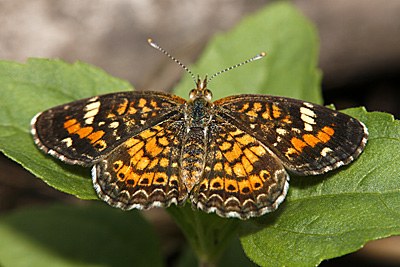
Phaon Crescent
- Habitat
- Openings in thorn forest, closely-cropped open areas, dunes, pastures, road edges
- Size
- 1–1½ in (2.5–3.8 cm)
- Lifespan
- Adults probably live about one to two weeks; species-specific studies are limited.
- Diet
- Caterpillar: fogfruit, mat grass. Adult: Lippia flowers and composites including shepherd's needle
About the Phaon Crescent
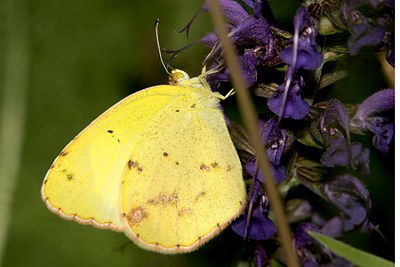
The Phaon Crescent (Phyciodes phaon) is one of the smaller crescents, measuring just 1 to 1½ inches (2.5–3.8 cm) across the wings. Its upper surface carries the orange-and-black checkered pattern typical of the group, but it's distinguished by a pale, cream-colored band crossing the forewing, which stands out clearly against the darker surrounding pattern. Combined with its small size, this band is often the quickest way to separate it from similar crescents sharing its range.
This species favors warm, open habitats along the Gulf Coast, Texas, and Florida — openings within thorn forest, closely cropped ground such as pastures and lawns, coastal dunes, and the weedy margins of roads. Its caterpillar host plants, fogfruit and mat grass, are low, mat-forming ground covers that thrive in exactly this kind of disturbed, sun-exposed terrain, which is part of why the Phaon Crescent turns up reliably in places altered by grazing, mowing, or foot traffic. Adults nectar at Lippia flowers — a close relative of fogfruit — as well as various composites, including shepherd's needle.
Males patrol by day close to stands of the host plant rather than ranging far afield, a sensible strategy given how localized fogfruit and mat grass patches tend to be. When females are ready to lay, they deposit their eggs in small groups on the undersides of the host leaves, giving the resulting caterpillars a modest head start in numbers during their earliest and most exposed stage of life.
Because fogfruit often grows as a low, spreading turf in closely cropped pastures, dunes, and roadsides, the Phaon Crescent can be surprisingly common in landscapes that look, at a glance, too disturbed or too sparse to support much wildlife. Its tight association with just a couple of host plants makes it a good indicator species: wherever fogfruit or mat grass forms a dense mat in warm, open ground across its Gulf Coast range, there's a good chance Phaon Crescents are patrolling nearby.
The Phaon Crescent ranges along the Gulf Coast from Florida through Texas and into Mexico and Central America, with occasional wanderers found farther inland. In the warmest parts of this range it can fly nearly year-round, producing several overlapping generations rather than a single seasonal brood. Its small size and pale forewing band usually distinguish it from the co-occurring Pearl Crescent, which tends to be larger and more heavily checkered.
Predators of Phaon Crescent caterpillars and adults likely include birds, ants, and small parasitoid wasps that specialize on crescent butterflies generally, a group whose caterpillars, feeding openly on low ground-cover plants, are probably more exposed to searching predators than species whose larvae shelter inside rolled or folded leaves. Because fogfruit tends to form dense, low mats rather than scattered individual plants, groups of Phaon Crescent caterpillars from a single egg cluster can sometimes be found feeding fairly close together even after hatching, at least in the earliest stages before they disperse more widely as they grow. Courtship appears to follow the general pattern seen in other Phyciodes crescents, with males relying on a combination of visual cues and close-range chemical signals to identify a receptive female, though detailed behavioral study specific to this species remains limited. In the warmest, most reliably frost-free parts of its range along the immediate Gulf Coast and in southern Florida, the species likely breeds essentially continuously, with new generations overlapping so closely that a single population may show caterpillars, chrysalides, and adults all present simultaneously at almost any time of year, a pattern quite different from the more sharply defined seasonal broods typical of crescents and checkerspots farther north.
Frequently asked questions
How can you tell a Phaon Crescent from other crescents?
Its small size and the pale, cream-colored band crossing the forewing are the quickest identifying features.
What kind of habitat does it prefer?
Open, sun-exposed ground such as thorn-forest clearings, closely cropped pastures, dunes, and road edges, mainly along the Gulf Coast, Texas, and Florida.
What do the caterpillars eat?
They feed on fogfruit and mat grass, both low, mat-forming ground plants common in disturbed open terrain.
Where do adults get nectar?
They visit Lippia flowers and composites such as shepherd's needle.
Does the Phaon Crescent have a clear generational structure like more northern butterflies?
In the warmest parts of its range it likely breeds nearly continuously, with overlapping generations rather than the sharply defined seasonal broods typical of related species farther north.
Where to find it
This species favors forest habitat. See real Oklahoma locations on the Habitats map.