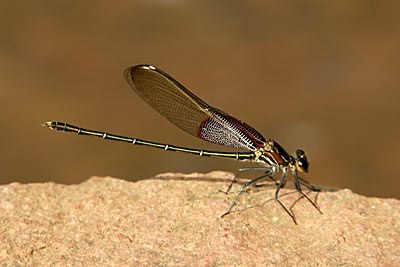
American Rubyspot
Hetaerina americana
- Habitat
- Streams and rivers with moderate current, often in sunny stretches
- Size
- Body length about 1.4-1.7 in (35-45 mm)
- Lifespan
- Adults typically live only days to a few weeks during the flight season
- Diet
- Adults catch small flying insects; aquatic nymphs prey on smaller invertebrates
About the American Rubyspot
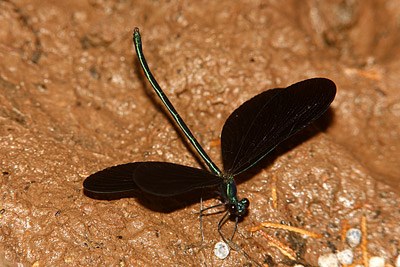
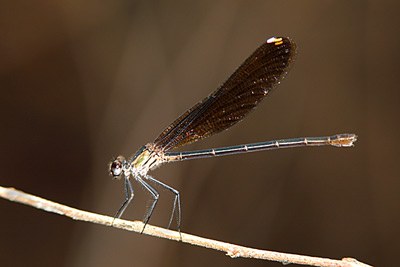
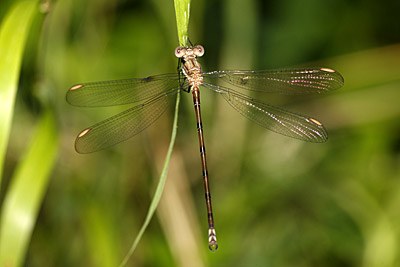
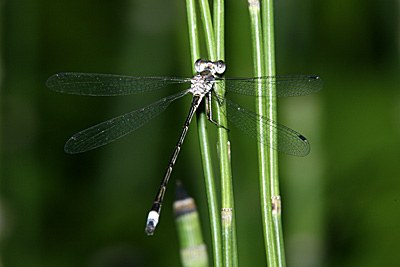
The American Rubyspot is a striking damselfly named for the brilliant ruby-red patch found at the base of each wing in males, which otherwise remain clear, combined with a metallic bronze-red body that can look almost black in poor light and flares into deep coppery red when the sun catches it directly. Females are duller, with a bronze-brown body and a smaller, more amber-toned patch at the wing base, making them less conspicuous than males but still identifiable by the same basic wing pattern; both sexes measure a modest inch and a half or so in length, typical for the genus.
The species is found along rivers and streams across much of the United States, including suitable habitat in Oklahoma, and it generally prefers flowing water with some noticeable current, in sunny, open stretches, distinguishing its habitat preference from shade-loving species like the Ebony Jewelwing that favor slower, more sheltered streams. It is often one of the more numerous and conspicuous damselflies along a suitable stretch of river, especially where riffles alternate with calmer runs and there is enough open sky for the sun to warm the water and banks.
Adults perch on rocks, twigs, or streamside vegetation overlooking the water and sally out to catch small flying insects, returning to a favored perch after each capture, a hunting style known as hawking that lets them conserve energy between brief, targeted flights. The aquatic nymphs live among rocks and vegetation in the current, preying on smaller invertebrates until they are ready to emerge and transform into flying adults; like other damselfly nymphs they breathe through external gills at the tip of the abdomen and can take a year or more to complete development in cooler parts of the range, though warmer southern streams likely allow for a faster life cycle.
Males are territorial, defending favored perches over the stream and engaging in aerial disputes and wing-flashing displays with rival males to advertise ownership of a site, since good perches near suitable egg-laying habitat are valuable for attracting mates. Courtship and mating typically occur near these defended territories, with the pair forming the characteristic damselfly mating wheel before the male releases the female to lay eggs, sometimes continuing to guard her from a nearby perch. After mating, females lay their eggs into submerged plant material, and the resulting nymphs continue the aquatic phase of the life cycle before eventually emerging as the next generation of adults, typically over a period lasting from spring through summer depending on local conditions.
Flight season in Oklahoma generally runs from late spring through early fall, with numbers often peaking in mid-summer when river flows have stabilized after spring rains. Because the species depends on reasonably clean, flowing water with intact banks, a healthy population of American Rubyspots along a given stretch of river is a modestly encouraging sign of decent water quality and streamside habitat condition, much as is true for several of the other flowing-water damselflies and dragonflies covered elsewhere on this list.
Fish and larger aquatic insects such as dragonfly nymphs are the main threats to developing American Rubyspot nymphs, while adults face predation from birds, spiders, and other dragonflies patrolling the same stream corridor; the bright red wing patch of a mature male, so effective for signaling to rivals and mates, may also make him somewhat more conspicuous to predators, a trade-off common to many brightly ornamented animals. Large emergences can sometimes be seen clinging to streamside rocks and vegetation en masse shortly after adults first take flight, before dispersing to establish individual territories along the bank.
Frequently asked questions
What's distinctive about the American Rubyspot's appearance?
Males have a striking ruby-red patch at the base of each wing, contrasting with otherwise clear wings.
Where do American Rubyspots prefer to live?
Along flowing streams and rivers with some current, often in sunny, open stretches.
Do male American Rubyspots defend territory?
Yes, males aggressively defend favored perches over the water and display to rivals by flashing their red wing patches.
How does the American Rubyspot differ from the Ebony Jewelwing?
Rubyspots prefer sunnier, faster-flowing water and have clear wings with red patches, while jewelwings favor shaded, slower streams and have fully dark or smoky wings.
How long do American Rubyspot nymphs take to develop?
Development time varies with water temperature; it can take a year or more in cooler streams, while warmer southern waters likely allow faster growth.
Where to find it
This species favors wetland habitat. See real Oklahoma locations on the Habitats map.