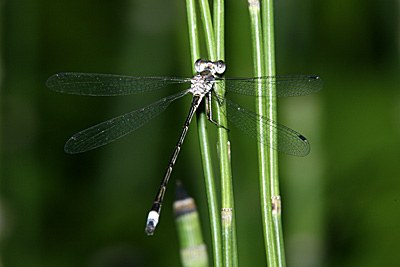
Southern Spreadwing
Lestes australis
- Habitat
- Ponds, marshy pool edges, and slow-moving water with dense emergent grasses or sedges
- Size
- About 1.3 to 1.6 inches (34-40 mm) long
- Lifespan
- Specific lifespan data for this species has not been well documented, but adult spreadwings in this genus typically fly for a few weeks during their season
- Diet
- Adults feed on small flying insects such as midges and gnats; nymphs eat aquatic insect larvae and other small invertebrates
About the Southern Spreadwing
Southern Spreadwing was only recognized as a full species relatively recently; for decades it was treated as the southern subspecies of what was then called the Common Spreadwing before taxonomists split that complex into the Northern Spreadwing (Lestes disjunctus) and the Southern Spreadwing (Lestes australis). The two remain difficult to separate reliably in the field without close examination of the male's abdominal appendages, and both belong to the common spreadwing group that overlaps broadly across the central and eastern United States.
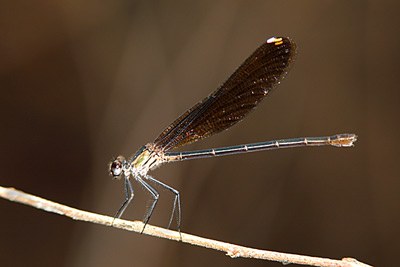
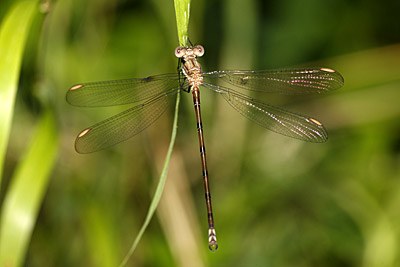
Adults are medium-sized damselflies with a metallic green thorax that develops a pale, frosty pruinescence with age, especially in mature males, along with a slender dark abdomen. Like other spreadwings, they rest with their wings held open rather than folded along the body, a posture that separates the family Lestidae from bluets, forktails, and dancers at a glance.
This species is typically found around ponds, marshy edges, and quiet backwaters with abundant emergent vegetation such as sedges and rushes, where females lay eggs into plant stems at or just above the waterline. Adults spend much of their time perched in grassy or shrubby vegetation near water, making short sallying flights to catch small flying insects, then returning to a perch. The nymphs develop underwater, feeding on small aquatic invertebrates before climbing emergent vegetation to transform into flying adults.
Because Southern Spreadwing is such a recent taxonomic split and closely resembles its northern counterpart, much of what is confidently known about its biology is inferred from the broader Lestes disjunctus complex rather than studies of this species alone; visitors curious about the fine points of its identification are dealing with one of the more genuinely tricky damselfly groups in the state. Both spreadwing species belong to the family Lestidae, a group generally distinguished from bluets and dancers by a somewhat heavier build in addition to their open-winged resting posture. Adults do not need to stay close to open water throughout the day and are often found perched well back in surrounding grasses and shrubs, returning to the pond edge mainly to feed, mate, or lay eggs. Because the two species' ranges broadly overlap across Oklahoma, individual damselflies at any given pond cannot be safely assigned to one species or the other by location alone.
Frequently asked questions
Is the Southern Spreadwing hard to identify?
Yes, it closely resembles the related Northern Spreadwing, and reliable identification usually requires close examination of the male's abdominal appendages.
Where does the Southern Spreadwing live?
It favors ponds and marshy, vegetated pool edges where it can perch on sedges and rushes near the water.
Why does it hold its wings open at rest?
It belongs to the spreadwing family, Lestidae, whose members characteristically perch with wings spread rather than folded flat over the abdomen.
What does the Southern Spreadwing eat?
Adults catch small flying insects like midges near their perches, while nymphs feed underwater on small aquatic invertebrates.
Where to find it
This species favors wetland habitat. See real Oklahoma locations on the Habitats map.