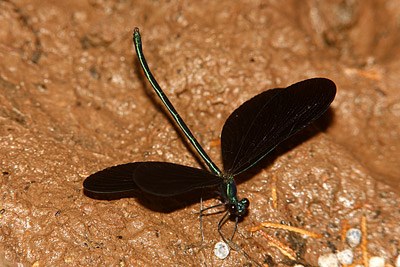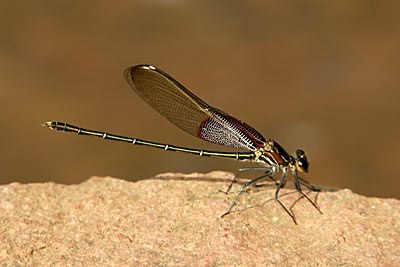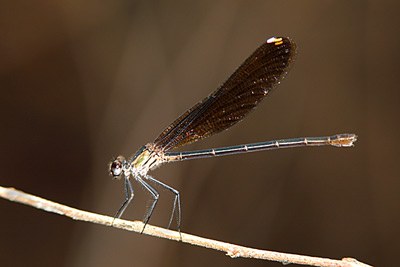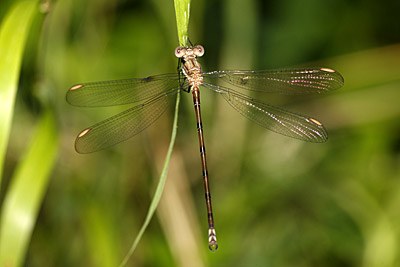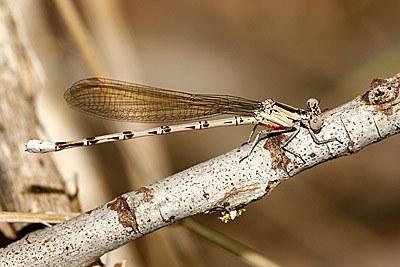
Aztec Dancer
Argia nahuana
- Habitat
- Streams and ponds in warmer western and southwestern settings
- Size
- About 1.0 to 1.3 inches (26-33 mm) long
- Lifespan
- Not well documented for this species specifically; dancers typically fly for a few weeks as adults
- Diet
- Adults hunt small flying insects; nymphs prey on aquatic invertebrates
About the Aztec Dancer
Aztec Dancer is primarily a species of the warmer Southwest, with its core range extending from Mexico north through Arizona, New Mexico, and neighboring states, reaching only the western edge of Oklahoma where suitable stream and pond habitat exists. Its presence in the state reflects the broader pattern of southwestern-adapted species bleeding into Oklahoma's drier western counties.
Mature males show blue coloration typical of many Argia dancers, with the usual striped thorax pattern and a slender, mostly dark abdomen; as with many dancers, close attention to the male's abdominal appendages is often needed to separate it confidently from similar blue species sharing its range.
This species uses both streams and standing water such as ponds, provided the habitat is in a warmer setting consistent with its southwestern distribution, and it tends to be found in more open, sunlit stretches of water rather than heavily shaded woodland creeks. Adults perch low near the water on rocks, gravel, or vegetation, making quick sallying flights to catch small flying insects before returning to a perch to feed.
Reproduction follows the typical dancer pattern, with males and females pairing in tandem and the male often remaining attached while the female deposits eggs into submerged plant material at the water's edge. The nymphs live in the water, sheltering among vegetation, gravel, or debris while feeding on smaller aquatic invertebrates as they mature toward emergence as flying adults. Because Aztec Dancer is at the edge of its range in Oklahoma, it is recorded less often than more broadly distributed eastern dancers, and observers looking for it should focus on the warmer stream and pond habitats of the state's western counties rather than the wooded creeks of eastern Oklahoma. As with other members of the genus, mated pairs remain in tandem through the egg-laying process, the male continuing to grip the female to prevent other males from fertilizing her eggs before she finishes ovipositing. Because it sits at the margin of its documented range in the state, confirming an Aztec Dancer sighting in Oklahoma often benefits from photographing the individual closely enough to check the fine details that separate it from other similar blue dancers sharing the same warm-water habitat.
Frequently asked questions
Is the Aztec Dancer common in Oklahoma?
No, its core range is the warmer Southwest and Mexico, so it only reaches the western edge of Oklahoma and is recorded less often than eastern dancer species.
What habitat does the Aztec Dancer use?
It uses both streams and ponds in warmer, sunlit settings consistent with its southwestern distribution.
How is the Aztec Dancer identified?
Mature males are blue with the typical Argia striped thorax pattern, but close examination of abdominal appendages is usually needed to separate it from similar blue dancers.
Where in Oklahoma should someone look for Aztec Dancers?
The western counties, where warmer stream and pond habitats resembling its core southwestern range are more likely to occur.
Where to find it
This species favors wetland habitat. See real Oklahoma locations on the Habitats map.