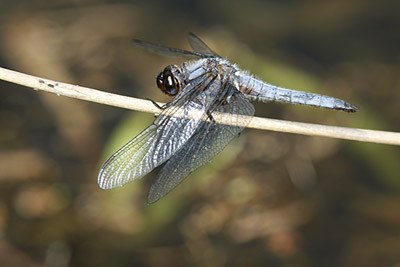
Blue Corporal
Ladona deplanata
- Habitat
- Ponds, lakes, slower sections of creeks, and ditches, especially shallow, sunny pools.
- Size
- About 1.1 to 1.6 inches (29-40 mm) long.
- Lifespan
- Not specifically documented; adults have a short overall flight window, typically mid-April through early June, being one of the first dragonflies of spring.
- Diet
- Adults catch small flying insects near the water, active early in the season when few other dragonflies are yet on the wing.
About the Blue Corporal
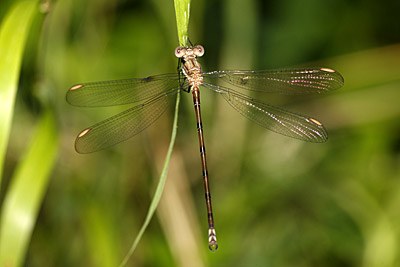
The Blue Corporal is a small, thickset dragonfly whose common name references two features at once: the powdery blue coloring of the mature male's abdomen, and a pair of lines on the thorax reminiscent of a corporal's insignia. Males show a dark brown thorax crossed by two wide, powder-blue stripes toward the front, paired with a pruinose blue abdomen, a black face, and dark brown eyes. Females look quite different, with an overall brown body marked by a narrow pale stripe and an equally narrow black stripe on each side of the thorax, plus a black stripe running down the center of the abdomen that widens toward the tip.
This species uses a fairly broad range of still and slow-moving habitats, including ponds and lakes, slower stretches of creeks, and even ditches, generally favoring shallow, sunny pools with open water.
The Blue Corporal is best known among Oklahoma dragonfly watchers as one of the very first species active each spring, often appearing well before most other dragonflies have emerged. Its documented flight period runs roughly from mid-April through early June, with numbers typically peaking in late April to mid-May, giving it a notably compressed season compared with dragonflies that fly all summer.
Adults hunt small flying insects near their breeding waters during this early window, taking advantage of reduced competition from other dragonfly species that have not yet emerged for the year. Breeding follows the pattern typical of skimmers, with females laying eggs into shallow, sunny water and nymphs developing on the pond or ditch bottom, preying on other aquatic invertebrates through their larval stage before emerging as adults right at the start of the region's main dragonfly season. Its early appearance each year makes the Blue Corporal a reliable first sign that Oklahoma's dragonfly season has begun in earnest. Because it emerges so early, often before nearby trees have fully leafed out, the Blue Corporal can be unusually easy to spot against still-bare shoreline vegetation compared with summer dragonflies competing against a fuller backdrop of greenery. Its short flight season also means missing a few weeks in spring can mean waiting a full year for another chance to see one nearby.
Frequently asked questions
Why is it called the Blue Corporal?
The male's abdomen is powdery blue, and the two stripes on the thorax resemble a corporal's insignia.
When is the best time to see a Blue Corporal?
Early spring, roughly mid-April through early June, with peak numbers in late April to mid-May.
What habitat does it prefer?
Shallow, sunny ponds and lakes, along with slower sections of creeks and even ditches.
Why is the Blue Corporal notable among Oklahoma dragonflies?
It is one of the very first dragonfly species to appear each spring, often before most other species have emerged.
Where to find it
This species favors wetland habitat. See real Oklahoma locations on the Habitats map.