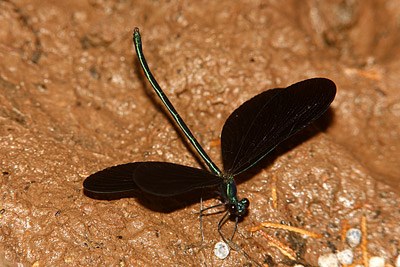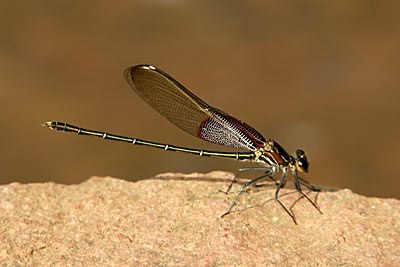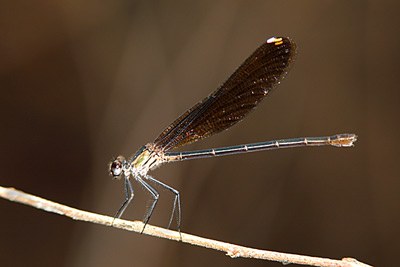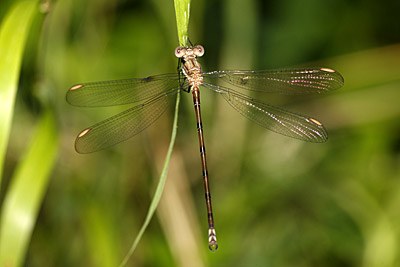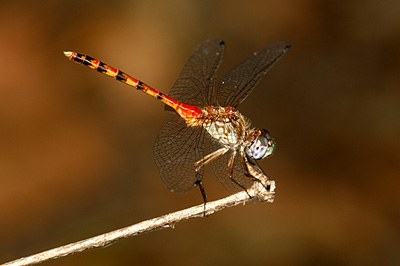
Blue-faced Meadowhawk
Sympetrum ambiguum
- Habitat
- Ponds and marshes with dense vegetation, generally in the eastern and central United States
- Size
- About 1.2 to 1.4 inches (30–36 mm) long, a small meadowhawk
- Lifespan
- A few weeks as a flying adult, typically appearing in late summer and into fall, though precise wild figures are not well documented
- Diet
- Adults catch small flying insects such as midges and gnats; nymphs prey on small aquatic invertebrates among dense pond vegetation
About the Blue-faced Meadowhawk
The Blue-faced Meadowhawk is a small, slender dragonfly named for the vivid pale blue face of mature males, a striking contrast against the reddish body typical of meadowhawks in the genus Sympetrum. This blue-faced feature is one of the most distinctive and reliable field marks among the meadowhawks, most of which otherwise look fairly similar to each other in overall reddish-brown coloring, making this species one of the easier ones in its group to confirm with a clear look at the face. Females and immature males are more yellowish-brown rather than red, but often still show at least a hint of the pale facial coloring that gives the species its name.
It favors ponds and marshy areas with dense vegetation, generally found across the eastern and central United States, and in Oklahoma it tends to appear later in the flying season than many other skimmers, often becoming most noticeable in late summer and into fall when many spring-flying species have already finished their season. This late-season timing is typical of meadowhawks generally, and makes the genus an important part of the dragonfly community still active as cooler weather approaches.
Adults hunt by perching low in dense vegetation and making short sallies to catch small flying insects such as midges and gnats, a scaled-down version of the classic skimmer perch-and-pursue strategy suited to its smaller size and the thicker, more sheltered habitat it favors compared to open-pond species. The aquatic nymphs live among dense submerged plants, where they ambush small aquatic invertebrates using the same rapid-strike hinged jaw common to all dragonfly nymphs, though on a scale suited to their smaller adult size.
Males defend small territories within their preferred marshy vegetation and mate with visiting females, after which eggs are laid directly into the water or onto wet vegetation near the water's edge, consistent with general meadowhawk breeding behavior. Because it tends to fly later in the season than many other Oklahoma dragonflies, the Blue-faced Meadowhawk is often one of the last common species still active as autumn approaches, making late-season pond visits worthwhile for anyone hoping to spot its distinctive pale blue face.
Frequently asked questions
What is the easiest way to identify this species?
Look closely at the face; mature males have a distinctive pale blue face that contrasts sharply with the reddish body, unlike most other meadowhawks.
When is it most likely to be seen?
It tends to fly later in the season than many other dragonflies, often becoming most noticeable in late summer and fall.
What kind of habitat does it prefer?
Ponds and marshy areas with dense vegetation, rather than open, sparsely vegetated water.
What does it eat?
Adults catch small flying insects like midges and gnats near dense pond vegetation, while nymphs prey on small aquatic invertebrates underwater.
Where to find it
This species favors wetland habitat. See real Oklahoma locations on the Habitats map.