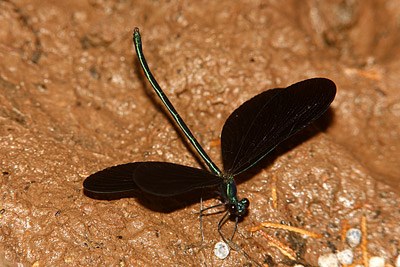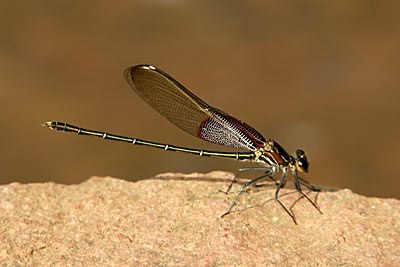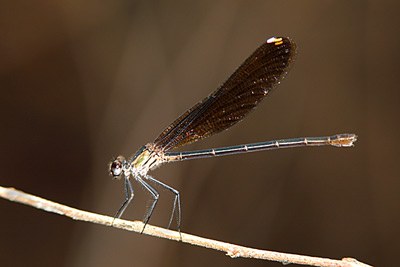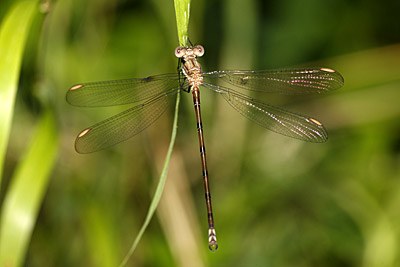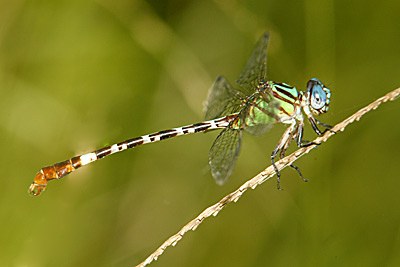
Blue-faced Ringtail
Erpetogomphus eutainia
- Habitat
- Rocky and sandy streams and rivers, similar to other ringtail clubtails in the genus Erpetogomphus.
- Size
- A modestly sized ringtail, generally smaller than the Eastern Ringtail; an exact figure specific to this species was not confidently found, so a genus-typical estimate in the neighborhood of 1.5 to 1.8 inches is offered rather than a confirmed number.
- Lifespan
- Not specifically documented for this species; likely a few weeks as a flying adult, consistent with related clubtails.
- Diet
- Adults hunt flying insects on the wing near streams; nymphs feed on aquatic invertebrates in stream-bottom sediment.
About the Blue-faced Ringtail
The Blue-faced Ringtail takes its name from the strikingly blue face of mature individuals, a feature that helps separate it from other ringtail species sharing the same streams. Like its relatives in the genus Erpetogomphus, it carries a slender, greenish body marked with pale rings around the abdomen and a moderate club near the tip, the pattern that gives all ringtails their common name.
This species is found in Central America and North America, with its range in the United States concentrated in the south-central states, including Oklahoma and Texas, where it favors rocky or sandy streams and rivers. As with other ringtails, clean flowing water with a mix of riffles and calmer stretches likely supports both the hunting adults and the substrate-dwelling nymphs.
Adults typically perch on streamside rocks, twigs, or low vegetation between hunting flights, darting out to snatch small flying insects and returning to a favored spot, a pattern common across the ringtail clubtails. Detailed, species-specific accounts of its hunting behavior are limited compared with better-studied clubtails, so much of what is known draws on the well-documented habits of its close relatives, including the Eastern Ringtail.
Breeding is expected to follow the standard gomphid pattern seen throughout the family: females deposit eggs into moving water, and the nymphs burrow into sand or fine sediment on the stream bottom, where they live as ambush predators of other invertebrates for an extended period before emerging as adults along the shoreline. Because detailed life-history studies specific to the Blue-faced Ringtail are scarce, some particulars of its lifecycle are inferred from closely related species rather than confirmed directly for this one, a reminder that even well-established dragonflies can still hold real identification and natural history gaps for enthusiasts to help fill in through careful field observation. As with other clubtails, the nymph stage almost certainly lasts far longer than the several weeks a mature adult spends flying, since gomphid nymphs typically need one to several years to develop before emerging. Anyone photographing a ringtail along an Oklahoma or Texas stream should note the face color carefully, since it is one of the few field marks reliably separating this species from its close relatives.
Frequently asked questions
What makes the Blue-faced Ringtail distinctive?
Mature individuals show a strikingly blue face, which distinguishes them from other ringtail clubtails sharing the same streams.
What type of water does it prefer?
Rocky or sandy streams and rivers, similar to other Erpetogomphus ringtails.
Is a lot known about this species' specific behavior?
Detailed studies are limited; much of what is assumed about its habits is drawn from closely related, better-studied ringtail species.
Where does its range extend?
It occurs across parts of the south-central United States, including Oklahoma and Texas, and into Central America.
Where to find it
This species favors wetland habitat. See real Oklahoma locations on the Habitats map.