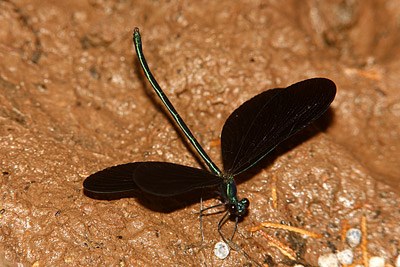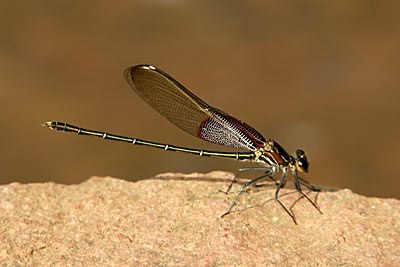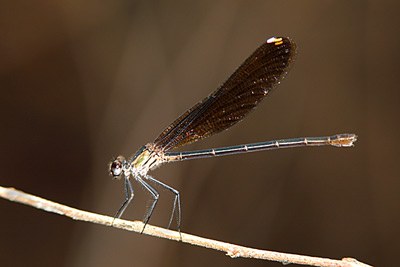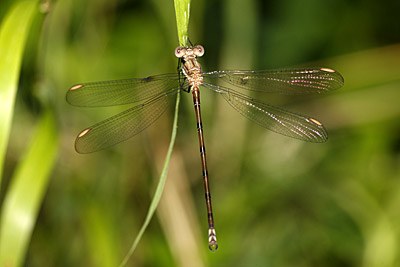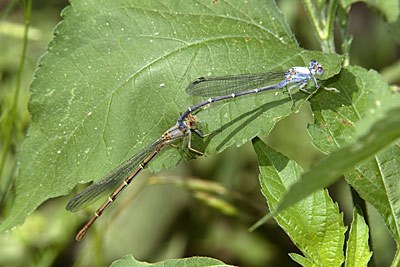
Blue-fronted Dancer
Argia apicalis
- Habitat
- Sandy or muddy-bottomed rivers and streams with open banks
- Size
- About 1.1 to 1.4 inches (29-35 mm) long
- Lifespan
- Precise figures are not well documented, but adult dancers typically fly for a few weeks during the warm season
- Diet
- Adults capture small flying insects such as midges and gnats; nymphs feed on aquatic insect larvae and other small invertebrates
About the Blue-fronted Dancer
Blue-fronted Dancer is one of the most familiar and widespread dancers in Oklahoma, common along the state's rivers and streams. Its name describes its most useful field mark: mature males have a bright blue thorax and the front third or so of the abdomen blue, while the remaining abdominal segments toward the tip turn mostly black, creating a clear two-toned effect that separates it from several similar blue dancers with more evenly distributed color.
This species favors larger streams and rivers with sandy or muddy substrates and open, sunny banks rather than small, heavily shaded creeks. It is frequently seen perching directly on the ground, on rocks, or on low bank vegetation right at the water's edge, often in good numbers where habitat is suitable, making it one of the more reliably encountered dancers for anyone walking a riverbank in the state.
Adults are active, low-perching hunters, making short flights out from a perch on the ground or a rock to intercept small flying insects before returning to the same or a nearby spot. Females lay eggs into submerged or floating plant material, often with the male remaining attached in tandem or guarding nearby, a common mating behavior among Argia dancers that helps ensure the male's own genetic contribution is the one fertilizing the eggs being laid.
The nymphs develop in the stream itself, usually in slower runs and pools where they can find shelter among sediment, debris, and submerged vegetation while preying on smaller invertebrates. Development time from egg to winged adult varies with water temperature but generally spans several weeks to a few months during the warmer parts of the year. Once mature, adult Blue-fronted Dancers can be seen in good numbers along the same stretch of river through much of the summer, making them one of the more dependable dancers for visitors trying to get a first look at the group in Oklahoma. Blue-fronted Dancer also tends to tolerate more open, sun-exposed banks than some of the shadier-loving dancers in the state, which helps explain why it is so often the first Argia species newcomers learn to recognize along Oklahoma's larger rivers.
Frequently asked questions
How do I tell a Blue-fronted Dancer from other blue dancers?
Look for blue confined mostly to the thorax and the front segments of the abdomen, with the rest of the abdomen turning mostly black, unlike more evenly blue species.
Where does the Blue-fronted Dancer typically perch?
It commonly perches low, directly on sand, mud, rocks, or bank vegetation right at the edge of rivers and streams.
Is the Blue-fronted Dancer common in Oklahoma?
Yes, it is one of the most widespread and frequently encountered dancers along the state's rivers and streams.
How do Blue-fronted Dancers reproduce?
Mated pairs lay eggs into submerged or floating plant material, often with the male staying attached in tandem while the female oviposits.
Where to find it
This species favors wetland habitat. See real Oklahoma locations on the Habitats map.