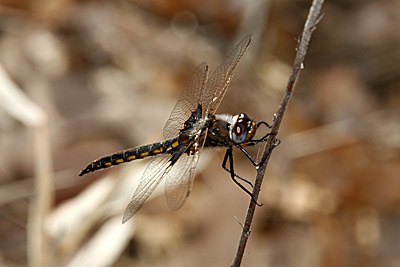
Common Baskettail
Epitheca cynosura
- Habitat
- Shallow, slow, sunny streams; marshy lakes; and mucky-bottomed waters, often where streams enter larger bodies of water.
- Size
- About 1.6 inches (38-43 mm) long.
- Lifespan
- Not specifically documented; adults fly for a relatively short early-season window of a few weeks, being one of the earliest baskettails on the wing each spring.
- Diet
- Adults catch flying insects during swift, looping hunting flights low over water and open ground; nymphs prey on aquatic invertebrates in mucky pond and stream sediment.
About the Common Baskettail
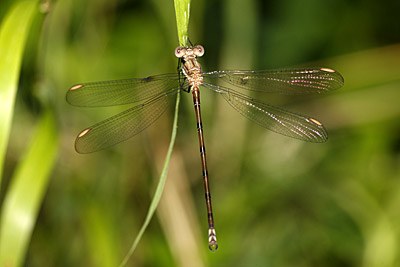
The Common Baskettail is a dull brown, medium-sized dragonfly with a row of yellow-orange spots along the sides of a notably stout abdomen that tapers toward the tip without forming an enlarged club, unlike many other dragonflies. Its most reliable identifying mark is a dark triangular patch near the base of the hindwing, present in roughly nine out of ten individuals and largely absent in other similar baskettail species, making it one of the more field-identifiable members of its confusing genus. Eyes shift from red-brown in newly emerged juveniles to blue or green in mature adults, and females carry a thicker abdomen with a shorter tip than males.
This species tolerates a wide range of water habitats but shows a preference for shallow, slow, sunny streams and marshy lakes, especially where a stream feeds into a larger body of water, and it seeks out mucky-bottomed areas for egg-laying. It ranges widely across the eastern United States and is one of the more frequently encountered baskettails in Oklahoma.
Males hunt with a distinctive flight style, cruising one to two feet above the ground or water over stretches of ten to thirty feet, with swift, looping, and often abruptly vertical movements that distinguish their flight from the more level, gliding patrol of many other dragonflies. This erratic, low hunting flight helps them snatch small flying insects in tight quarters near shorelines and stream margins.
As with other baskettails, the common name reflects the female's habit of extruding a basket-shaped mass of eggs at the abdomen tip before releasing them into the water. The resulting nymphs settle into mucky bottom sediment, where they live as camouflaged predators of other invertebrates through their aquatic development before emerging, typically quite early in spring, as one of the season's first dragonflies on the wing. Because it is one of the very first dragonflies most Oklahomans will see each year, the Common Baskettail often serves as an unofficial herald of the coming dragonfly season at local ponds and slow streams. Its swarming, low hunting flights over open ground can sometimes be mistaken for a cloud of much smaller insects until a closer look reveals the dragonfly's larger size and distinctive wing patch.
Frequently asked questions
What is the easiest way to identify a Common Baskettail?
Look for the dark triangular patch near the base of the hindwing, present in about ninety percent of individuals and rare in similar species.
How does its flight style differ from other dragonflies?
Males fly low, one to two feet above ground or water, with swift, looping, often vertical movements rather than a steady patrol.
When does the Common Baskettail typically appear each year?
It is one of the earliest dragonflies of spring, with a relatively short flight period.
What habitat does it favor for breeding?
Shallow, slow, sunny streams and marshy lakes with mucky bottoms, often near where a stream enters a larger body of water.
Where to find it
This species favors wetland habitat. See real Oklahoma locations on the Habitats map.