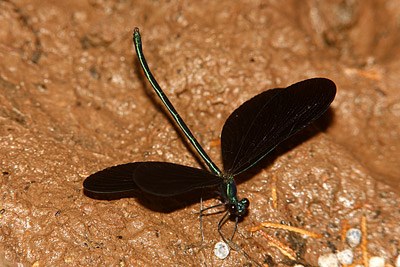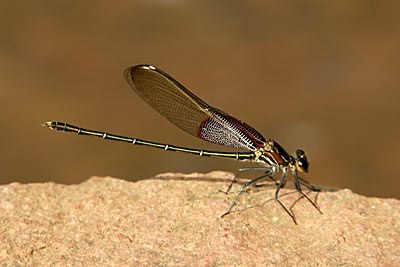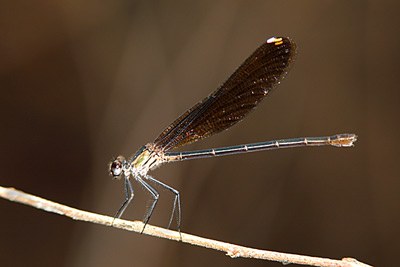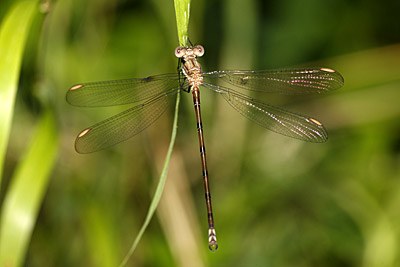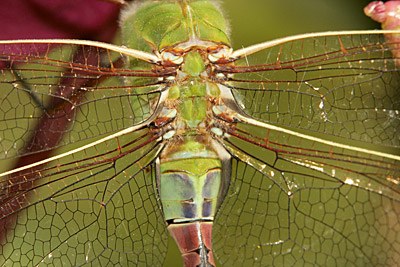
Common Green Darner
Anax junius
- Habitat
- Virtually every kind of pond, lake, marsh, and slow stream
- Size
- About 2.7 to 3.1 inches (68-80 mm) long, one of the largest and most familiar dragonflies in North America
- Lifespan
- Migratory generations live only long enough to complete a one-way journey and reproduce, typically a matter of weeks, while a resident generation born later in the season overwinters as a nymph and lives longer overall as part of a multi-generational annual cycle
- Diet
- Adults hunt a wide variety of flying insects, including mosquitoes, flies, moths, and even other dragonflies; nymphs prey on aquatic invertebrates, tadpoles, and small fish
About the Common Green Darner
Common Green Darner is one of the largest, most familiar, and most widely distributed dragonflies in North America, instantly recognizable by its bright green thorax and a long abdomen that is blue in mature males and more brownish or reddish in females and immature males. Its size and bold, contrasting colors make it one of the easiest large dragonflies to identify at a glance, even in flight.
This species is a habitat generalist, found at virtually any pond, lake, marsh, or slow stream across Oklahoma and much of the continent, from small farm ponds to large reservoirs. Its tolerance for such a wide range of standing and slow-moving water, combined with strong flight and wide dispersal ability, helps explain why it is one of the most commonly seen dragonflies almost anywhere suitable water exists.
One of the most remarkable aspects of Common Green Darner biology, confirmed by stable-isotope studies of museum and field-collected wings combined with decades of citizen-science flight records, is its multi-generational annual migration. A first generation migrates north in spring over long distances, lays eggs, and dies; a second generation then emerges and migrates south in fall, laying eggs before dying in turn; and a third, non-migratory generation emerges from those eggs, overwinters as nymphs in the south, and produces the adults that migrate north the following spring to begin the cycle again. This means the individual darners seen flying south in autumn are not the same individuals that flew north that same spring, but their offspring, an intergenerational relay migration that is unusual even among migratory insects.
As adults, Common Green Darners are active, wide-ranging hunters, patrolling steadily over open water and fields to catch flying insects of many kinds, including mosquitoes, flies, moths, and occasionally smaller dragonflies. Nymphs are large, robust aquatic predators that prey on aquatic invertebrates, tadpoles, and small fish, and depending on whether they belong to a migratory or resident generation may develop quickly within a single season or overwinter in the water before emerging the following year. Females of this species typically lay eggs directly into submerged or floating plant tissue, sometimes without a male remaining attached, unlike many damselflies in which the male continues to grip the female throughout egg-laying. This flexibility in mating behavior, combined with the species' extraordinary migratory life history, makes Common Green Darner one of the most thoroughly studied dragonflies in North America.
Frequently asked questions
Is the Common Green Darner really migratory?
Yes, isotope and citizen-science studies have documented a multi-generational annual migration in which different generations move north in spring and south in fall.
How can you identify a Common Green Darner?
Look for a bright green thorax and a long abdomen that is blue in mature males and more brownish or reddish in females and young males.
What does the Common Green Darner eat?
Adults hunt a wide variety of flying insects, including mosquitoes, flies, moths, and occasionally other dragonflies, while nymphs prey on aquatic invertebrates, tadpoles, and small fish.
Where can Common Green Darners be found in Oklahoma?
Almost anywhere there is standing or slow-moving water, from small farm ponds to large lakes and marshes, since it is a strong flier and habitat generalist.
Where to find it
This species favors wetland habitat. See real Oklahoma locations on the Habitats map.