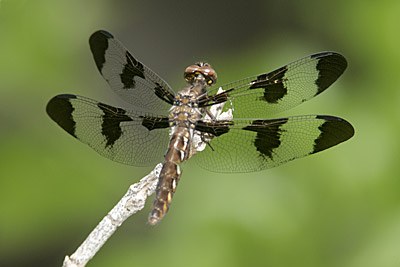
Common Whitetail
Plathemis lydia
- Habitat
- Ponds, lakes, and slow streams with open, sunny shoreline, common and widespread across Oklahoma
- Size
- About 1.7 to 2.0 inches (43–51 mm) long
- Lifespan
- Generally a few weeks as a flying adult, consistent with other common skimmers, though precise wild figures are not well documented
- Diet
- Adults catch flying insects such as mosquitoes, flies, and small moths; nymphs prey on aquatic insect larvae and other invertebrates
About the Common Whitetail
The Common Whitetail is named for the chalky white pruinosity that covers the abdomen of mature males, a color combined with bold, dark brown-black bands across the middle of each wing plus a smaller dark patch at the very base, producing a striking black-and-white wing pattern in flight. Females and immature males lack the white abdomen, showing brown bodies with pale yellow side markings instead, and their wings carry a different pattern of small brown spots rather than the male's broad bands, which can make the sexes look almost like different species until the pattern differences are learned.
This is one of the most common and easily observed dragonflies across nearly the entire United States, and it is a familiar sight at Oklahoma ponds, lakes, and slow streams with open, sunny shoreline. Unlike many skimmers that prefer perches up on stems or shrubs, the Common Whitetail frequently rests flat on bare ground, rocks, or boardwalks at the water's edge, making it one of the easier dragonflies for visitors to observe up close without needing to search through vegetation.
Adults hunt by darting from a low perch to catch flying insects such as mosquitoes, flies, and small moths, then typically returning to the same spot, a hunting style shared broadly across skimmers but especially easy to watch given how often this species chooses open, low perches. The aquatic nymphs live among sediment and submerged debris in still or slow water, functioning as ambush predators that seize aquatic insect larvae and other small invertebrates using a rapid strike of the extendable hinged labium.
Males are highly territorial, defending a stretch of shoreline against rivals with aggressive chases and displays of the banded wing pattern, and mate with females that enter the territory. The female then lays eggs by tapping the abdomen against the water's surface, generally without extended guarding by the male. Eggs hatch into nymphs that develop underwater for roughly a year or so before finally emerging onto a stem, rock, or other support at the water's edge to complete the transformation into the adult stage, with males only developing their signature white tail as they mature over the following days.
Frequently asked questions
Why is it called the Common Whitetail?
Mature males develop a chalky white, powdery coating on the abdomen, giving the species its name.
Do females have white tails too?
No, females keep a brown body with pale side markings and a different wing spot pattern rather than the male's white abdomen and wing bands.
Where does it like to perch?
Often flat on bare ground, rocks, or boardwalks right at the water's edge, rather than up on plant stems like many other skimmers.
Is it common in Oklahoma?
Yes, it is one of the most widespread and frequently seen dragonflies statewide at ponds, lakes, and slow streams.
Where to find it
This species favors wetland habitat. See real Oklahoma locations on the Habitats map.