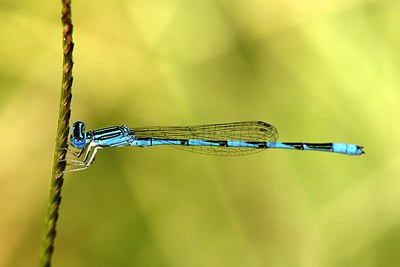
Double-striped Bluet
Enallagma basidens
- Habitat
- Ponds, lakes, and other still or slow-moving water with open shorelines
- Size
- About 0.9 to 1.1 inches (22-27 mm) long, a small bluet
- Lifespan
- Not well documented for this species specifically; bluets generally fly for a few weeks as adults
- Diet
- Adults catch small flying insects such as midges; nymphs feed on aquatic invertebrates
About the Double-striped Bluet
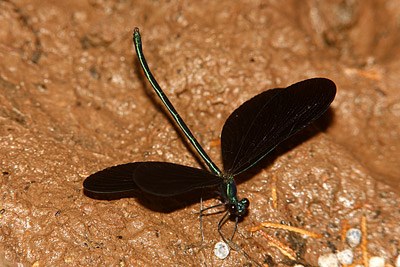
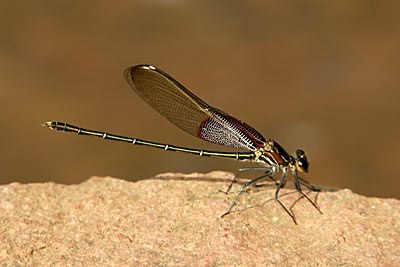
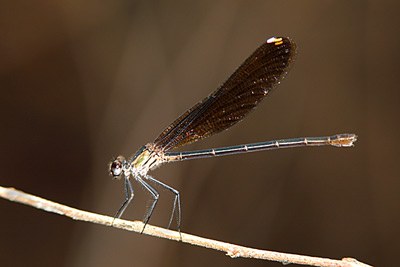
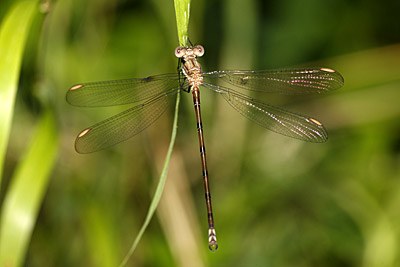
Double-striped Bluet is a small damselfly distinguished from most other bluets by an identification feature built right into its name: rather than the long, full-length thoracic stripes typical of the genus Enallagma, this species has noticeably shortened, truncated stripes on the sides of the thorax, a pattern that becomes a useful field mark once observers know to look for it.
Mature males show the blue-and-black patterning typical of many bluets, with blue confined mainly to the thorax and the base and tip of the abdomen, and black dominating the middle segments. Females are typically duller, often more brownish or grayish, which is standard across the genus and can make them harder to identify to species without a male nearby for comparison.
This species is associated with ponds, lakes, and other standing or slow-moving water with reasonably open shorelines, where adults perch on low vegetation near the water's edge. Like other bluets, it hunts by making short flights out over or near the water to catch small flying insects such as midges and gnats, then returning to a perch to rest and digest.
One notable aspect of Double-striped Bluet's recent history is a documented range expansion: over recent decades the species has spread well beyond its historically more restricted distribution and is now found much more widely across the central and eastern United States than earlier records suggested, making it one of the more range-dynamic damselflies in the region. Breeding follows the pattern typical of bluets, with tandem pairs laying eggs into submerged or floating vegetation, and nymphs developing underwater among plants and debris while feeding on small aquatic invertebrates before eventually emerging as flying adults. Because of its ongoing range expansion, it is increasingly likely to be encountered at ponds and lakes across Oklahoma even where it may not have been recorded in earlier decades. As with other bluets, mated pairs join in tandem, and the male often continues to grip the female while she lays eggs into submerged plant tissue, sometimes briefly beneath the water's surface. Because of its ongoing spread into new territory, naturalists documenting Oklahoma's damselfly fauna over the coming years may find Double-striped Bluet turning up at ponds and lakes where it was not previously recorded.
Frequently asked questions
What does the Double-striped Bluet's name refer to?
It has noticeably shortened thoracic stripes compared to the long stripes typical of most other bluets in the genus Enallagma.
Has the Double-striped Bluet always been common in Oklahoma?
No, the species has undergone a documented range expansion in recent decades and is now found much more widely than earlier records suggested.
What kind of water does the Double-striped Bluet prefer?
Ponds, lakes, and other standing or slow-moving water with fairly open shorelines.
What do Double-striped Bluets eat?
Adults catch small flying insects like midges and gnats near the water, while nymphs feed on aquatic invertebrates.
Where to find it
This species favors wetland habitat. See real Oklahoma locations on the Habitats map.