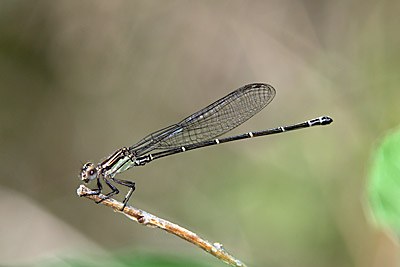
Dusky Dancer
Argia translata
- Habitat
- Rivers and streams, including some more disturbed or altered stretches of habitat
- Size
- About 1.1 to 1.4 inches (29-35 mm) long
- Lifespan
- Not well documented for this species specifically; dancers generally fly for a few weeks as adults
- Diet
- Adults feed on small flying insects; nymphs prey on aquatic invertebrates
About the Dusky Dancer
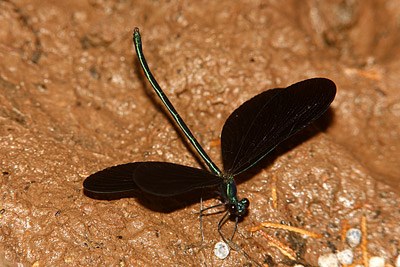
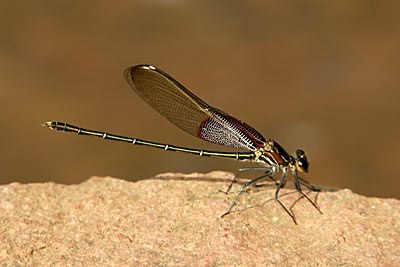
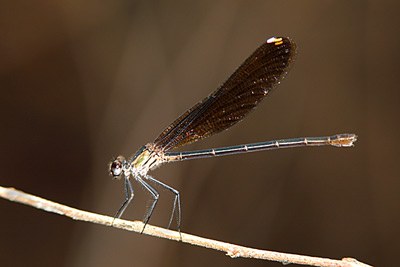
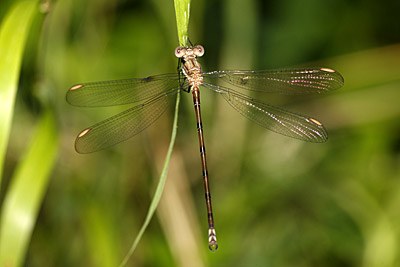
Dusky Dancer stands out among Oklahoma's blue-toned dancers for going the other direction: mature males are notably dark, often appearing blackish-blue or deep violet rather than the bright, clean blue of species like the Blue-fronted Dancer, giving the species its common name. This darker overall tone can make it look almost silhouette-like when perched in shade, a useful clue once observers learn to recognize it among the other stream-dwelling dancers.
The species is found along rivers and streams and appears to tolerate a somewhat broader range of water quality and habitat conditions than some of its more specialized relatives, including stretches of stream that have been altered or degraded to some degree, which may partly explain why it remains fairly widespread despite not being tied to pristine habitat the way some dancers are.
Adults perch low near the water on rocks, bank vegetation, or exposed debris, sallying out in short flights to capture small flying insects before returning to rest. This low, close-to-the-water perching style is shared across the genus Argia and makes dancers generally easier to approach and observe closely than many dragonflies, which tend to patrol more actively over open water.
Breeding follows the familiar Argia pattern of tandem mating pairs, with the male often remaining attached to the female while she lays eggs into submerged plant material or other suitable substrate near the bank. The resulting nymphs live within the stream or river, feeding on small aquatic invertebrates while sheltering among sediment, debris, and vegetation as they grow through successive molts before eventually emerging as winged adults. Because Dusky Dancer appears more tolerant of altered stream conditions than some related species, it can sometimes be found along stretches of water that have lost some of their original habitat quality, making it a dancer worth checking for even along less pristine streams and rivers. As with other dancers, mate-guarding is typical, with the male continuing to grasp the female while she lays eggs into plant material near the bank. Because it tolerates a wider range of stream conditions than some related species, Dusky Dancer can be a useful species to check for along stretches of river that have been altered by development but still retain enough shoreline vegetation and slow current to support damselfly life cycles.
Frequently asked questions
Why is it called the Dusky Dancer?
Mature males are notably dark, blackish-blue or deep violet, rather than the bright blue seen in many related dancer species.
Is the Dusky Dancer found only in pristine habitat?
No, it appears somewhat more tolerant of altered or degraded stream conditions than some other dancers, so it can turn up along less pristine waterways.
Where does the Dusky Dancer perch?
It perches low near the water on rocks, bank vegetation, or debris, typical of dancers in the genus Argia.
What do Dusky Dancer nymphs eat?
They prey on small aquatic invertebrates while sheltering among sediment, debris, and vegetation in the stream.
Where to find it
This species favors wetland habitat. See real Oklahoma locations on the Habitats map.