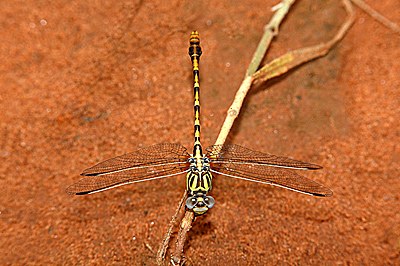
Eastern Ringtail
Erpetogomphus designatus
- Habitat
- Rivers and large streams with sandy or gravelly bottoms, riffles, and sandbanks.
- Size
- About 1.9 to 2.2 inches (49-55 mm) long.
- Lifespan
- Not specifically documented; likely a few weeks as a flying adult, in line with other clubtails.
- Diet
- Adults catch small flying insects in flight; nymphs are aquatic invertebrate predators living among sand and gravel substrate.
About the Eastern Ringtail
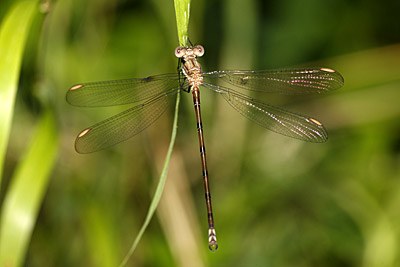
The Eastern Ringtail gets its name from the series of pale yellow rings encircling its abdomen, a pattern that stands out clearly against the darker body and makes this clubtail relatively easy to recognize once seen well. It belongs to the genus Erpetogomphus, a name drawn from Greek roots referring to reptiles, likely a nod to the sinuous, snake-like look of the ringed abdomen when viewed end-on. Males have a slender, mostly greenish body with a larger club at the tip of the abdomen, while females are more yellow overall, with a thicker body and a less pronounced club. The wings are clear apart from small amber-tinted spots near the base, and the eyes are usually a pale blue-gray, separated by a narrow gap at the top of the head.
This species is strongly tied to moving water, favoring rivers and large streams with sandy or gravelly bottoms, riffles, and exposed sandbanks. Habitats with a mix of sun-warmed shallows and faster-flowing sections seem especially attractive, both for breeding adults and for the sand-dwelling nymphs. Flight season in Oklahoma generally runs from late spring through summer, with adults most active on warm, sunny days when insect prey is abundant over the water.
Away from the breeding riffles, Eastern Ringtails often perch some distance from the water itself, settling on bare ground, low vegetation, twigs, or even fence wire, a habit shared by both sexes; like many clubtails, they favor a flat, horizontal perch on open ground more often than the elevated, upright perches typical of skimmers and pennants. This tendency to range away from the immediate shoreline means the species is sometimes spotted well up a nearby bank or field edge rather than right at the water's surface. When hunting, adults sally out to catch flying insects and return to a favored perch, a pattern typical of clubtails generally.
Breeding follows the usual gomphid cycle: females lay eggs into flowing water, often tapping the abdomen against the surface in flight rather than landing to oviposit, and the nymphs burrow into sand and gravel on the streambed, where they live as camouflaged predators of other aquatic invertebrates for an extended period before crawling out to transform into winged adults. Because the species depends on clean, sandy-bottomed streams and rivers, it can serve as a useful indicator of decent water quality and stream habitat condition in the areas where it is found.
Nymphs, like those of most gomphids, rely on camouflage and patience rather than active pursuit, lying partly buried in sand while ambushing smaller invertebrates that drift past. This sand-loving lifestyle ties the species tightly to unpolluted, well-oxygenated streams, so a healthy Eastern Ringtail population is a modest vote of confidence in local water quality, and a decline in numbers along a given river can be an early warning sign of siltation or pollution upstream.
Within its own genus, the Eastern Ringtail can be confused with other ringed clubtails found in the southern United States, and confirming an identification sometimes depends on close attention to the exact pattern of pale rings and the shape of the terminal abdominal appendages rather than overall color alone. Males are thought to establish informal territories along a favored riffle, returning to the same general stretch of current over multiple days, though they appear less aggressively confrontational toward rival males than some of the more territorial pennants and skimmers sharing the same waters.
Frequently asked questions
How can you recognize an Eastern Ringtail?
Look for the pale yellow rings encircling the abdomen, blue-gray eyes, and clear wings with small amber spots near the base.
What kind of water does this species need?
Rivers and large streams with sandy or gravelly bottoms and riffles, not still ponds.
Where do adults perch when not near the water?
On bare ground, low vegetation, twigs, or even fence wire, sometimes well away from the stream itself.
Why might this species be a good sign of stream health?
Because its nymphs need clean sand and gravel substrate, its presence suggests reasonably good water quality.
What does the genus name Erpetogomphus refer to?
It derives from Greek roots referring to reptiles, likely describing the sinuous, snake-like look of the ringed abdomen.
Where to find it
This species favors wetland habitat. See real Oklahoma locations on the Habitats map.