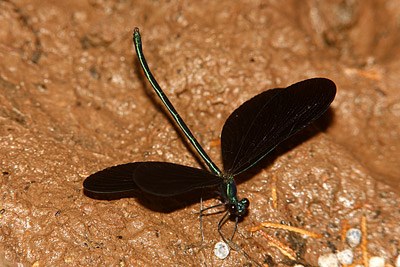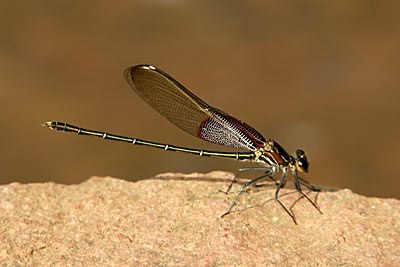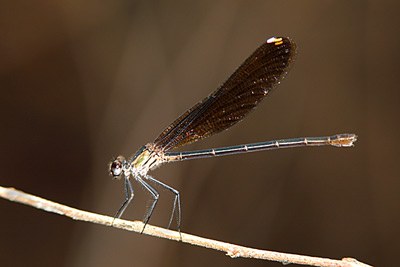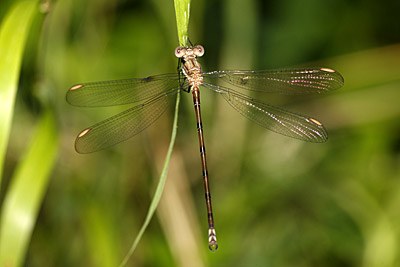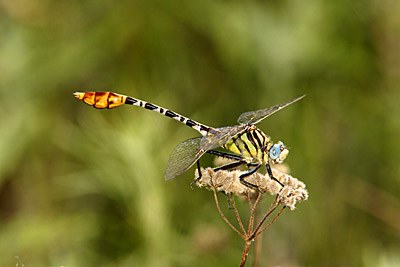
Flag-tailed Spinyleg
Dromogomphus spoliatus
- Habitat
- Rivers with mud-bottomed pools and variably forested banks, as well as mud-bottomed lakes and ponds with clear to muddy water.
- Size
- About 2.2 to 2.6 inches (56-66 mm) long.
- Lifespan
- Not specifically documented; likely several weeks as an adult, similar to other clubtails in the family Gomphidae.
- Diet
- Adults hunt flying insects on the wing; nymphs are aquatic predators of other invertebrates in mud-bottomed pools and slow water.
About the Flag-tailed Spinyleg
The Flag-tailed Spinyleg is a brightly patterned clubtail named for its vivid yellow-orange terminal segments and the unusually long, comb-like spines on its hind legs, which can number anywhere from about four to eleven per leg. Males have blue to turquoise eyes and a yellow-to-tan face, with a dull yellow thorax marked by black diagonal stripes. The abdomen is mostly yellow to white with large brown blotches, giving the insect a boldly patterned look that stands out among Oklahoma's other river-dwelling clubtails.
This species favors rivers with mud-bottomed pools, ranging from heavily forested to sparsely vegetated banks, and it also turns up around mud-bottomed lakes and ponds with either clear or murky water. That flexibility in water clarity and shoreline cover makes it somewhat more adaptable than some of its more specialized clubtail relatives.
Males typically perch in elevated spots along the waterside or low on rocks, often raising the abdomen toward the sun during the heat of midday, a posture that helps regulate body temperature, and sometimes let it hang down when perched in shrubs instead. They also fly out over the water and hover in place for short periods, watching for prey or intruding males, before returning to a favored perch. The long spines on the hind legs are thought to help the dragonfly grasp and hold onto struggling prey caught in mid-air.
Breeding follows the typical gomphid pattern, with females depositing eggs into the water and the resulting nymphs settling into soft mud on the pool bottom, where they spend an extended larval period as burrowing ambush predators before eventually emerging as winged adults along the shoreline. The species carries a globally secure conservation status, and it is a recognizable, if not especially common, part of the dragonfly fauna along Oklahoma's rivers. Nymphs of this species, like those of other clubtails, breathe through internal gills and rely on a hinged, extendable mouthpart called a labium to snatch prey that wanders too close, spending far longer underwater as a nymph than the adult spends on the wing. Watching for the raised-abdomen basking posture on a sunny midday perch is often the easiest way to pick this species out from other river-dwelling clubtails.
Frequently asked questions
What gives the Flag-tailed Spinyleg its name?
Its brightly colored yellow-orange abdomen tip resembles a flag, and its hind legs bear unusually long, comb-like spines.
What are the spines on its legs used for?
They likely help the dragonfly grasp and hold onto flying insect prey it catches in midair.
Where does this species prefer to live?
Rivers with mud-bottomed pools, as well as mud-bottomed ponds and lakes with clear to muddy water.
How do males behave near the water?
They perch on elevated spots or low rocks, often raising the abdomen toward the sun, and periodically hover over the water while hunting or patrolling.
Where to find it
This species favors wetland habitat. See real Oklahoma locations on the Habitats map.