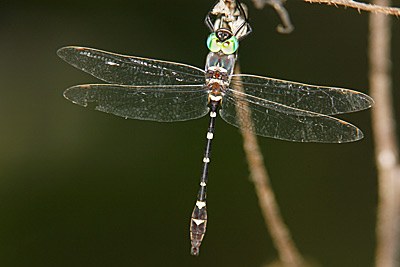
Georgia River Cruiser
Macromia illinoiensis georgina
- Habitat
- Fast streams, large rivers, and lakes with moderate wave action; more broadly, shallow, sunny rivers, streams, bays, channels, and lakes with good water quality.
- Size
- About 2.6 to 3.0 inches (66-76 mm) long.
- Lifespan
- Not specifically documented; likely several weeks as an adult, consistent with other large cruisers.
- Diet
- Adults catch flying insects during long, continuous patrol flights; nymphs prey on aquatic invertebrates on river and lake bottoms.
About the Georgia River Cruiser
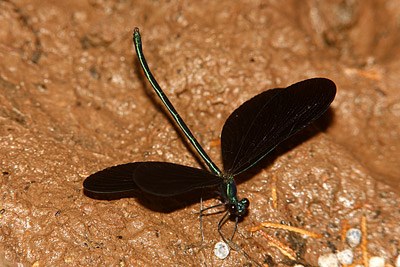
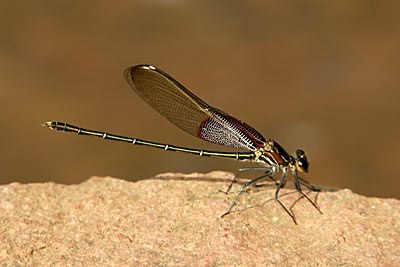
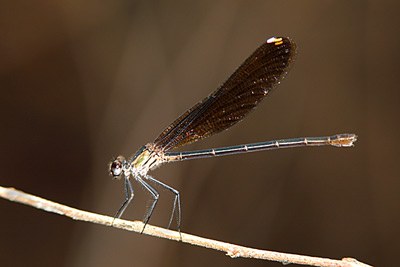
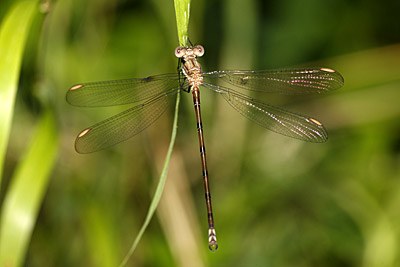
The Georgia River Cruiser is the southern subspecies of the Swift River Cruiser, with the closely related Illinois River Cruiser occupying the northern part of the same species' range. It is a large, dark brown dragonfly with a single yellow stripe along each side of the thorax and a row of yellow spots running down the length of the abdomen. Its eyes are a bright, vivid green, a feature shared across the cruiser family. Distinguishing this subspecies from other Macromia species in the field can require close attention to fine structural details, such as the length of a keel on the middle leg relative to the shin, which specialists use to confirm identification.
This subspecies favors fast streams, large rivers, and lakes with at least moderate wave action, and more generally the cruiser family is associated with shallow, sunny rivers, streams, bays, channels, and lakes that maintain good water quality. That water-quality association makes cruisers a reasonable, if informal, indicator species for healthier river and lake systems.
Cruisers as a group are known for near-continuous flight rather than frequent perching, and the Georgia River Cruiser follows this pattern, patrolling long stretches of shoreline or open water for extended periods while hunting flying insects on the wing. This tireless flight style, often well out over open water, can make cruisers harder to observe closely than dragonflies that perch regularly, since a good look often depends on the insect passing near enough to a fixed vantage point.
Breeding follows the general dragonfly pattern of egg-laying into the water followed by an aquatic nymphal stage, during which the young cruiser lives as a predator of other invertebrates on the river or lake bottom before eventually emerging as a winged adult. Given its size, patrol-style flight, and preference for larger, cleaner water bodies, the Georgia River Cruiser is one of the more impressive dragonflies a patient observer might spot cruising along an Oklahoma river or lake shoreline. Because the species spends so much of its adult life on the wing rather than perched, most confirmed sightings come from watching a favored stretch of shoreline patiently rather than searching for a resting individual. Its dependence on clean, well-oxygenated rivers and lakes also means local populations can serve as an informal early warning sign if water quality in a favored river system begins to decline.
Frequently asked questions
What is a 'cruiser' dragonfly?
Cruisers are large dragonflies known for near-continuous patrol flights over water rather than frequent perching, and the Georgia River Cruiser is a good example.
How is the Georgia River Cruiser related to the Illinois River Cruiser?
They are both subspecies of the Swift River Cruiser, with the Georgia form occupying the southern part of the range and the Illinois form the northern part.
What does its coloring look like?
A dark brown body with a single yellow stripe on each side of the thorax, yellow abdominal spots, and bright green eyes.
Why is it considered a sign of good water quality?
Cruisers are generally associated with clean, well-oxygenated rivers and lakes, making their presence a loose indicator of healthy water.
Where to find it
This species favors wetland habitat. See real Oklahoma locations on the Habitats map.