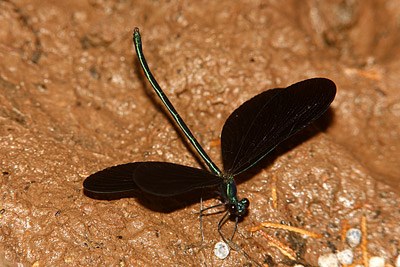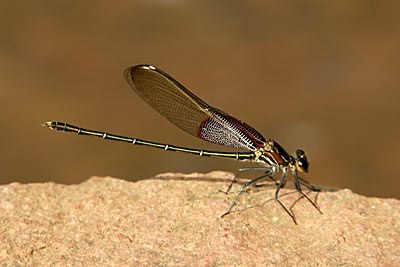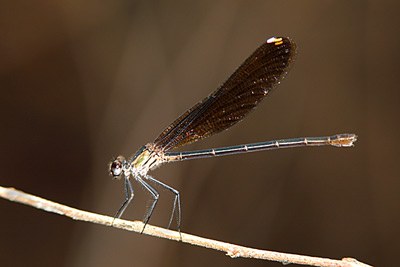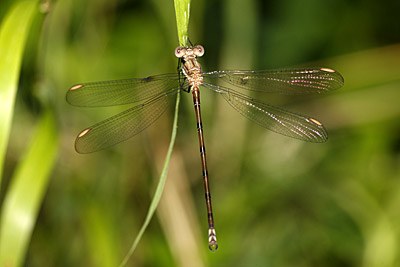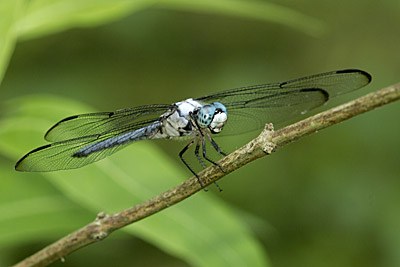
Great Blue Skimmer
Libellula vibrans
- Habitat
- Shaded woodland ponds and slow streams, mainly in the southeastern United States, reaching the eastern edge of Oklahoma
- Size
- About 2.1 to 2.3 inches (53–58 mm) long, among the largest of the Libellula skimmers
- Lifespan
- Likely several weeks as a flying adult, consistent with other large skimmers, though species-specific data is limited
- Diet
- Adults catch flying insects including flies, moths, and mosquitoes; nymphs prey on aquatic insect larvae and other invertebrates
About the Great Blue Skimmer
The Great Blue Skimmer is one of the largest members of the genus Libellula, and mature males show a rich blue-gray, powdery body set off by a distinctive brown face, a combination that helps distinguish it from other large blue skimmers such as the Slaty Skimmer. The wings are mostly clear, sometimes with a light golden or amber tinge near the base, and the overall impression is of an unusually large, robust dragonfly with a slow, powerful wingbeat. Females and immature males are brown rather than blue, with pale yellow stripes along the sides of the thorax, gradually developing the bluer coloring as they mature.
This species is primarily a bird of the southeastern United States, and Oklahoma sits near the western edge of its range, where it turns up in shaded, wooded ponds, spring seeps, and slow, forest-lined streams rather than the open, sunny ponds favored by many other skimmers. Its preference for shadier, more sheltered water makes it somewhat less conspicuous than sun-loving species like the Widow Skimmer, and it is best looked for around wooded pond margins in the eastern part of the state.
Adults hunt using the classic skimmer strategy of perching on a shaded twig or leaf and sallying out to catch passing flying insects such as flies, moths, and mosquitoes, then returning to the same or a nearby perch to consume the prey. The aquatic nymphs live among leaf litter, submerged roots, and sediment in still or slow water, where they ambush aquatic insect larvae and other small invertebrates using a fast-extending hinged jaw, a hunting method shared by all dragonfly nymphs.
Males defend a stretch of shaded shoreline as territory and mate with females entering the area, after which the female lays eggs by tapping the abdomen against the water's surface, often in a spot with dappled shade rather than full sun. Given the species' association with wooded ponds and streams, its nymphs likely tolerate cooler, more shaded water conditions than nymphs of open-pond species, though detailed developmental studies specific to this species are limited. Its size and quiet, shade-loving habits make the Great Blue Skimmer a notable find for anyone exploring wooded wetlands in eastern Oklahoma.
Frequently asked questions
How can I tell a Great Blue Skimmer from other blue skimmers?
Look for its unusually large size and brown face contrasting with a blue-gray body, along with its preference for shaded, wooded water rather than open ponds.
Where in Oklahoma is it most likely to occur?
It is near the western edge of its range in Oklahoma, so it is most likely found around shaded, wooded ponds and streams in the eastern part of the state.
What does it eat?
Adults catch flying insects such as flies and moths near shaded water, while nymphs prey on aquatic insect larvae among leaf litter and submerged roots.
Is it a common dragonfly?
It is less commonly encountered than open-pond skimmers because it favors shadier, more wooded habitats that are less frequently visited.
Where to find it
This species favors wetland habitat. See real Oklahoma locations on the Habitats map.